
Tesco Steel & Engineering manufactures Inconel 718 flanges (UNS N07718 / W.Nr. 2.4668) — the niobium-hardened, age-hardenable nickel-chromium superalloy with ~52.5% Ni, ~19% Cr, ~18.5% Fe, ~5% niobium and ~3% Mo. Through gamma-double-prime (Ni₃Nb) precipitation on solution treatment and ageing it develops the highest strength of the common Inconel grades, with excellent strength to ~700°C, good cryogenic toughness and good weldability (low strain-age-cracking risk). Available in weld neck, slip-on, blind, socket-weld, threaded, lap-joint, spectacle and orifice types to ASTM B637 / ASME B16.5. Class 150 to 2500, NPS 1/2″ to 24″, PN6 to PN400. ISO 9001:2015 certified. Made in India.
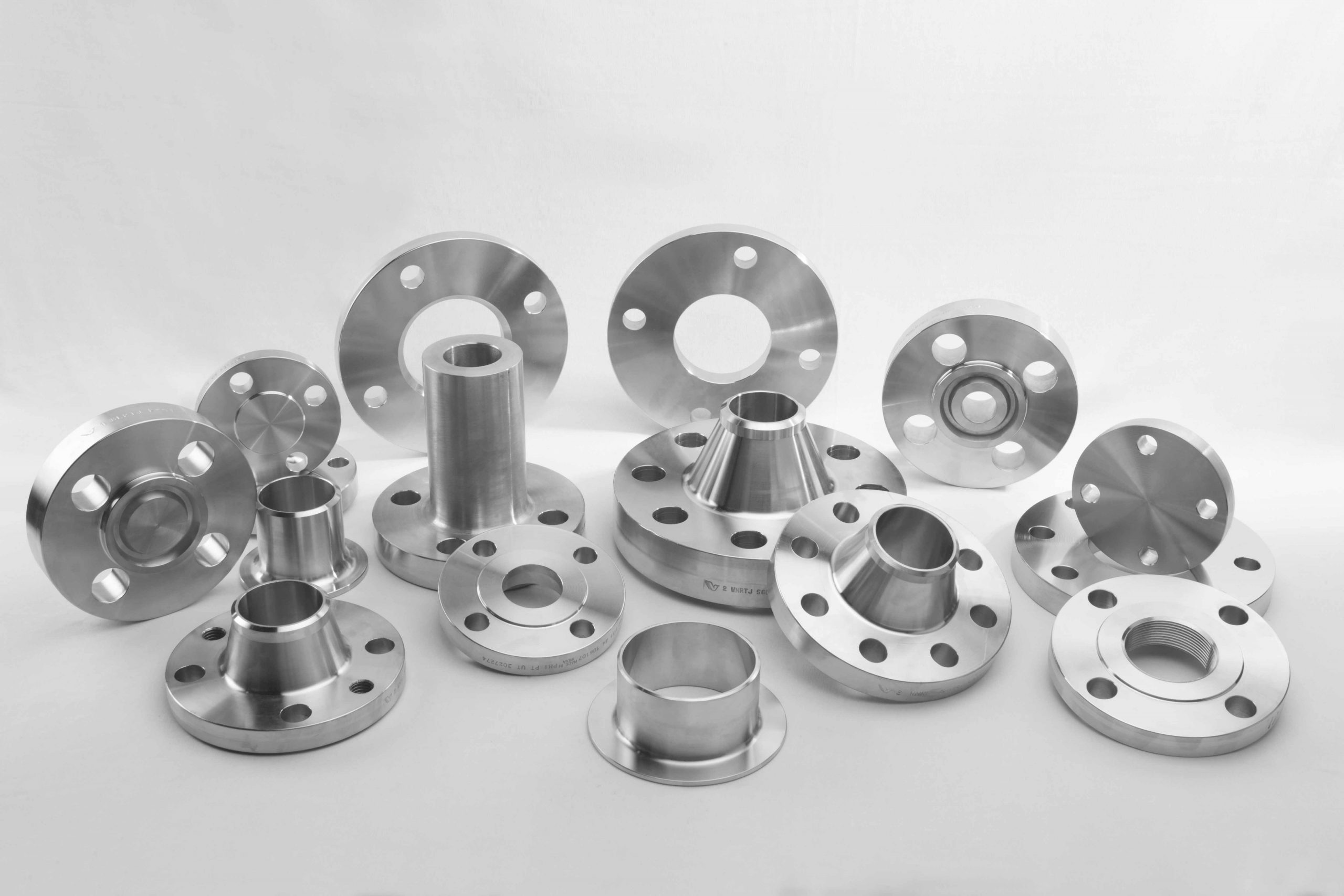
Inconel 718 (UNS N07718) Flanges
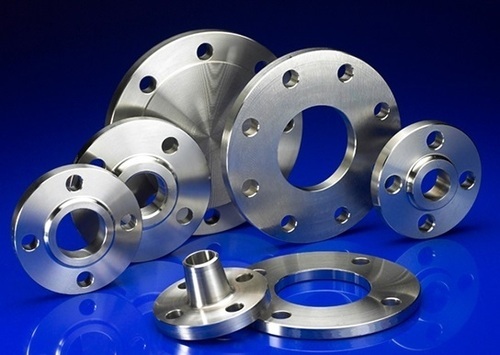
Inconel 718 Weld Neck & Blind Flanges
Tesco Steel & Engineering manufactures Inconel 718 flanges in all types from weld neck to orifice, Class 150 to 2500 — supplied in the solution-treated-and-aged condition with EN 10204 3.1 / 3.2 certification, PMI and third-party inspection on request. Explore the wider Inconel flange range, the corrosion-focused Inconel 625 flanges and general-purpose Inconel 600 flanges, and the flange dimension charts.
| Inconel 718 flanges are available in the following specifications: | |
|---|---|
| Material Grade | Inconel 718 / UNS N07718 / W.Nr. 2.4668 (NiCr19Fe19Nb5Mo3) |
| Alloy Type | Age-hardenable nickel-chromium-iron-niobium superalloy (gamma-double-prime) |
| Condition | Solution treated + precipitation (age) hardened |
| Size | 1/2″ NB to 24″ NB (DN 15 to DN 600); larger to ASME B16.47 |
| Class / Rating | 150#, 300#, 600#, 900#, 1500#, 2500# · 3000#, 6000#, 9000# (socket-weld / threaded) |
| Pressure Ratings | PN 6 – PN 400 (PN6, 10, 16, 25, 40, 64, 100, 160, 250, 320, 400) |
| Material Standards | ASTM B637, ASME SB637, AMS 5662 / 5663 / 5664; EN designation 2.4668 |
| Dimensional Standards | ASME B16.5, ASME B16.47 (Series A & B), MSS SP-44, DIN EN 1092-1 |
| Flange Types | Weld Neck (WNRF), Slip-On (SORF), Blind, Socket Weld (SWRF), Lap Joint, Threaded / Screwed, Spectacle Blind, Long Weld Neck, Orifice, Plate |
| Flange Faces | Raised Face (RF), Flat Face (FF), Ring Type Joint (RTJ), Tongue & Groove (T&G) |
| Weld Filler | ERNiFeCr-2 (Inconel Filler Metal 718) |
| Testing | PMI, hardness/tensile, hydrostatic, UT, MT/PT per spec; EN 10204 3.1 / 3.2 |
Inconel 718 is a nickel-chromium-iron base with a strong niobium addition (plus molybdenum, titanium and aluminium). The niobium forms the gamma-double-prime (Ni₃Nb) precipitate during ageing — the source of the alloy's exceptional strength and its weldability advantage.
| Element | Inconel 718 (UNS N07718) |
|---|---|
| Nickel (Ni) | 50.0 – 55.0% (~52.5%) |
| Chromium (Cr) | 17.0 – 21.0% (~19%) |
| Iron (Fe) | Balance (~18.5%) |
| Niobium + Tantalum (Nb+Ta) | 4.75 – 5.50% |
| Molybdenum (Mo) | 2.80 – 3.30% |
| Titanium (Ti) | 0.65 – 1.15% |
| Aluminium (Al) | 0.20 – 0.80% |
| Carbon (C) | 0.08% max |
| Mechanical Property (solution treated + aged, typical) | Inconel 718 |
|---|---|
| Tensile Strength | 1240 – 1450 MPa (180–210 ksi) |
| Yield Strength 0.2% | 1030 – 1240 MPa (150–180 ksi) |
| Elongation | 12 – 25% |
| Service Temperature | Cryogenic to ~700 °C (1300 °F) |
| Density | 8.19 g/cm³ |
| Melting Range | 1260 – 1336 °C |
| Standard | Inconel 718 Designation |
|---|---|
| UNS (USA) | N07718 |
| Werkstoff (Germany) | 2.4668 |
| EN designation | NiCr19Fe19Nb5Mo3 / NiCr19Nb5Mo3 |
| ASTM / ASME | B637 / SB637 (age-hardenable forgings); B670 (plate) |
| AMS | 5662 / 5663 / 5664 / 5589 |
| Common names | Inconel 718, Alloy 718, Nickel Alloy 718 |
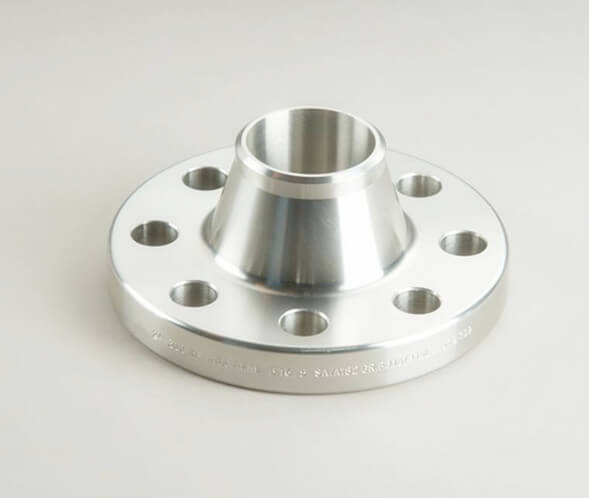
Inconel 718 Weld Neck Flange (WNRF)
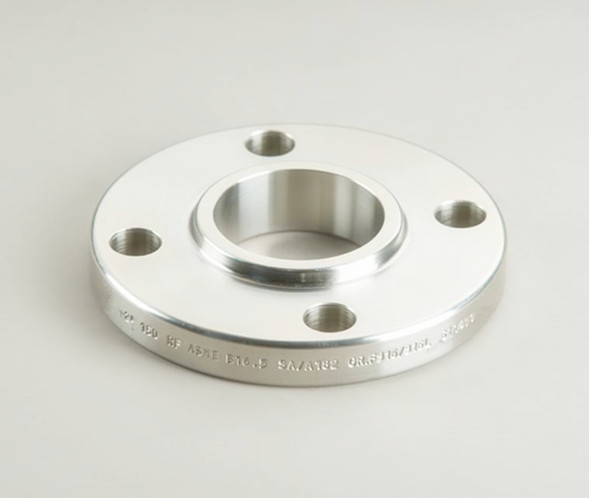
Inconel 718 Slip-On Flange (SORF)
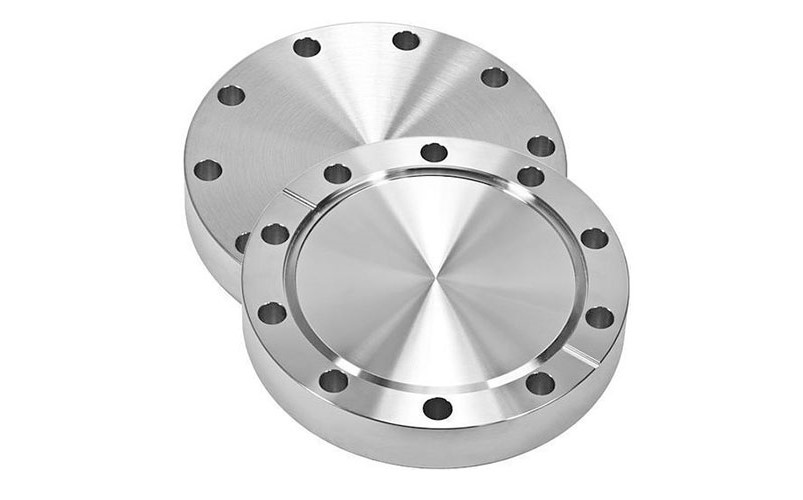
Inconel 718 Blind Flange
| Flange Type | Description & Inconel-718-Specific Use |
|---|---|
| Weld Neck (WNRF) | Tapered hub butt-welded to pipe for high-integrity, high-strength turbine, downhole and high-pressure service; weld with ERNiFeCr-2 filler, then age. |
| Slip-On (SORF) | Fillet-welded over the pipe; used in high-strength piping at moderate pressure. |
| Blind | Seals pipe ends and vessel nozzles in high-pressure and high-strength systems. |
| Socket Weld (SWRF) | Small-bore (1/2″–2″) instrument and high-pressure branch connections. |
| Lap Joint (LJRF) | Used with an Inconel 718 stub end where frequent dismantling is required; economizes on alloy in the backing ring. |
| Threaded (TRFF) | Internal NPT/BSP threads for non-welded high-strength connections. |
| Spectacle Blind / Long Weld Neck / Orifice | Isolation spades, nozzle/long-neck and flow-metering flanges in Inconel 718 for high-strength duty. |
| Property | 718 (N07718) | 625 (N06625) | 600 (N06600) |
|---|---|---|---|
| Strengthening | Age-hardenable (Ni₃Nb) | Solid-solution | Solid-solution |
| Tensile strength | ~1240-1450 MPa | ~830-1000 MPa | ~550-690 MPa |
| Max strength temperature | ~700°C | ~1000°C (corrosion) | ~1095°C (corrosion) |
| Aqueous / seawater corrosion | Good | Excellent | Good (chloride SCC) |
| Heat treatment needed | Yes (solution + age) | No | No |
| Typical role | Turbine, fasteners, downhole, structural | Seawater, sour-service, corrosion | General nickel alloy, chloride/HT |
Gamma-double-prime ageing gives tensile strength up to ~1450 MPa — far above the solid-solution grades.
Retains high strength to ~700°C and excellent toughness at cryogenic temperatures — ideal for turbines and rockets.
Sluggish niobium ageing gives low strain-age-cracking risk — welds readily with ERNiFeCr-2, then ages.
Chromium and molybdenum give good oxidation and aqueous corrosion resistance alongside the high strength.
| Industry | Typical Application |
|---|---|
| Aerospace & Gas Turbines | Engine discs, casings, high-strength flanges, fasteners and ducting |
| Rocket & Cryogenic | Liquid-fuel rocket and cryogenic high-strength flanged components |
| Oil & Gas / Subsea | Downhole, wellhead and subsea high-strength sour-service components |
| Power Generation | Gas-turbine and high-pressure flanged connections |
| Nuclear | High-strength reactor and structural flanged components |
| High-Pressure Equipment | Springs, fasteners and high-pressure flanges needing maximum strength |
Made from certified Alloy 718 with PMI verification of Cr, Nb and Mo — full chemistry and heat-treatment record on the MTC.
Forged to ASTM B637 / AMS 5662 in the solution-treated-and-aged condition for full strength.
WNRF, SORF, blind, socket-weld, threaded, lap-joint, spectacle, LWN, orifice and plate — in RF, FF, RTJ and T&G.
EN 10204 3.1 / 3.2 MTC with hardness/tensile results, heat/lot traceability, hydrostatic and third-party inspection on request.
Inconel 718 flange prices reflect the high nickel and niobium content plus forging and the solution + ageing heat treatment — it is a premium high-strength superalloy for aerospace, downhole and structural service. Tesco Steel & Engineering offers competitive ex-works pricing from Mumbai with full export documentation and material traceability. Click Ask for Quote or message us on WhatsApp at +91 92233 66922 with flange type, size (NB), pressure class, quantity and documentation requirements.
Q1. What is an Inconel 718 flange?
An Inconel 718 flange is a pipe flange made from the niobium-hardened, age-hardenable nickel-chromium superalloy UNS N07718 (W.Nr. 2.4668) — about 52.5% nickel, 19% chromium, 18.5% iron, 5% niobium and 3% molybdenum with small titanium and aluminium. It develops the highest strength of the common Inconel grades through gamma-double-prime (Ni3Nb) precipitation on heat treatment, with excellent strength to ~700 degrees C and good cryogenic toughness. Flanges are forged to ASTM B637 and machined to ASME B16.5 / B16.47 dimensions.
Q2. What is the chemical composition of Inconel 718?
Inconel 718 (UNS N07718) nominal composition: nickel 50–55% (~52.5%), chromium 17–21% (~19%), iron balance (~18.5%), niobium plus tantalum 4.75–5.5% (~5%), molybdenum 2.8–3.3% (~3%), titanium 0.65–1.15%, aluminium 0.2–0.8%, with carbon 0.08% max. The niobium is the key hardening element, forming the gamma-double-prime strengthening phase.
Q3. Why is Inconel 718 so strong?
Inconel 718 is precipitation- (age-) hardenable. A solution treatment followed by a two-step ageing heat treatment precipitates a fine gamma-double-prime (Ni3Nb) phase that gives it the highest room- and elevated-temperature strength of the common Inconel grades. Because niobium-based ageing is sluggish, 718 can be welded and then aged with low risk of strain-age cracking — unlike titanium/aluminium-hardened superalloys.
Q4. What heat treatment do Inconel 718 flanges receive?
Inconel 718 flanges are typically solution-annealed (around 950–1065 degrees C) and then precipitation-aged in two steps (around 720 degrees C and 620 degrees C) to develop full strength. The exact temper is specified per AMS 5662/5663 or the application; we supply flanges in the required solution-treated-and-aged condition with the heat-treatment record on the certificate.
Q5. What temperature can Inconel 718 flanges handle?
Inconel 718 keeps very high strength and good oxidation resistance up to about 700 degrees C (1300 degrees F) and is also tough and ductile at cryogenic temperatures, making it suitable for both hot turbine and very cold (rocket/cryogenic) service. Above ~700 degrees C the strengthening phase coarsens, so other superalloys are used for higher-temperature duty.
Q6. What standards apply to Inconel 718 flanges?
Inconel 718 flanges are forged to ASTM B637 (UNS N07718, the age-hardenable nickel-alloy spec) and machined to ASME B16.5 (1/2 inch to 24 inch) or ASME B16.47 / MSS SP-44 for larger sizes. The European designation is W.Nr. 2.4668, and aerospace material is covered by AMS 5662 / 5663. Material is supplied with EN 10204 3.1 / 3.2 certification.
Q7. Can Inconel 718 flanges be welded?
Yes. Inconel 718 has the best weldability of the age-hardenable superalloys because its niobium-based ageing is slow, giving good resistance to post-weld strain-age cracking. It is welded by GTAW (TIG) and GMAW using matching ERNiFeCr-2 (Inconel Filler Metal 718). Welded assemblies are usually solution-treated and aged after welding to restore full strength.
Q8. What is the difference between Inconel 718 and 625?
Inconel 625 is solid-solution strengthened and not heat-treatable, giving high strength with outstanding aqueous/seawater corrosion resistance. Inconel 718 is age-hardenable, giving much higher strength after heat treatment, and is optimized for high-strength structural and high-temperature service (turbines, fasteners, downhole) to ~700 degrees C. Choose 718 for maximum strength, and 625 for the broadest corrosion and seawater resistance.
Q9. What are the mechanical properties of Inconel 718?
Typical Inconel 718 properties in the solution-treated and aged condition: tensile strength about 1240–1450 MPa (180–210 ksi), yield strength about 1030–1240 MPa (150–180 ksi), elongation about 12–25%, density 8.19 g/cm³. This is the highest strength of the common Inconel flange grades, retained to elevated temperature.
Q10. Are Inconel 718 flanges supplied with material test certificates?
Yes. Every Inconel 718 flange is supplied with EN 10204 3.1 (or 3.2) mill test certificates confirming chemistry, mechanical properties, heat-treatment condition and heat/lot traceability, with PMI, hydrostatic testing and third-party inspection on request. Tesco Steel & Engineering is an ISO 9001:2015 certified manufacturer and exporter from Mumbai, India.