
Tesco Steel & Engineering manufactures Insultwist studs — serrated twist-lock anchors that are stud-welded to furnace, boiler, kiln and duct casings to hold ceramic fiber blanket insulation. We supply the complete fixing set: the Insultwist stud, a speed washer to retain the intermediate layers, and a twist-lock (fibrelok) washer that twists onto the serrations to lock the blanket — with a ceramic cuplock (alumina > 50%) as the high-temperature alternative to the metal lock washer. Made in SS304, SS310, Inconel 600, Inconel 601 and carbon steel, in any length to suit your insulation thickness. ISO 9001:2015 certified. Made in India.
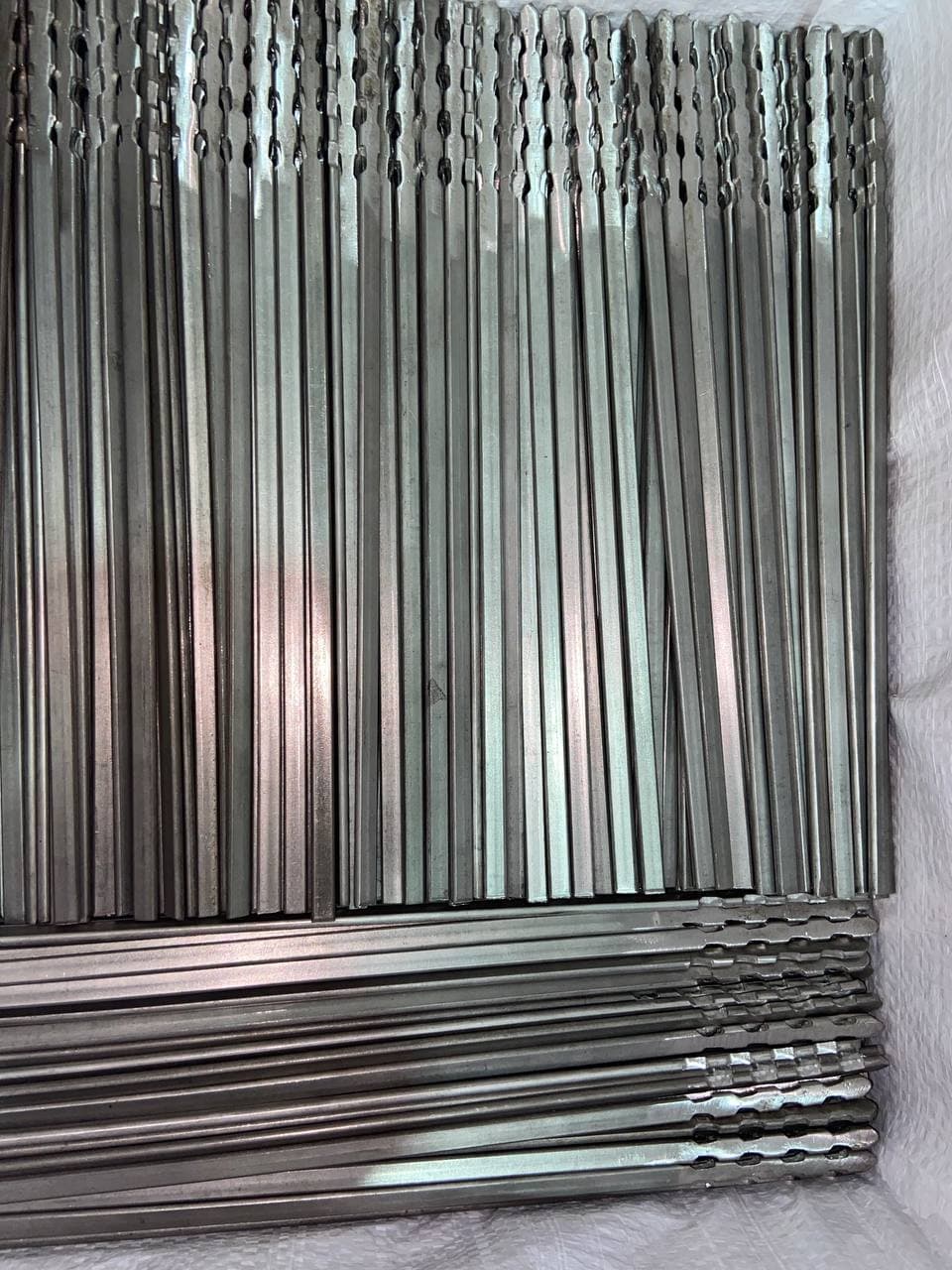
Insultwist Studs — Serrated Twist-Lock Anchors
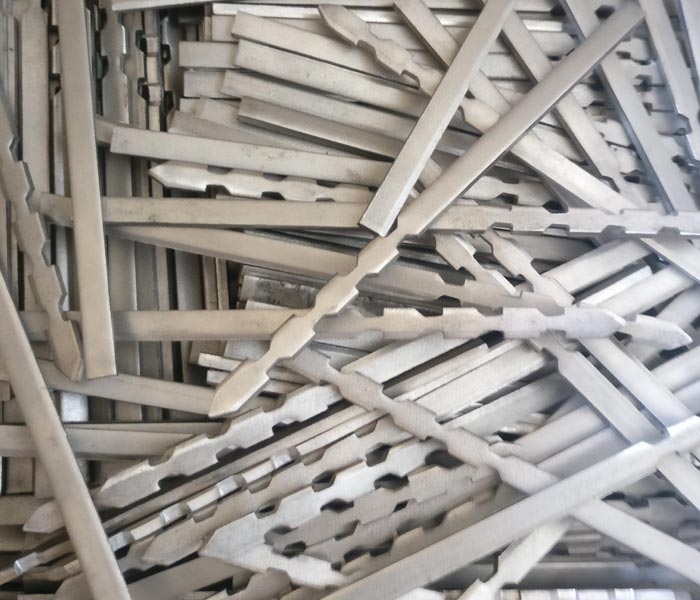
Serrated Flat Profile (7 mm × 3 mm)
An Insultwist stud — also called a twist-lock anchor or ceramic fiber blanket anchor — is the metal pin that keeps a hot-face insulation lining attached to the steel shell of a furnace, boiler or kiln. It is a flat serrated strip, about 7 mm wide and 3 mm thick, that is stud-welded to the casing. Once welded, the ceramic fiber blanket is simply pushed over the stud, and washers are pushed and twisted onto the serrations to lock the blanket tight against the wall. Because the serrations grip mechanically, the lining stays in place through the constant expansion and contraction of repeated heat-up and cool-down cycles — the situation where lesser fixings work loose.
We supply the Insultwist system as a complete, matched set so the whole anchoring job is covered from one source:
The serrated flat anchor itself — stud-welded to the casing, with the serrated section carrying the washers. Length is made to suit the insulation thickness.
A pressed metal clip, about 40 × 40 mm, with a central serrated grip. It pushes onto the serrations (or onto round rod) to retain the intermediate blanket layers while the lining is built up.
A pressed, slightly dished washer, about 38 × 25 mm, with a central slot. Pushed over the serrations at the hot face and twisted to lock the outer face of the blanket.
A high-alumina ceramic cup that replaces the metal lock washer where the hot face is too hot for steel — it caps and protects the anchor tip and reduces heat short-circuiting.
The ceramic ferrule used during drawn-arc stud welding to attach the anchor to the casing — supplied with the set.
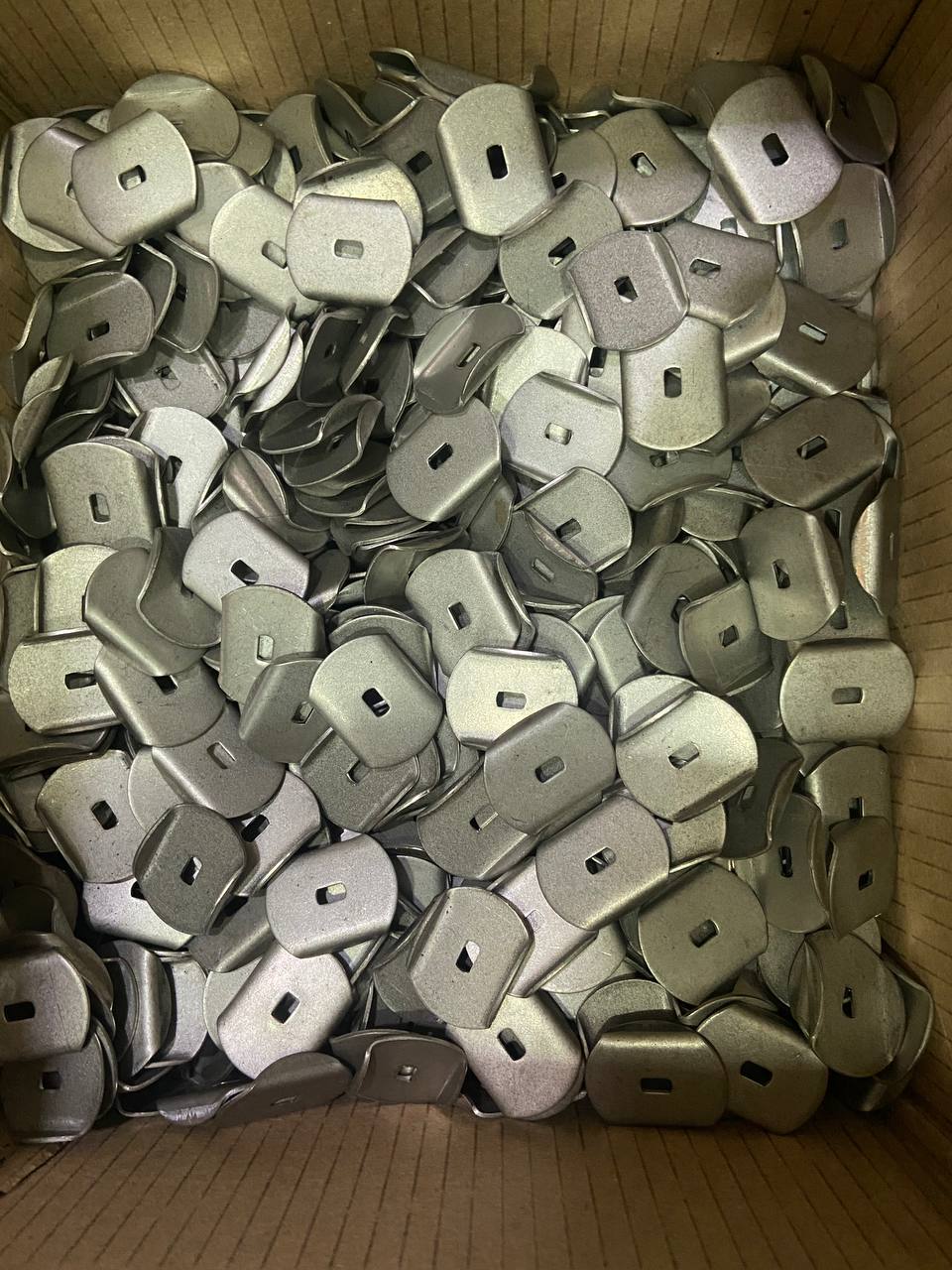
Twist-Lock (Fibrelok) Washers — SS310
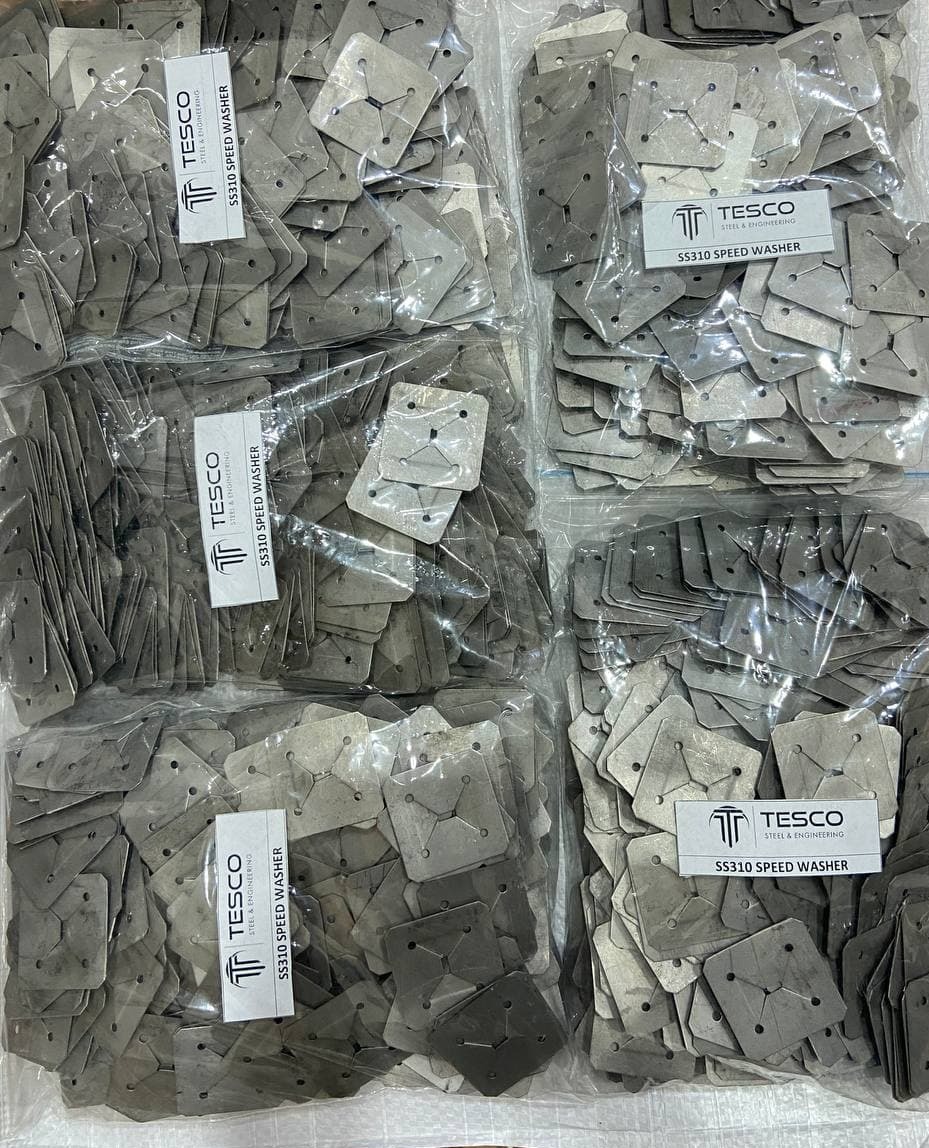
Speed Washers (Speed Clips) — SS310
Insultwist studs and washers are made from fully annealed material and chosen to match the operating temperature and atmosphere. The grade you pick is mostly about how hot the anchor will run:
| Grade | Type | Indicative max service temp. | Typical use |
|---|---|---|---|
| Carbon Steel | Mild steel | Low / cold-face | Economical anchoring at low temperatures or on the cold face |
| SS 304 | Austenitic stainless | ~ 870 °C | Moderate-temperature furnace and duct linings |
| SS 321 | Titanium-stabilised austenitic stainless | ~ 900 °C | Resists sensitisation; good elevated-temperature strength |
| SS 310 | High-temp austenitic stainless | ~ 1100 °C | The high-temperature workhorse — most common choice |
| Incoloy 800 | Fe-Ni-Cr alloy | ~ 1100 °C | Carburisation & oxidation resistance with high-temp strength |
| 253 MA | Rare-earth / silicon austenitic stainless | ~ 1150 °C | Outstanding oxidation resistance and high-temp strength |
| Inconel 600 | Nickel alloy | ~ 1150 °C | Reducing, cyclic and aggressive atmospheres |
| Inconel 601 | Nickel alloy | ~ 1200 °C | Highest temperatures — best high-temp oxidation resistance |
| Ceramic Cuplock | Alumina ceramic (> 50% Al₂O₃) | Hot-face tip beyond metal limits | Caps and protects the anchor tip at very high temperatures |
Further special alloys can be supplied to order if your atmosphere calls for them — just ask. Always confirm the grade against your actual hot-face temperature and atmosphere; the figures above are indicative guidance, not guarantees.
| Component | Specification |
|---|---|
| Insultwist stud (flat) | ~ 7 mm nominal width × 3 mm thick serrated strip; serrated section up to 75 mm; overall length to suit insulation thickness |
| Insultwist stud (wire) | Pressed from 6.5 mm wire (~ 5 mm effective dia.) for greater base cross-section and bending resistance |
| Twist-lock / fibrelok washer | Pressed dished washer ~ 38 × 25 mm with central locking slot |
| Speed washer / speed clip | Pressed clip ~ 40 × 40 mm with central serrated grip; suits serrated section or round rod |
| Ceramic cuplock | Alumina > 50%; ~ Ø50 mm flange × 68 mm high, 4.5 mm square locating hole |
| Welding ferrule | Ceramic ferrule for drawn-arc / CD stud welding; L-base option for higher-strength attachment |
| Cross-sectional area | Calculated to equal or exceed minimum industry standard |
| Certification | EN 10204 3.1 mill test certificate & PMI on request |
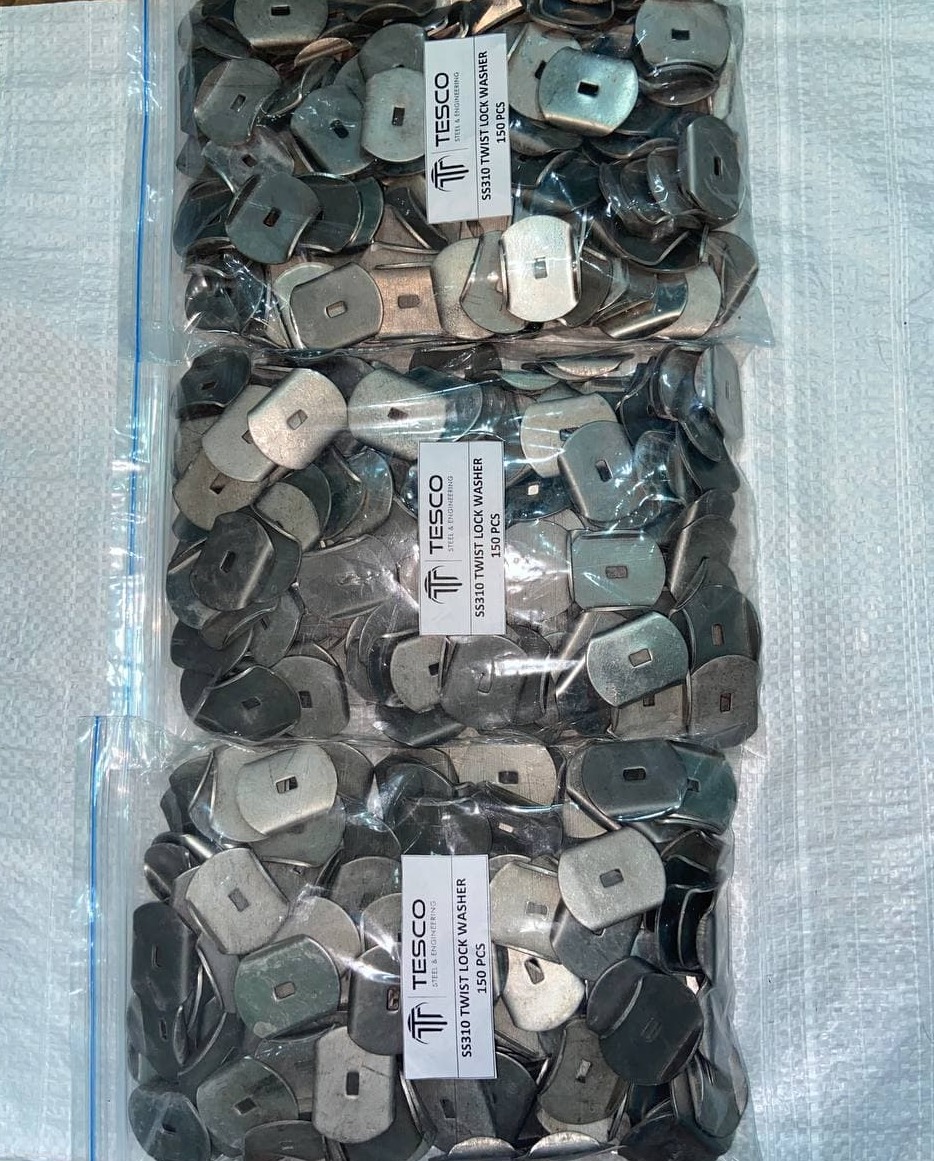
Twist-Lock Washers — Bagged & Labelled
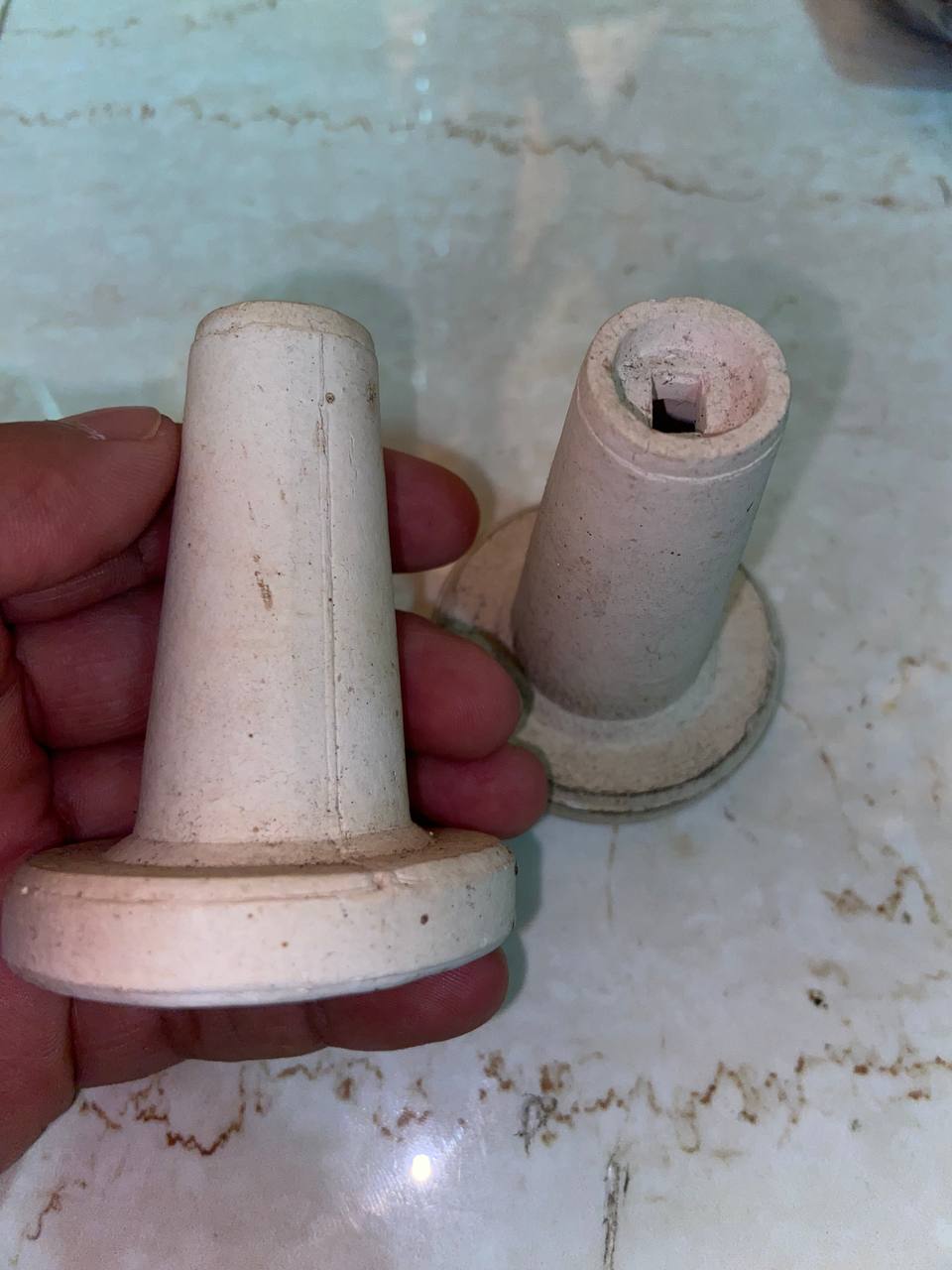
Ceramic Cuplock (Alumina > 50%)
Below are the full dimensioned drawings we manufacture to — the Insultwist twist-lock anchor and assembly (drawing TSE-R031) and the ceramic cuplock. View them inline or download the PDFs, then send them back with your insulation thickness and chosen grade and we’ll quote.
Serrated twist-lock stud profile (7 mm × 3 mm), pressed lock washer, speed clip and welding ferrule, plus the full twist-lock assembly stack-up through the insulation layers. Common alloys: SS304, SS310, Inconel 601, Incoloy 800.
⬇ Download Insultwist Stud Datasheet (PDF)The high-alumina ceramic cuplock (alumina > 50%) used in place of the metal lock washer on hot faces — Ø50 mm flange, 68 mm overall height and a 4.5 mm square locating hole that seats on the stud tip.
⬇ Download Ceramic Cuplock Datasheet (PDF)The twist-lock serrations grip mechanically, so the lining stays tight through repeated heat-up and cool-down — where loose fixings let blanket sag and gap.
Stud-weld, impale, push the speed washer, twist the lock washer. No drilling, no bolting, no adhesives — one weld and a twist per anchor.
From carbon steel up to Inconel 601, with a ceramic cuplock for the hot face — matched to your furnace temperature and atmosphere.
Stud, speed washer, twist-lock washer, ceramic cuplock and welding ferrule supplied together — no mixing parts from different suppliers.
| Industry / Equipment | Typical Use |
|---|---|
| Petrochemical & refining | Fired heaters, reformers, cracking and process furnaces lined with ceramic fiber blanket |
| Power & boilers | Boiler casings, ducts and flues, flue-gas paths |
| Heat treatment | Annealing, normalising and heat-treatment furnaces; kiln linings |
| Steel & foundry | Ladle and tundish covers, reheating furnaces |
| General high-temp | Any plant where ceramic fiber blanket is anchored to a steel casing |
What is an Insultwist stud?
An Insultwist stud is a serrated, flat twist-lock anchor — about 7 mm wide and 3 mm thick — that is stud-welded to a furnace, boiler, kiln or duct casing to hold ceramic fiber blanket insulation in place. The blanket is pushed over the stud and locked with washers, so the lining stays tight against the wall even through thermal cycling. It is also known as a twist-lock anchor or ceramic fiber blanket anchor.
How is an Insultwist stud installed?
First the stud is welded to the casing by drawn-arc or capacitor-discharge stud welding, using a welding ferrule at the base. The ceramic fiber blanket layers are then impaled over the stud, a speed washer is pushed down the serrations to retain the intermediate layers, and a twist-lock (fibrelok) washer is pushed over the serrations at the hot face and twisted so its teeth grip and lock the blanket. For very high hot-face temperatures a ceramic cuplock is fitted instead of the metal lock washer.
What is included in the complete Insultwist fixing set?
The complete set is the Insultwist stud (the serrated twist-lock anchor), a speed washer (speed clip) that retains intermediate blanket layers, and a twist-lock washer (also called a fibrelok or pressed lock washer) that locks the outer face. A welding ferrule is supplied for stud welding. As an option the metal lock washer is replaced with a ceramic cuplock for high-temperature hot faces. We supply all of these parts together so the anchoring system is complete.
What is a twist-lock washer (fibrelok washer)?
The twist-lock washer — also called a fibrelok or pressed lock washer — is a pressed, slightly dished metal washer about 38 × 25 mm with a central slot. It is pushed over the serrated section of the stud and twisted a quarter turn; the serrations bite into the slot so the washer cannot slide back, locking the ceramic fiber blanket at the hot face.
What is a speed washer or speed clip?
The speed washer (speed clip) is a pressed metal washer, typically 40 × 40 mm, with a central serrated grip. It pushes onto the serrated section — or onto round rod — and holds the intermediate layers of blanket while installation continues. It lets an installer build up multiple insulation layers quickly before the final twist-lock washer goes on.
What is a ceramic cuplock and when is it used instead of the lock washer?
A ceramic cuplock is a high-alumina ceramic cup (alumina greater than 50%) that fits over the stud and seats on its squared/serrated tip in place of the metal twist-lock washer. It is used when the hot-face temperature is too high for a metal washer to survive, or where the metal tip would act as a heat short-circuit. The ceramic cup caps and protects the anchor and helps insulate the tip. Typical dimensions are about a 50 mm flange and 68 mm overall height with a 4.5 mm square locating hole.
What materials and grades are Insultwist studs available in?
Insultwist studs and their washers are made in carbon steel, SS 304, SS 321, SS 310, 253 MA, Incoloy 800, Inconel 600 and Inconel 601. The grade is chosen to match the operating temperature and atmosphere — carbon steel for low-temperature or cold-face use, SS 304 and SS 321 for moderate temperatures, SS 310, 253 MA and Incoloy 800 for high-temperature service, and Inconel 600 / 601 for the hottest and most aggressive oxidising, reducing or cyclic environments. Further special alloys can be supplied to order.
Which grade should I choose for my operating temperature?
As a guide: carbon steel suits low-temperature and cold-face anchoring; SS 304 is used to roughly 870 °C; SS 310 to roughly 1100 °C and is the most common high-temperature choice; Inconel 600 to roughly 1150 °C with good resistance in reducing and cyclic conditions; and Inconel 601 to roughly 1200 °C with the best high-temperature oxidation resistance. For the hot-face tip beyond metal limits, an alumina ceramic cuplock is used. Always confirm against your actual hot-face temperature and atmosphere.
What sizes and dimensions do Insultwist studs come in?
The standard Insultwist stud is a flat serrated strip about 7 mm wide and 3 mm thick, with a serrated section up to 75 mm long; the overall length is made to suit the insulation thickness. A version pressed from 6.5 mm wire (about 5 mm effective diameter) is also available, which gives a greater cross-sectional area at the base and so more resistance to bending. The cross-sectional area is calculated to equal or exceed minimum industry standard. Twist-lock washers are about 38 × 25 mm and speed washers about 40 × 40 mm.
How are Insultwist studs welded to the casing?
They are attached by stud welding — drawn-arc or capacitor-discharge — using a ceramic welding ferrule at the base of the stud, which gives a fast, full-strength single weld to the steel casing. An L-base is sometimes preferred where a higher-strength weld attachment is required. No bolting or drilling of the casing is needed.
Where are Insultwist studs used?
They are used throughout high-temperature ceramic fiber lining work — petrochemical and refinery furnaces and heaters, reformers, boilers, fired heaters, annealing and heat-treatment furnaces, kilns, ducts and flues, ladle and tundish covers, and any plant where ceramic fiber blanket is anchored to a steel casing. The twist-lock system is favoured because it holds the lining tightly through repeated heating and cooling cycles.
Can you supply custom lengths and the complete set, and what certification is provided?
Yes. We make Insultwist studs to any length to suit the insulation thickness and supply the complete fixing set — stud, speed washer, twist-lock washer, welding ferrules and ceramic cuplock — in the grade you need. Studs and washers are pressed from fully annealed material, and we provide material test certificates (EN 10204 3.1) and positive material identification (PMI) on request. Tesco Steel & Engineering is an ISO 9001:2015 certified manufacturer and exporter from Mumbai, India.