

Tesco Steel & Engineering manufactures reusable insulation inspection plugs — permanent, resealable inspection ports fitted through the cladding of insulated piping, vessels and tanks for corrosion under insulation (CUI) inspection and NDT thickness checks. Two models are offered: a premium silicone plug with SS304 / SS316 stainless steel flange and lanyard, and a metal-cap inspection plug with silicone sleeve, cap, optional handle and locking ring — both models made in SS304 and SS316 grades. We mould the sealing element in industrial-grade silicone, superior to EPDM, for -50°C to 600°C service with an airtight, watertight seal that stays soft and reusable for years. Sizes 1″ to 5″. ISO 9001:2015 certified. Made in India.
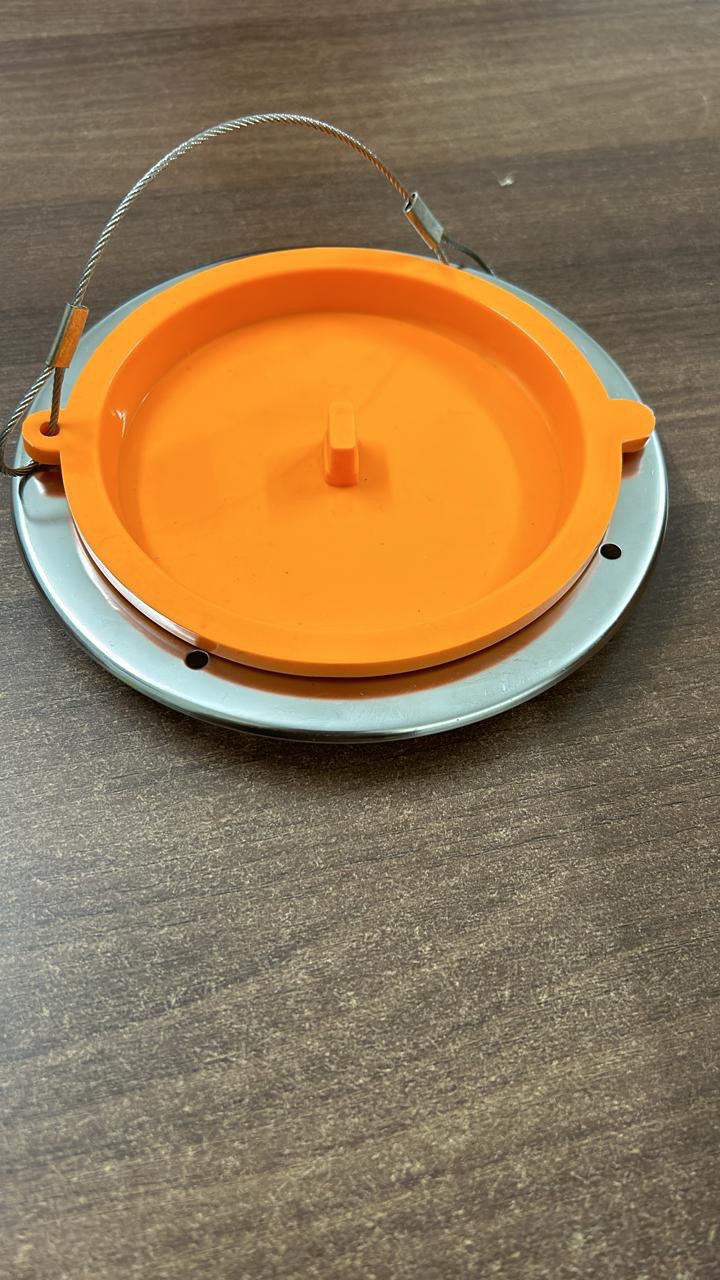
Silicone Inspection Plug with SS Flange & Lanyard
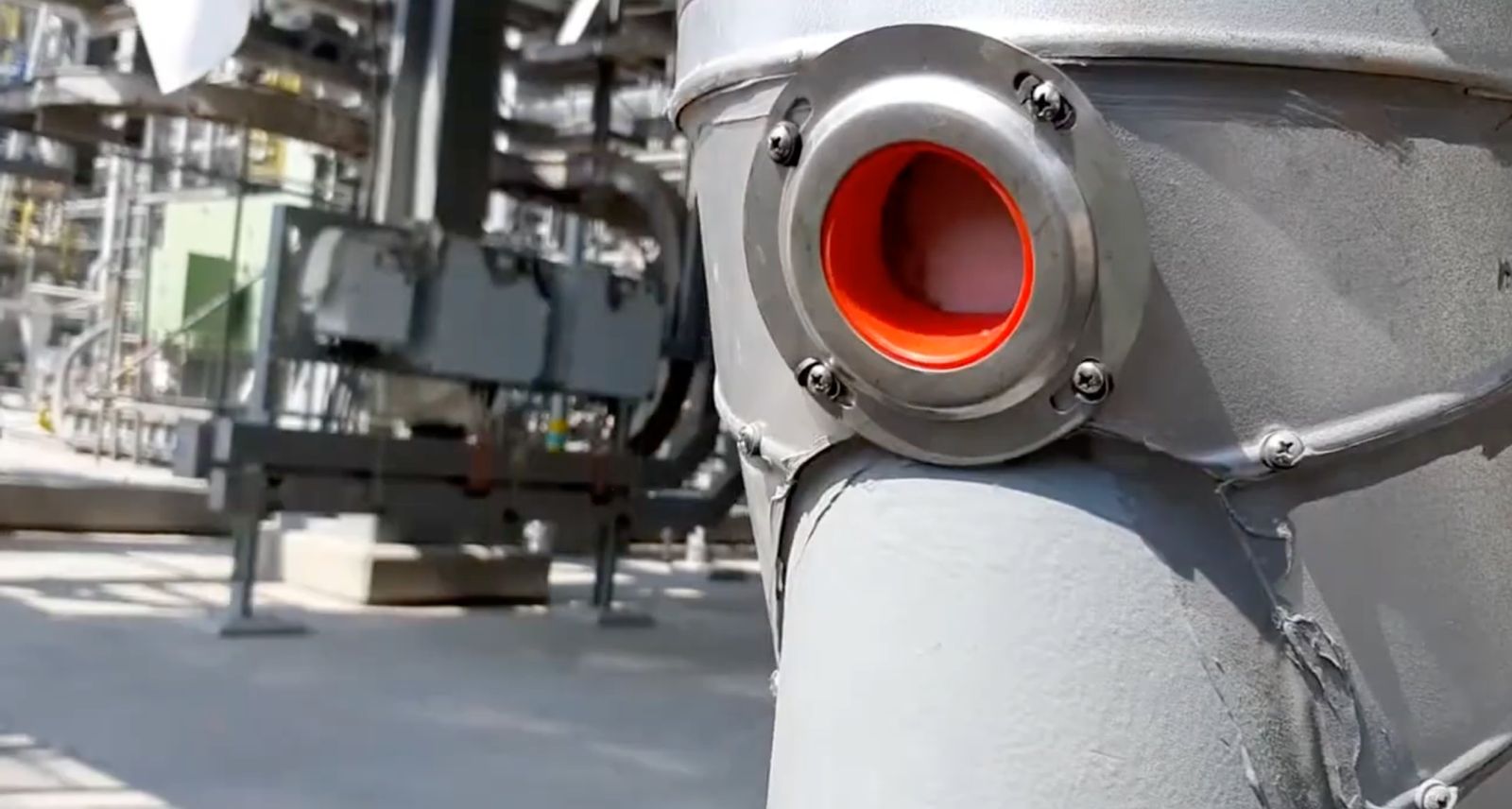
Inspection Plug Installed on Insulated Vessel Cladding
An insulation inspection plug is a small, permanently installed resealable port through the metal cladding of an insulated line or vessel. A stainless steel flange is fixed to the jacketing over a cut-out, and a moulded silicone plug presses into the flange bore to close it. When inspectors need to check the pipe beneath — ultrasonic wall-thickness readings, moisture checks, visual examination — they simply pull the plug (it stays tethered on its stainless steel lanyard), take the reading and press the plug back in. The insulation system is never cut, patched or resealed with mastic, and the same datum point can be re-measured year after year.
An industrial-grade silicone plug (red as standard) seating into a SS304 or SS316 stainless steel flange with integrated fixing holes, retained by a stainless steel lanyard. The plug is moulded with a convex bottom that keeps long-term radial sealing pressure against the flange side wall, compensating for any shrinkage from aging — a permanent airtight and watertight seal. Sizes 1″, 2″, 3″, 4″ and 5″; operating temperature -50°C to 600°C (-58°F to 932°F).
A moulded silicone sleeve set into the cladding closed by a stainless steel plug cap, supplied with or without handle, lanyard and locking ring (all in SS304 or SS316 to match). No special tools, O-rings, transition gaskets or contoured flanges are required — easy to remove and reuse. Sizes 1.5″, 2.0″, 2.5″, 3.0/3.5″ and 5″ (38, 50, 64, 76 and 127 mm).
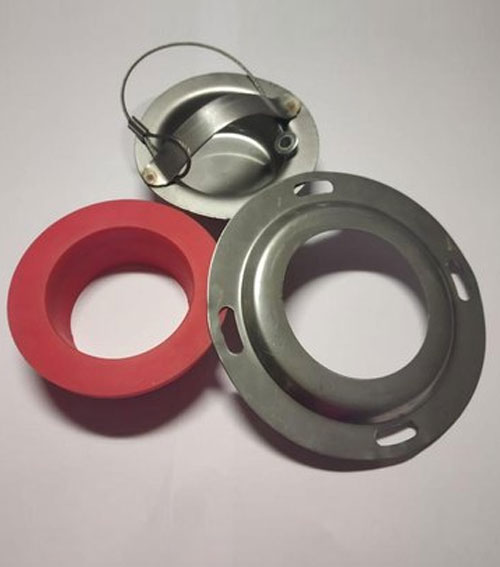
Model 2 Components: Silicone Sleeve, SS Locking Ring & Cap
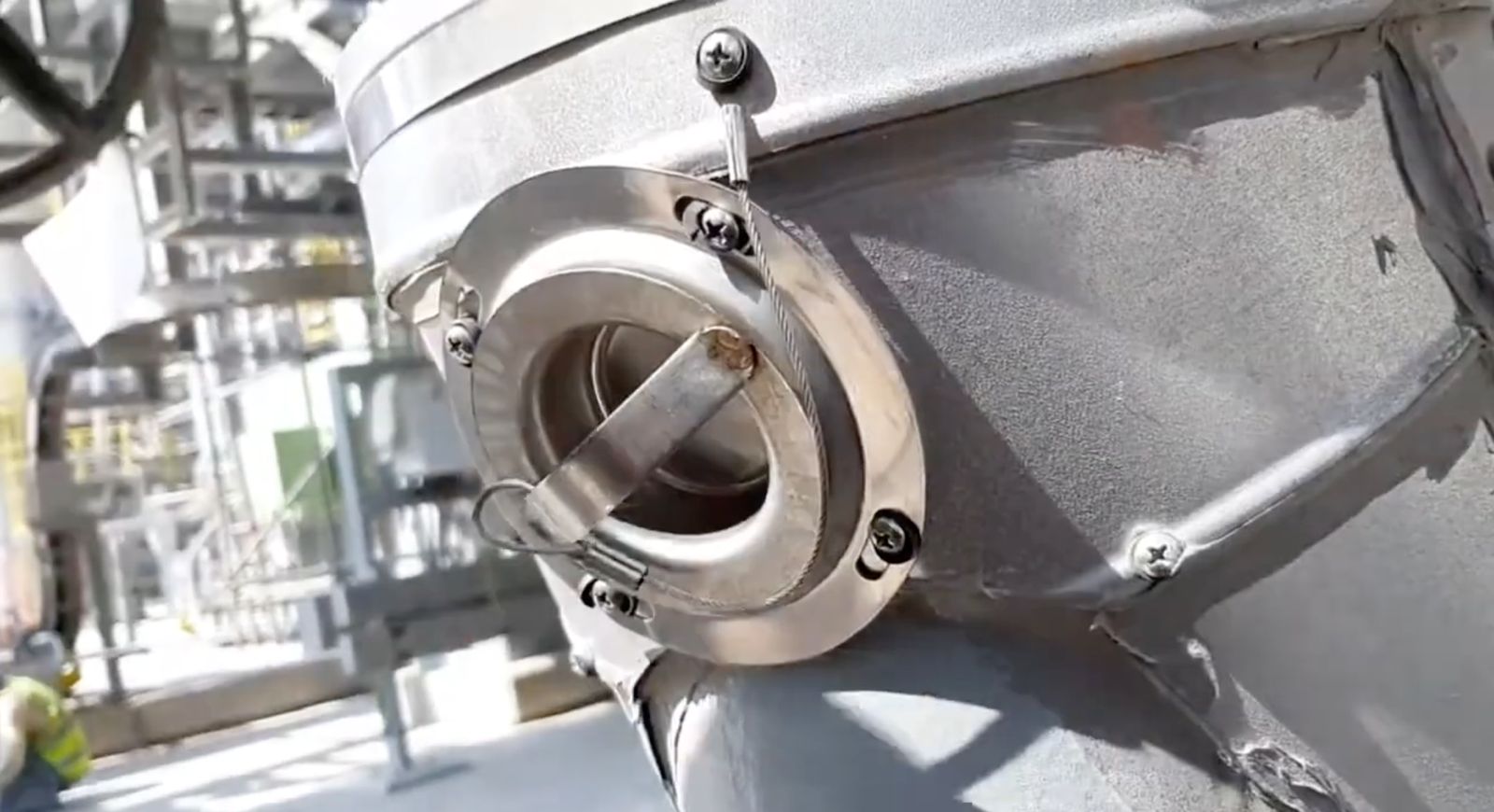
Model 2 Installed: SS Cap with Handle on Vessel Cladding
Many inspection plugs on the market use EPDM sleeves. Tesco moulds the sealing element in industrial-grade silicone because it is superior to EPDM in every property that matters on hot, outdoor insulation cladding:
| Property | Tesco Silicone Plug | Typical EPDM Plug |
|---|---|---|
| Continuous service temperature | -50°C to 600°C (model 1); sleeve grades to +400°C | Roughly -40°C to 120–150°C only |
| Behaviour at hot-cladding temperature | Stays elastic, keeps sealing force | Hardens, cracks, takes permanent compression set |
| UV / ozone / weathering (outdoor racks) | Outstanding — silicone is inherently UV and ozone immune | Good when new, degrades with prolonged sun exposure |
| Fire resistance | Excellent — self-extinguishing behaviour | Inferior, burns more readily |
| Reuse life (pull out / press in cycles) | Years of repeated resealing without loss of fit | Seal force drops as the elastomer ages and stiffens |
| Low-temperature flexibility | Flexible to -50°C and below | Stiffens significantly in deep cold |
All metal parts — flange, plug cap, handle, locking ring and lanyard — are manufactured in SS304 or SS316 stainless steel (ASTM A240) on both models. SS304 suits most plant environments; SS316, with 2–3% molybdenum, is recommended for coastal, offshore and chloride-laden atmospheres where pitting resistance is needed. Aluminium metal parts can also be supplied against specific enquiry. A typical certified SS304 (ASTM A240) heat analysis from our production:
| Element | Carbon | Manganese | Silicon | Sulphur | Phosphorus | Chromium | Nickel |
|---|---|---|---|---|---|---|---|
| SS304 (ASTM A240), % | 0.041 | 1.09 | 0.51 | 0.007 | 0.001 | 18.92 | 8.31 |
Typical properties of the moulded silicone sealing element (sleeve / plug), tested to ASTM methods:
| Property | Condition | Test Method | Unit | Typical Value |
|---|---|---|---|---|
| Hardness | @23°C / 5 sec | ASTM D 2240 | Shore A | 47 |
| Specific Gravity | @23°C | ASTM D 792 | – | 1.05 |
| Mould Shrinkage | After 24 hrs | ASTM D 955 | % | 1.45 |
| Tensile Strength @ Break | 500 mm/min, flow direction | ASTM D 412 | kg/cm² | 30 |
| Elongation @ Break | 500 mm/min, flow direction | ASTM D 412 | % | 525 |
| 100% Modulus | flow direction | ASTM D 412 | kg/cm² | 20 |
| Tear Strength | 500 mm/min | ASTM D 624 | kg/cm | 15 |
| Compression Set | @70°C / 22 hrs | ASTM D 395 ‘B’ | % | 35 |
The sealing element is colour-coded by temperature class — all colours share about 1400 psi (98 kg/cm²) tensile strength with excellent chemical, ozone, water, weathering, UV and fire resistance:
| Colour | Grey | Red | Blue |
|---|---|---|---|
| Temperature range (°C) | -100 to +300 | -100 to +400 | -100 to +400 |
| Temperature range (°F) | -100 to +600 | -100 to +600 | -100 to +600 |
| Tensile strength | 1400 psi (98 kg/cm²) | 1400 psi (98 kg/cm²) | 1400 psi (98 kg/cm²) |
| Chemical resistance | Excellent | Excellent | Excellent |
| Ozone & water resistance | Outstanding | Excellent | Excellent |
| Weathering resistance | Outstanding | Excellent | Excellent |
| UV & fire resistance | Excellent | Excellent | Excellent |
| Model | Available Sizes | Configuration Options | Operating Temperature |
|---|---|---|---|
| Silicone Plug with SS Flange & Lanyard | 1″, 2″, 3″, 4″, 5″ | SS304 or SS316 flange with integrated holes · SS lanyard | -50°C to 600°C (-58°F to 932°F) |
| Metal-Cap Plug with Silicone Sleeve | 1.5″, 2.0″, 2.5″, 3.0/3.5″, 5″ (38, 50, 64, 76, 127 mm) | With or without handle, lanyard & locking ring · SS304 / SS316 (aluminium on request) | Grey -100 to +300°C · Red / Blue -100 to +400°C |
Custom sizes and plug colours can be produced against specific enquiry.
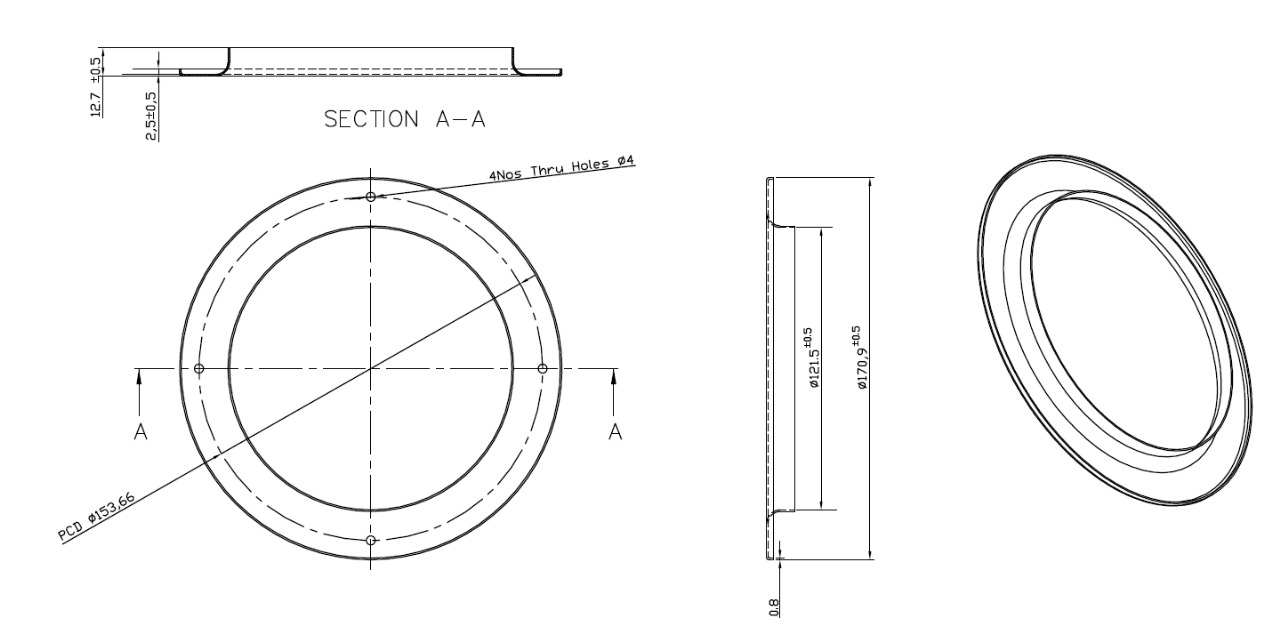
Typical 5″ Flange: 170.9 mm OD · 121.5 mm Bore · PCD 153.66 mm · 4 × Ø4 Holes
| Typical 5″ SS Flange | |
|---|---|
| Outside diameter | 170.9 ±0.5 mm |
| Bore diameter | 121.5 ±0.5 mm |
| Fixing holes | 4 × Ø4 mm thru |
| Hole PCD | 153.66 mm |
| Overall height | 12.7 ±0.5 mm |
| Collar height | 2.5 ±0.5 mm |
| Sheet thickness | 0.8 mm |
Insulation inspection plugs are installed on insulated piping, vessels, columns, heat exchangers and storage tanks across:
| Industry | Typical Use |
|---|---|
| Refineries & petrochemicals | CUI inspection programs on hot insulated lines, columns and exchangers; UT thickness monitoring points |
| Power plants | Steam and feedwater line cladding access; insulation moisture checks |
| Tank farms & terminals | Shell and roof insulation inspection ports on insulated storage tanks |
| Fertiliser, chemical & LNG | Hot and cold insulated service; cryogenic-compatible silicone to -50°C |
| Offshore & coastal plants | SS316 flange and lanyard for chloride atmospheres; dropped-object-safe tethered plugs |
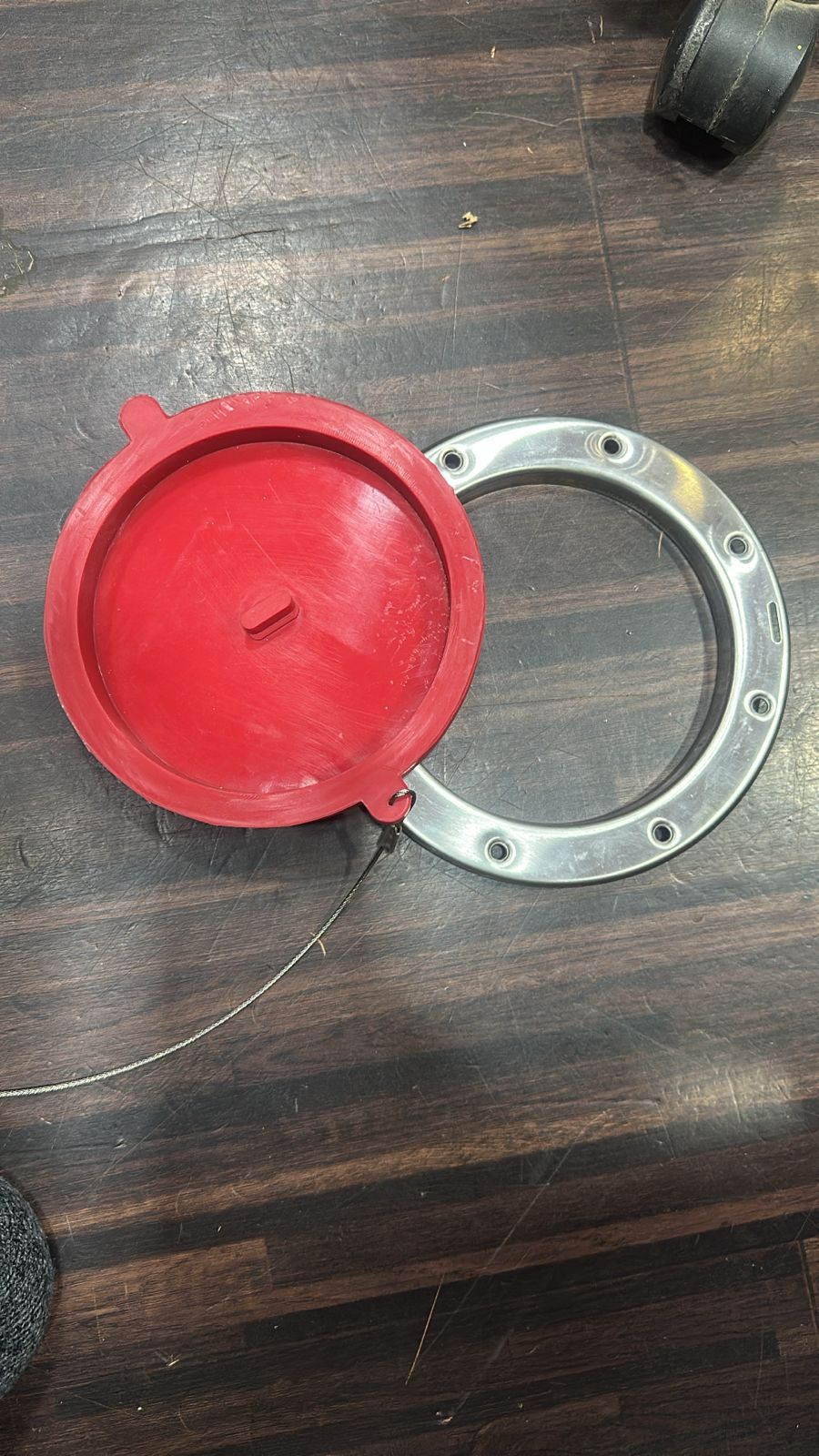
Red Silicone Plug (Convex Sealing Base) & SS Flange
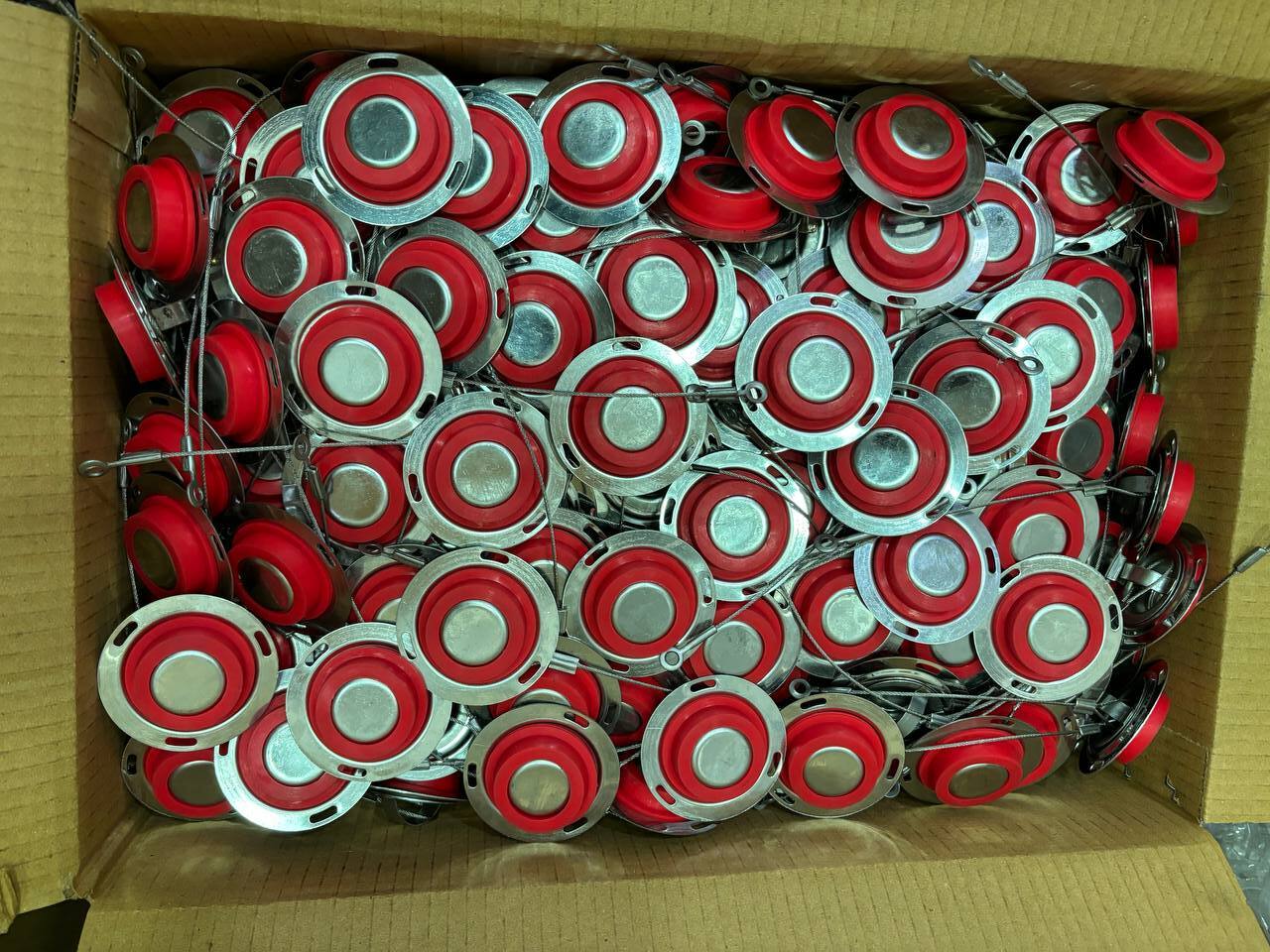
Ready Stock — Inspection Plugs with SS Flange & Lanyard
Pull the plug, take the UT reading, press it back — no cutting, patching or mastic-sealing of jacketing, and the same datum point is re-measured every round for true corrosion-rate trending.
Industrial-grade silicone — superior to EPDM — stays elastic from -50°C to 600°C, shrugging off UV, ozone, weather and heat that harden ordinary elastomer plugs into leak paths.
The convex plug base keeps permanent radial pressure on the flange bore wall, compensating for aging shrinkage, so rain and washdown water never reach the insulation.
Flange, cap, handle, locking ring and lanyard all in SS304 or SS316 — no rusting carbon-steel hardware staining the cladding; SS316 for coastal and offshore chloride service.
No O-rings, transition gaskets, contoured flanges or sealants to stock or replace — installation needs only a hole saw and self-tapping screws or rivets.
The stainless steel lanyard keeps every plug attached to its flange on pipe racks, columns and tank roofs, eliminating dropped-object hazards and lost plugs.
Installing an insulation inspection plug takes only a few minutes per point with ordinary hand tools — no sealants, O-rings or transition gaskets. Watch our installation video below, then follow the same six steps shown in it:
What is an insulation inspection plug?
A reusable sealed port fitted into the metal cladding of insulated piping, vessels or tanks. Inspectors remove a small silicone plug, take ultrasonic thickness readings or visually check the pipe surface for corrosion under insulation (CUI), and reseal the opening in seconds — without cutting and patching the insulation jacketing each time. It consists of a stainless steel flange fixed to the cladding and a removable silicone plug retained by a stainless steel lanyard.
What is CUI and how do inspection plugs help?
CUI — corrosion under insulation — is hidden external corrosion of pipe and vessel walls beneath thermal insulation, caused by trapped moisture. It is one of the costliest integrity problems in refineries and power plants because it stays invisible until insulation is stripped. Permanently installed inspection plugs create fixed monitoring points where inspectors can repeatedly measure wall thickness and check for moisture at the same location, making CUI inspection programs faster, cheaper and non-destructive to the insulation system.
What models does Tesco Steel & Engineering offer?
Two models. Model 1 is a silicone inspection plug with flange and lanyard: an industrial-grade silicone plug with a convex bottom that seals airtight and watertight into a SS304 or SS316 stainless steel flange with integrated fixing holes, retained by a stainless steel lanyard, in sizes 1″, 2″, 3″, 4″ and 5″. Model 2 is a metal-cap inspection plug: a silicone sleeve with a stainless steel plug cap, available with or without handle, lanyard and locking ring, in sizes 1.5″ to 5″ (38–127 mm). Both models are made in SS304 and SS316 grades.
Why does Tesco use silicone instead of EPDM?
Silicone is superior to EPDM for this duty. It retains elasticity and sealing force from -50°C up to 600°C, while EPDM is generally limited to about 120–150°C and hardens, cracks and takes a permanent compression set well below typical hot-insulation surface temperatures. Silicone also offers outstanding UV, ozone and weathering resistance for outdoor cladding, better fire resistance, and a far longer resealing life — the plug stays soft and keeps sealing after years of removal and refitting.
What temperature range can the plugs handle?
The silicone plug with SS flange is rated for continuous service from -50°C to 600°C (-58°F to 932°F). The silicone sleeve of the metal-cap model is colour-coded: grey covers -100 to +300°C and red and blue cover -100 to +400°C, all with about 1400 psi (98 kg/cm²) tensile strength and excellent chemical, ozone, weathering, UV and fire resistance.
What flange and cap materials are available?
Both models are manufactured with SS304 and SS316 stainless steel metal parts — flange, cap, handle, locking ring and lanyard. SS304 (ASTM A240, ~18.9% Cr, ~8.3% Ni) suits most plant environments; SS316, with 2–3% molybdenum, is recommended for coastal, offshore and chloride-laden atmospheres. Aluminium parts can also be supplied on request.
What sizes are available?
The silicone plug with SS flange and lanyard comes in 1″, 2″, 3″, 4″ and 5″. The metal-cap inspection plug comes in 1.5″, 2.0″, 2.5″, 3.0/3.5″ and 5″ (38, 50, 64, 76 and 127 mm), with or without handle, lanyard and locking ring. Custom sizes and colours are available against enquiry.
How is an inspection plug installed?
Cut a hole matching the plug size through the cladding and insulation at the chosen point, fix the stainless steel flange to the jacketing through its integrated holes with self-tapping screws or rivets, and press the silicone plug into the flange bore. No special tools, O-rings, transition gaskets, contoured flanges or sealants are required — the joint is immediately airtight and watertight.
Can the plugs be removed and reused?
Yes — that is the core purpose. The plug pulls out by hand for each inspection and presses back in to restore the seal, hundreds of times over its life, because silicone does not harden or take a permanent set the way EPDM does. The lanyard keeps the plug attached so it cannot be dropped or lost at height, and the optional locking ring on the metal-cap model secures the cap in high-vibration locations.
Is the seal really airtight and watertight?
Yes. The plug is moulded with a convex (domed) bottom that maintains long-term radial sealing pressure against the side wall of the flange bore, compensating for any shrinkage from aging. This keeps rainwater, washdown water and humid air out of the insulation — critical, because a leaking inspection port would itself become a CUI initiation site.
What is the stainless steel lanyard for?
The lanyard permanently tethers the removable plug or cap to the flange. During inspection rounds on pipe racks, columns and tank roofs it prevents dropped-object hazards and lost plugs, so the port is always resealed with its own correctly sized plug. Lanyards are supplied in stainless steel to match the SS304 or SS316 flange.
Are certificates and customisation available?
Yes. Stainless steel parts are produced from certified ASTM A240 SS304 / SS316 material with mill test certificates on request, and Tesco Steel & Engineering is an ISO 9001:2015 certified manufacturer and exporter based in Mumbai, India. Custom plug colours (grey, red, blue and others), custom sizes, aluminium metal parts and configurations with or without handle, lanyard and locking ring are available against enquiry.