

Tesco Steel & Engineering manufactures ceramic fiber blanket fixing studs — the flat metal anchors that weld to a furnace, kiln or boiler casing and hold the ceramic fibre blanket lining firmly in place. Our standard size is 15 mm wide × 85 mm long × 3 mm thick, but we make fixing studs to any dimension, slot pattern or bend you need. Supplied in heat-resistant grades — SS 304/309/310/321, Inconel 600/601 and Hastelloy X — and across our full materials range to match your furnace temperature and atmosphere. ISO 9001:2015 certified. Made in India.
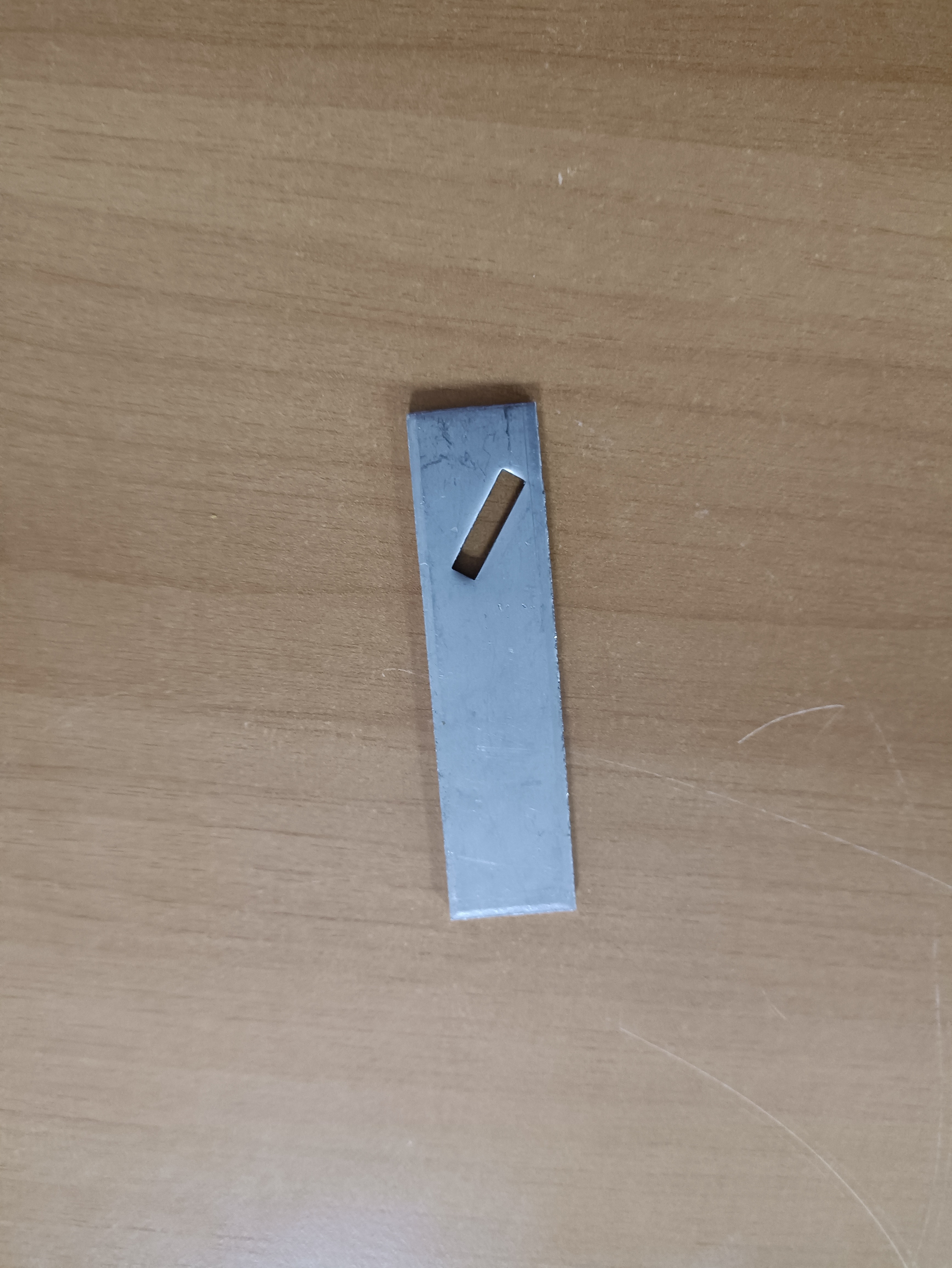
Ceramic Fiber Blanket Fixing Stud — 15 × 85 × 3 mm
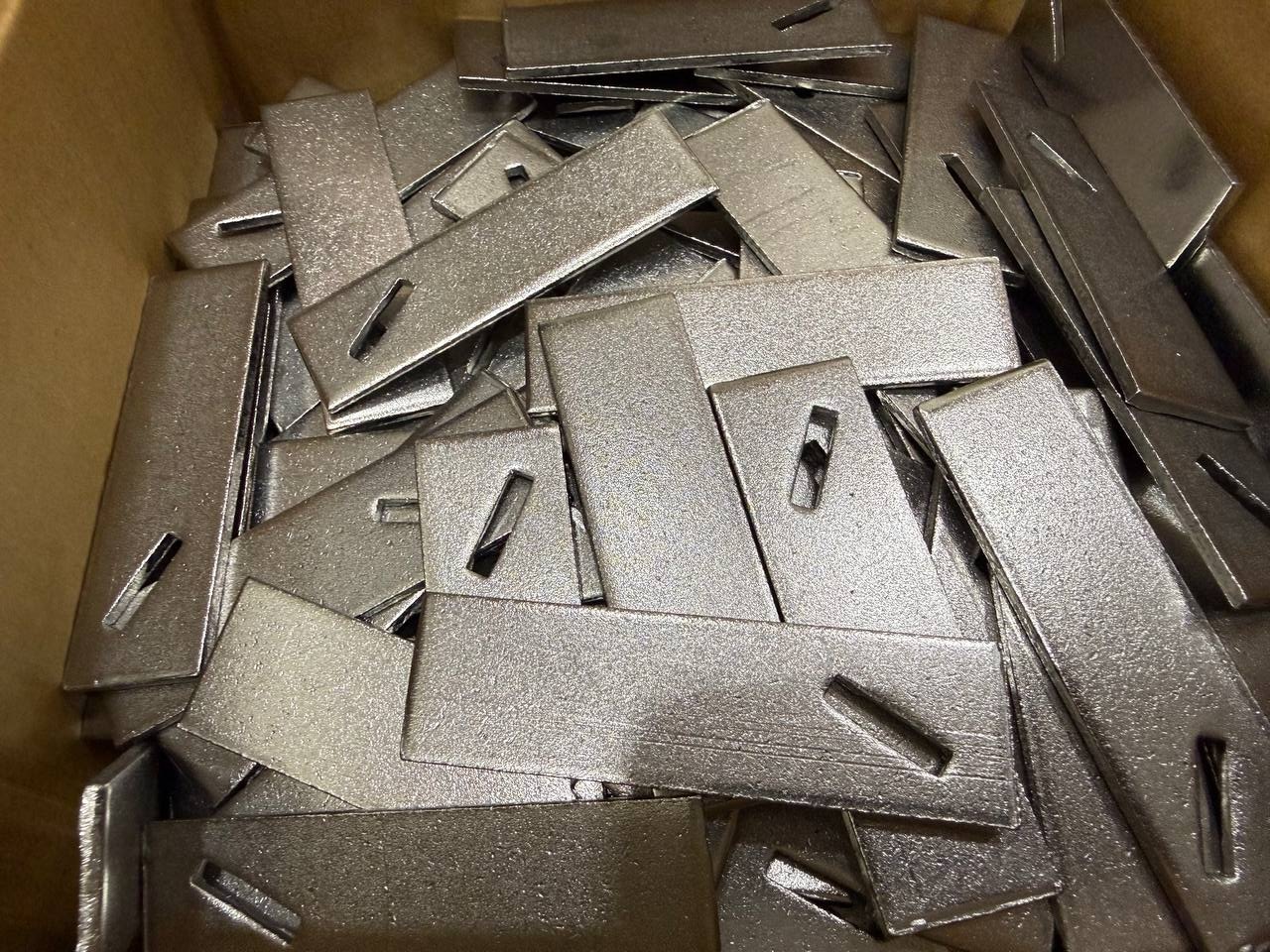
Slotted Fixing Studs in Bulk — Press-Blanked & Punched
When a furnace or kiln is lined with ceramic fibre blanket, something has to hold that soft, lightweight insulation against the hot wall — and that job belongs to the fixing stud. It is a flat strip of heat-resistant metal, welded to the steel casing, with a punched angled slot near one end. The blanket is layered or impaled over the anchors and a retaining clip, strip or lock-wire is engaged through the slot, so the lining cannot sag off the roof, lift away from the wall or pull loose under the constant heat-up and cool-down of the furnace. Different plants call the same part a blanket anchor, insulation fixing clip, fibre fixing stud or fixing lance — they all describe this welded retainer.
Our stock fixing stud is dimensioned for common blanket linings:
| Parameter | Standard Stud |
|---|---|
| Width (W) | 15.00 mm |
| Length (L) | 85 mm |
| Thickness | 3 mm |
| Slot | Single angled keyhole slot (punched) |
| Fixing method | Welded (stud-weld or fillet weld) to casing |
The fixing stud lives in the hot zone, so the grade is chosen first and foremost for its temperature resistance. In practice the heat-resistant stainless steels and nickel alloys do most of this work — but we make the studs across the entire materials range we carry, so the anchor can be matched to the casing-side temperature, a corrosive atmosphere or a special duty. The table below lists the grades we supply against each family:
| Material Family | Grades We Supply | Typical Use for Fixing Studs |
|---|---|---|
| Stainless Steel | AISI 304, 309, 310, 314, 316, 321, 410, 430 | The standard choice — 309 & 310 for high furnace temperatures, 304/321 for moderate heat |
| Inconel | Inconel 600, 601, 625 | Highest-temperature and cyclic furnace service; 601 is the classic blanket-anchor nickel grade |
| Hastelloy | Hastelloy X, C276, C22 | Severe heat with reducing / carburising or corrosive atmospheres |
| Alloy Steel (Chrome-Moly) | A182 F5, F11, F22, F91 | Elevated-temperature service where chrome-moly is specified |
| Carbon Steel | Low-carbon / mild steel | Cooler casing-side fixing and lower-temperature enclosures |
| LTCS (Low-Temp Carbon Steel) | A350 LF2, A333 Gr 6 | Cold-box and cryogenic insulation fixing |
| Monel | Monel 400, K500 | Corrosive / marine atmospheres |
| Titanium | Grade 2, Grade 5 | Aggressive chemical environments where titanium is required |
| Duplex & Super Duplex | 2205, 2507 | Corrosive moderate-temperature duties (not for high-heat zones) |
| Copper Nickel | 90/10 (C70600), 70/30 (C71500) | Seawater and marine atmospheres |
| Bimetal | Bimetallic / clad combinations | Where a dissimilar weld-base / hot-face combination is needed |
As a quick guide, the practical maximum service temperature drives the grade choice. Tell us the hot-face temperature and atmosphere and we will recommend the right one:
| Grade | Approx. Max Service Temp | Notes |
|---|---|---|
| AISI 304 / 321 / 316 | ~870–900°C | Moderate-temperature furnaces and back-up layers |
| AISI 309 | ~1000–1050°C | High-temperature general furnace service |
| AISI 310 | ~1100–1150°C | The workhorse heat-resistant anchor grade |
| Inconel 601 / 600 | ~1150–1250°C | Severe and cyclic heat; excellent oxidation resistance |
| Hastelloy X | ~1150°C+ | Severe heat with reducing / carburising atmospheres |
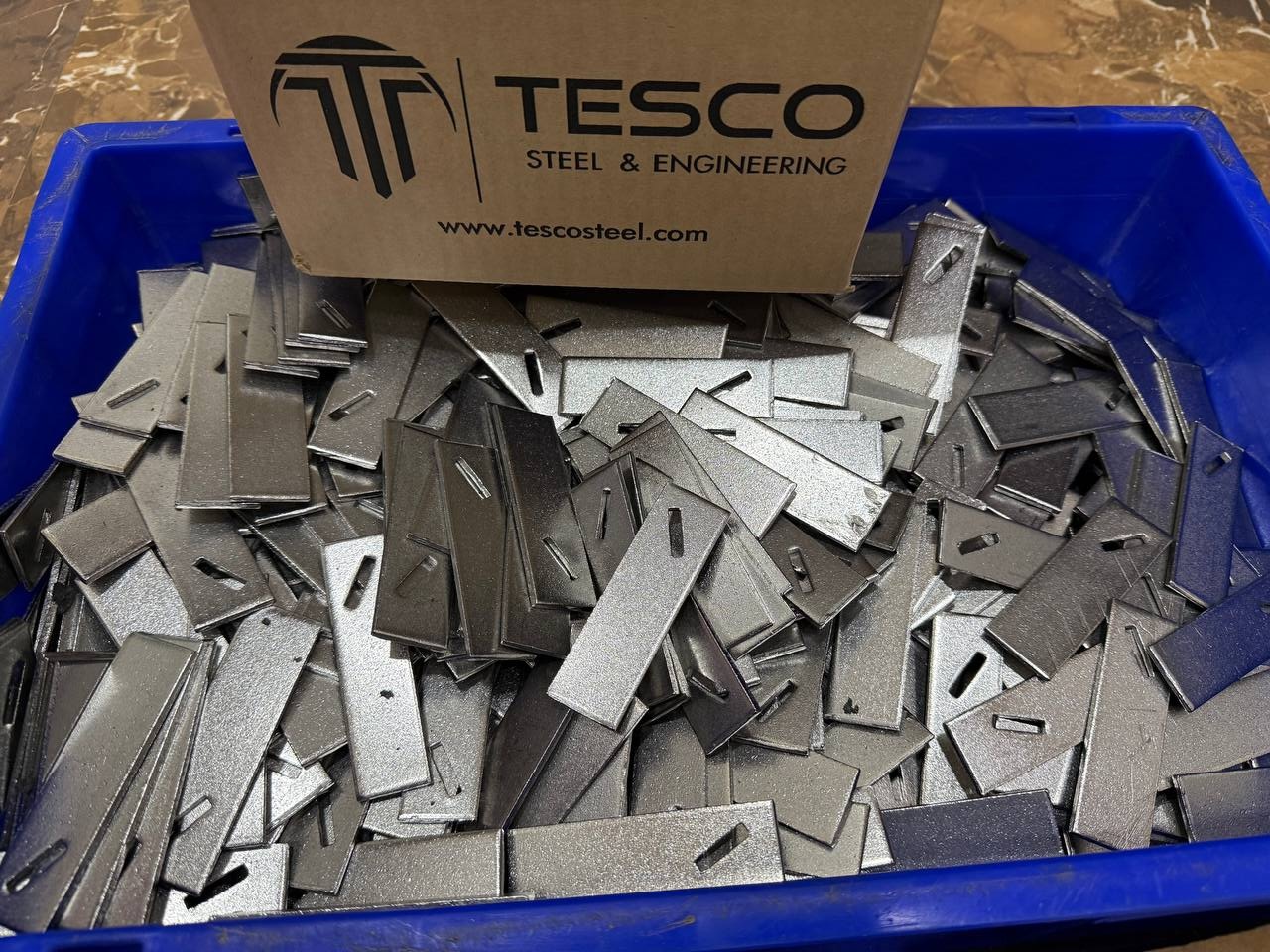
Bagged, Boxed & Export-Packed by Grade and Size
| Sector | Where Fixing Studs Are Used |
|---|---|
| Industrial furnaces & kilns | Holding ceramic fibre blanket and module linings on walls and roofs |
| Heat treatment & annealing | Reheating, forging, annealing and bell furnaces relined with fibre blanket |
| Refinery & petrochemical heaters | Fired-heater and reformer casings, ducting and stacks |
| Boilers & power plant | Boiler casings, penthouse and duct insulation retention |
| Steel & foundry | Ladle and tundish covers, soaking pits, holding furnaces |
| Cement, ceramics & incineration | Kiln hoods, preheaters and incinerator chambers |
The 15 × 85 × 3 mm standard is just a starting point — width, length, thickness, slot pattern and bends are all made to your drawing, in any quantity.
From SS 304 up to SS 310, Inconel 601 and Hastelloy X, the anchor is matched to the actual hot-face temperature and atmosphere, not supplied as one-material-fits-all.
Punched from certified heat-resistant strip on press tooling, so thousands of studs come out dimensionally identical with clean slots.
Made from certified material with EN 10204 3.1 mill test certificates and PMI verification on request.
High-volume capacity, bagged and boxed by grade and size, crated for export to plants worldwide.
We can also quote matching retaining washers, clips and lock-wire, so the fixing system ships complete.
What is a ceramic fiber blanket fixing stud?
A flat metal anchor welded to the steel casing of a furnace, kiln, boiler or heater to hold ceramic fibre blanket insulation against the wall. Also called a ceramic fibre blanket anchor, insulation fixing clip or fibre fixing stud, it has a punched angled slot that keys the blanket layer and lets a retaining strip, pin or lock-wire pass through, so the soft insulation cannot sag, lift or pull away in service.
What is your standard fixing stud size?
Our standard ceramic fibre blanket fixing stud is 15 mm wide × 85 mm long × 3 mm thick. This is only our most common stock size — we manufacture fixing studs in any width, length, thickness, slot position and bend a customer specifies. Send your drawing or a sample and we will make the anchor to match it exactly.
Can you make custom sizes?
Yes — custom dimensions are the norm. The 15 × 85 × 3 mm size is a starting point; we routinely make fixing studs longer or shorter for thicker or thinner blanket linings, wider or narrower, in different thicknesses, with single or multiple slots, and with bends or tabs for specific fixing methods. There is no tooling barrier — give us the dimensions and quantity and we will quote the exact part.
What materials and grades are they made in?
Heat-resistant grades are the usual choice: stainless steels AISI 304, 309, 310, 314, 316 and 321, and nickel alloys Inconel 600, 601, 625 and Hastelloy X / C276 for the highest temperatures. We also supply the full materials range — alloy (chrome-moly) steel, carbon steel, LTCS, Monel, titanium, duplex stainless and copper-nickel — for casing-side fixing, corrosive atmospheres or lower-temperature duties. The grade is chosen to suit the operating temperature and atmosphere.
Which grade should I use for high-temperature furnaces?
As a guide: AISI 304 suits up to ~870°C, AISI 321/316 to ~870–900°C, AISI 309 to ~1000–1050°C, and AISI 310 to ~1100–1150°C — 309 and 310 are the workhorses for blanket anchors. For the most severe temperatures and cyclic or carburising / reducing atmospheres, Inconel 601, Inconel 600 and Hastelloy X take the anchor reliably above 1150°C. We will recommend a grade once we know the hot-face temperature and atmosphere.
How is a fixing stud installed?
The stud is stud-welded or fillet-welded to the steel casing on a regular grid to suit the blanket weight and temperature. The ceramic fibre blanket is then impaled or layered over the anchors, and a retaining clip, washer, strip or lock-wire is engaged through the slot to lock the insulation in place. Spacing is tighter on roofs and at higher temperatures. No special tools beyond a stud welder or MIG/TIG set are needed.
Where are ceramic fibre blanket fixing studs used?
Wherever ceramic fibre blanket or module insulation lines a hot enclosure: industrial furnaces and kilns, heat-treatment and annealing furnaces, reheating and forging furnaces, petrochemical and refinery fired heaters, boilers, ladle and tundish covers, incinerators and high-temperature ducting. Any plant relining with ceramic fibre blanket needs fixing studs to hold the lining.
What is the difference between a fixing stud, an anchor and a fixing washer?
These terms overlap in the furnace trade. The fixing stud or anchor is the welded part that attaches to the casing and carries the blanket — this product. A fixing washer, cup-lock or speed clip is the smaller piece that pushes onto a pin or through the slot to retain the blanket on the anchor. We supply the fixing studs / anchors and can quote matching retaining washers and clips on request.
How are the fixing studs manufactured?
They are press-blanked and punched from heat-resistant steel strip or sheet to the required width, length and slot pattern, deburred, and bent or formed if the design calls for it. Because they are made on press tooling from flat strip, both the standard 15 × 85 × 3 mm part and fully custom profiles can be produced quickly and in large volumes with consistent dimensions.
Do you supply material test certificates?
Yes. Fixing studs are made from certified material and supplied with EN 10204 Type 3.1 mill test certificates confirming grade and chemistry, with positive material identification (PMI / XRF) available on request. Tesco Steel & Engineering is an ISO 9001:2015 certified manufacturer and exporter from Mumbai, India, shipping fixing studs worldwide.
What is the minimum order quantity and packaging?
Fixing studs are small, high-volume items normally ordered by the thousand, but we are flexible on quantity for trial or relining batches. They are supplied bagged and boxed by grade and size, palletised or crated for export, with each package tagged with the grade, size and quantity for clean site receipt.
Will the fixing stud survive thermal cycling without failing?
When the right grade is selected for the hot-face temperature, yes. The reason 309, 310 and Inconel 601 are specified for blanket anchors is their resistance to oxidation, scaling and creep under repeated heat-up and cool-down. Using an under-rated grade is the usual cause of anchor failure and lining collapse, which is why we match the grade to the actual furnace temperature and atmosphere rather than supplying a single material for everything.