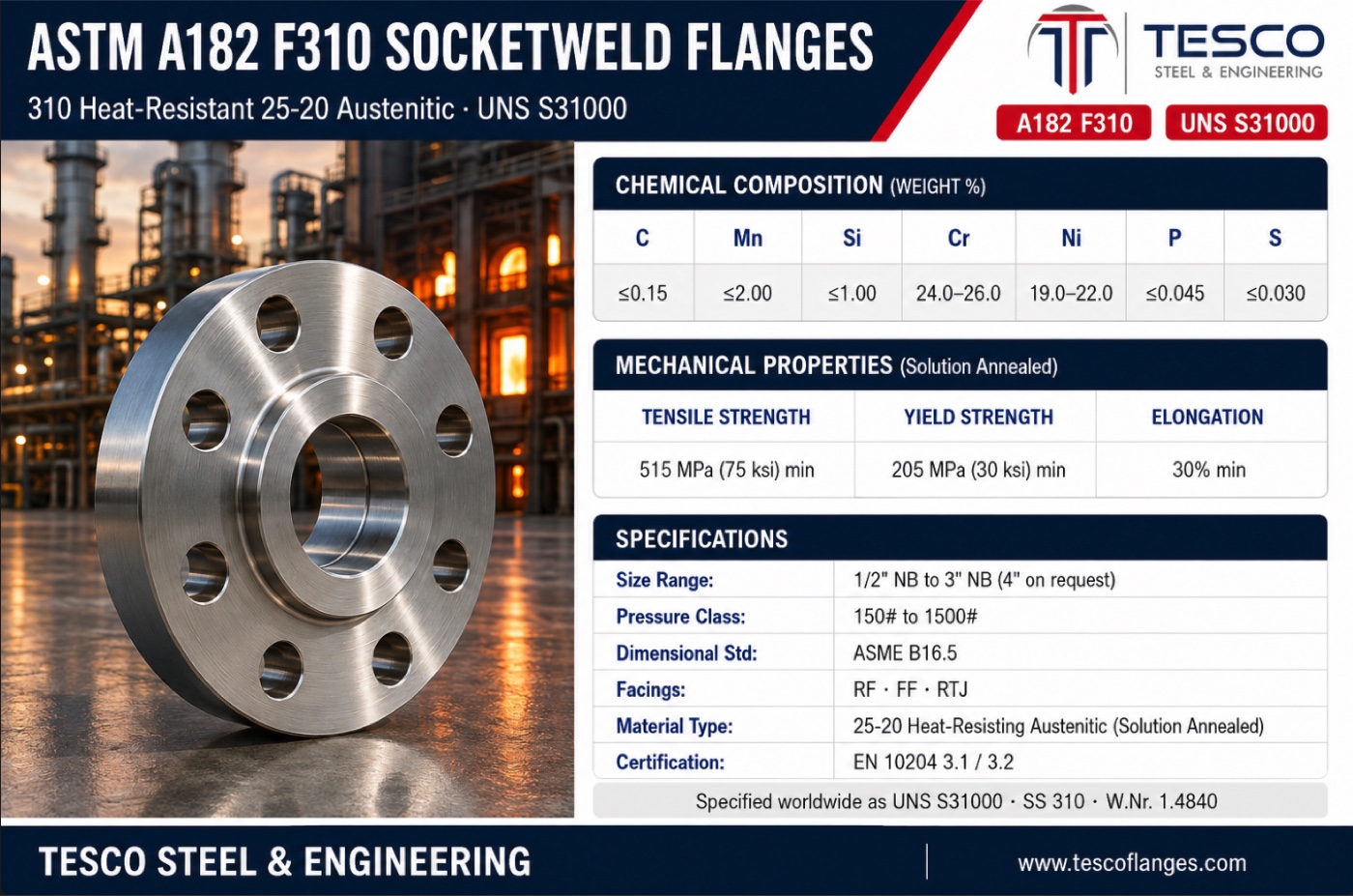
Tesco Steel & Engineering manufactures ASTM A182 F310 socketweld flanges — the 25-20 heat-resisting austenitic: 24–26% Cr, 19–22% Ni, UNS S31000, W.Nr. 1.4840 — to ASME B16.5 from ½″ to 3″ NB in Classes 150–1500. Where the rest of the stainless ladder climbs against chlorides, 310 climbs against fire: double-dose chromium grows an oxide scale that stays adherent and keeps rebuilding to roughly 1100 °C in dry air, and the high nickel holds tough austenite through every heating cycle — the fire brigade of the stainless family. The honest split is stated below: the metal's ceiling and the flanged joint's B16.5 envelope are two different numbers, and this page keeps them separate. The creep thread runs through F304H; the stabilised grades F321/F347 hold the middle band; chlorides belong to 316L and the duplex family. Facings: SWRF, SWFF, SWRTJ. Every lot with EN 10204 3.1/3.2 MTC. ISO 9001:2015, made in Mumbai, India — exported to 50+ countries.
A182 F310 · UNS S31000 · W.Nr. 1.484025-20 — The Heat GradeScale-Stable to ~1100 °C Dry AirCarburisation-Resistant NiNo Preheat — No PWHT515 / 205 MPa · 30% ElongationASME B16.5 ½″–3″ · Class 150–1500EN 10204 3.1 / 3.2 · ISO 9001:2015
ASTM A182 F310 Socketweld Flanges — Specifications at a Glance
What is an ASTM A182 F310 Socketweld Flange?
The heat grade in the small-bore pattern. A forged 25-20 austenitic flange (ASTM A182 F310 / UNS S31000) with a machined socket: pipe seated square by geometry, one external fillet weld — no preheat, no PWHT — through-bore matched to the pipe schedule. Cr 24–26% grows a scale that stays put and keeps rebuilding to roughly 1100 °C in dry air; Ni 19–22% holds tough austenite through cycling and resists carburisation. Tensile ≥515 MPa, yield ≥205 MPa, elongation ≥30%, solution annealed. Sized by ASME B16.5 at ½″–3″ NB, Classes 150–1500 — the joint governed by the B16.5 tables, the metal by the fire. EN 10204 3.1 on every lot.
Both ladders start at 304, and they climb different mountains: a spec that names 310 for cooling water, or 316 for a furnace flue, has confused them — our quotation will say so politely.
What 25-20 Buys
Scale That Stays Put
Every stainless wears a chromium-oxide skin; at furnace heat the lean grades' skin cracks and spalls with each cycle. 25% chromium funds a denser, better-anchored scale and a deep reserve to rebuild it — useful oxidation resistance to ~1100 °C in dry air.
Austenite That Survives the Cycle
20% nickel holds the structure fully austenitic and tough through every heating-cooling cycle — and resists carburisation where hot carbon-bearing gas turns leaner grades brittle.
Strength Where It Counts
Room-temperature numbers match the family; the point is what survives at 800–1000 °C — where 310 keeps working surface and useful strength while the general-purpose grades scale away.
Honesty About the Joint
The metal's ceiling is not the joint's ceiling: B16.5 rates austenitic flanges to 816 °C at steeply falling pressures, and the gasket governs before that — we quote the flange and advise the sealing system together.
ASTM A182 F310 Chemical Composition (UNS S31000)
Element
C
Mn
Si
Cr
Ni
P
S
Weight %
≤0.15
≤2.00
≤1.00
24.0–26.0
19.0–22.0
≤0.045
≤0.030
Read it against the ladder: chromium a full third higher than 304's, nickel more than double — a double dose of film-former and structure-holder, bought for heat. The 0.15% carbon ceiling is higher than the general-purpose grades' because at service temperature carbon is creep strength; 310S (≤0.08%) and 310H (floored) move the same dial — see the FAQ. No molybdenum: its benefits vanish at these temperatures. PMI on every piece.
Mechanical Properties (Solution Annealed)
Property
ASTM A182 F310 Requirement
Tensile Strength
≥ 515 MPa (75 ksi)
Yield Strength (0.2%)
≥ 205 MPa (30 ksi) — the standard austenitic room-temperature certificate; the grade's case is made at 800–1000 °C
Elongation
≥ 30%
Condition
Solution annealed — sigma phase (see the FAQ) re-dissolves with a fresh anneal
Temperature Span
Metal: scale-stable to ~1100 °C dry air. Joint: B16.5 austenitic tables to 816 °C, gasket and bolting governing in practice
Watch Items
Sigma embrittlement on long 650–870 °C dwell; reducing sulphidizing atmospheres attack high nickel — both FAQs below
One Socket, Three Facings — and the Hot-Gasket Note
At heat the gasket governs the joint before the flange does — state the joint temperature on the enquiry and sealing guidance comes with the quotation.
ASTM A182 F310 Socketweld Flange Specifications
ASTM A182 F310 Socketweld Flanges are available in the following specifications:
Material Grade
ASTM A182 F310 (UNS S31000), W.Nr. 1.4840 — 310S and 310H by name to order, matched to the adjoining pipe
Heat Treatment
Solution annealed — furnace records certified
Size
1/2"NB to 3"NB per ASME B16.5; 4″ and larger to order; EN 1092-1 patterns to order
Class
150#, 300#, 600#, 900#, 1500# (900# shares 1500# dimensions in most sizes) — hot-gas volume lives in 150/300
Facings
Raised Face (SWRF), Flat Face (SWFF), Ring Type Joint (SWRTJ) with groove per B16.20
Bore
Socket bore to pipe OD; through-bore matched to pipe schedule (Sch 10S/40S dominate)
Welding
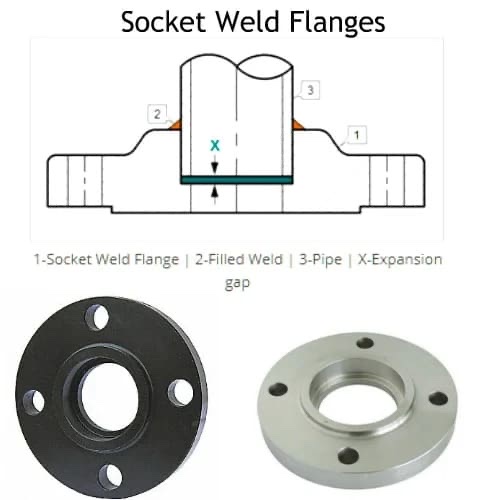
Single external fillet with 1/16″ expansion gap; 310-type filler, slim beads (fully austenitic deposit — hot-cracking discipline); no preheat, no PWHT
Service Span
Furnace-adjacent, flue and hot-gas small bore; metal scale-stable to ~1100 °C dry air, joint per B16.5 tables; atmosphere honesty — see the notes
Surface Finish
Pickled or natural machined — stainless-dedicated handling, no carbon-steel contact
Testing
Tension & chemistry per heat; PMI on every piece; socket depth and bore gauged
Certification
EN 10204 3.1 with solution-anneal records (standard) / 3.2 witnessed
Specification Notes — Getting 310 Sockets Right
Four honest notes.Two ceilings, not one: the metal holds its scale to ~1100 °C, but B16.5 rates the bolted joint only to 816 °C at steeply falling pressures, and the gasket system governs before that — state both temperatures. Reducing sulphur attacks high nickel: sooty, fuel-rich, sulphur-bearing atmospheres form a nickel-sulphide eutectic — oxidising sulphur service is fine, reducing is not; name the atmosphere on the enquiry. Sigma embrittles on long 650–870 °C dwell: expect reduced ambient toughness in long-served components; a fresh solution anneal restores it. And 310 is not a chloride grade: no molybdenum, austenitic SCC unchanged — cooling water and marine duty belong to 316L and the duplex family, however impressive 25% chromium sounds.
How Our A182 F310 Socketweld Flanges Are Manufactured
1
Forging — cut billet of the spectro-verified S31000 heat is hot-forged into the flange blank with full heat traceability and segregated stainless handling.
2
Solution annealing — the anneal-and-quench that sets the clean, sigma-free austenitic structure; furnace charts retained against the heat number.
3
Machining — faces, OD and drilling to ASME B16.5 on stainless-dedicated stations — the 25-20 work-hardens vigorously: sharp tooling, positive feeds; socket counterbore and depth gauged piece by piece, through-bore matched to the ordered schedule.
4
Facing — RF serrations, flat face or RTJ groove per B16.20.
5
Testing & marking — tension and chemistry per heat; PMI on every piece; laser-marked with grade, size, class, schedule and heat number.
6
Certification & packing — EN 10204 3.1 MTC with solution-anneal records (3.2 witnessed on request); packed sea-worthy with no carbon-steel contact.
Where ASTM A182 F310 Socketweld Flanges Are Used
On the hot side of the plant, wherever small bore meets fire: furnace and heater-adjacent piping, flue-gas and breeching connections, thermal oxidiser and incinerator trim, burner, pilot and igniter lines, purge and instrument taps off hot ducting, heat-treatment furnace services, combustion-air preheaters, and kiln-adjacent utilities in cement and ceramics plants. Production below:
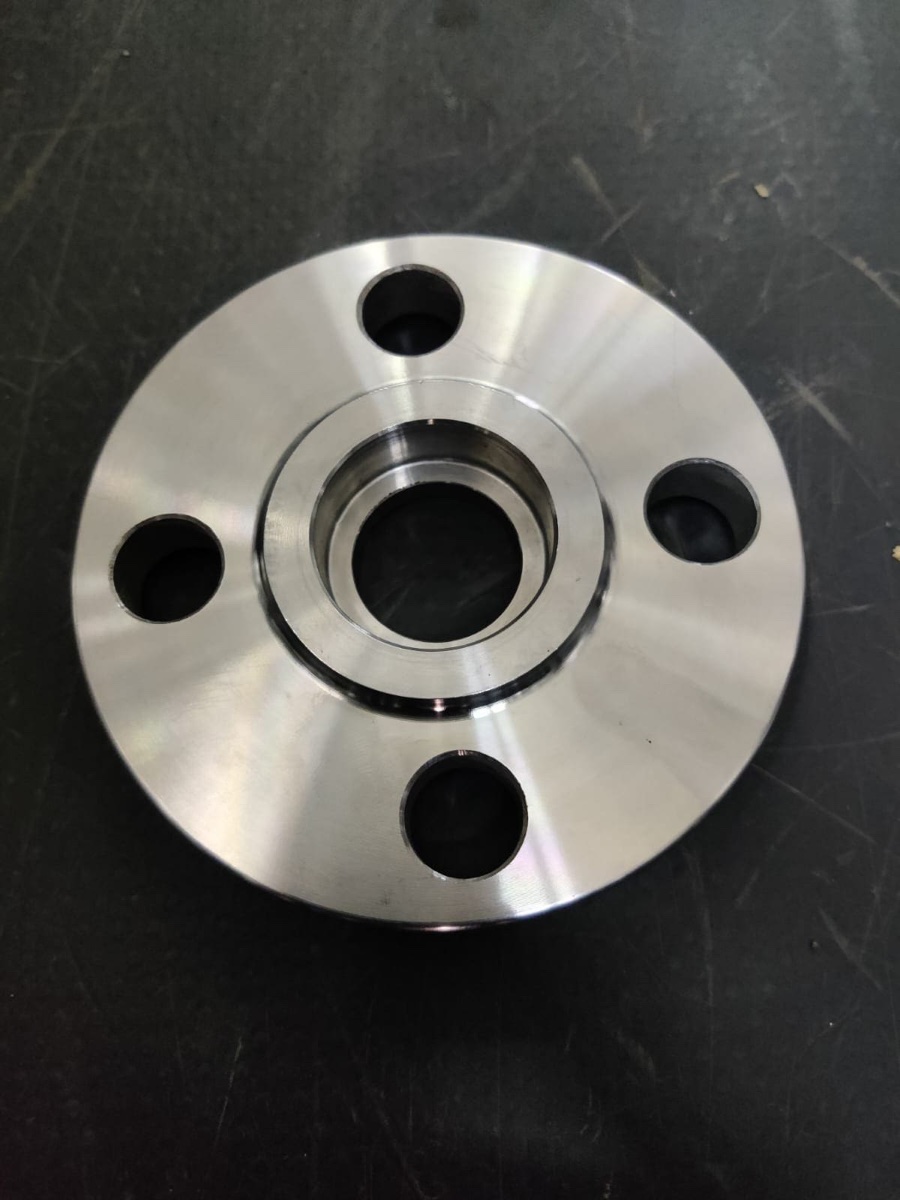
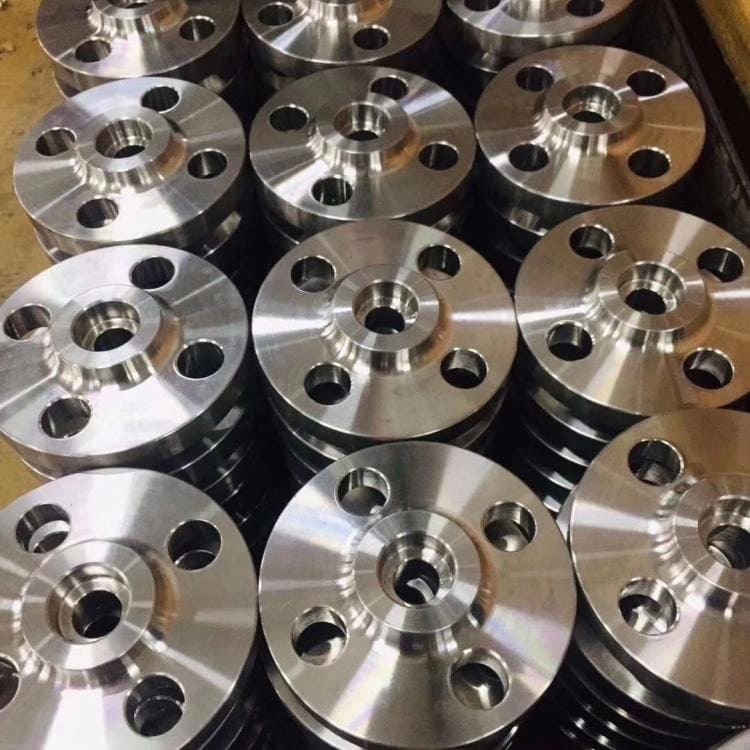
Stainless Socket Weld Flange — Socket Bore Visible, Our WorksSocket Weld Flanges — Machined Batch, Ready for DispatchThe Socket Weld Joint — Note the Expansion Gap (X)
A182 F310 Socketweld Flange Dimensions
Socket weld flange dimensions are class-governed per ASME B16.5 — identical across material grades (pressure-temperature ratings follow the austenitic group and derate steeply with temperature). Full charts:
How to Specify & Order an A182 F310 Socketweld Flange
Six elements — plus the two temperatures and the atmosphere:
1
Size & standard — e.g. 1″ NB ASME B16.5, or DN25 EN 1092-1 to order.
2
Pressure class & facing — 150#–1500#; SWRF (the default), SWFF or SWRTJ — with the joint temperature, so gasket guidance comes with the quote.
3
Pipe schedule — Sch 10S, 40S or 80S: the through-bore is matched to the pipe ID.
4
Grade line as written — F310, 310S or 310H, matched to the adjoining pipe specification; the service atmosphere (oxidising/reducing, sulphur/clean) if you want metallurgy guidance.
5
Certification — EN 10204 3.1 with solution-anneal records (our standard) / 3.2 witnessed, PMI as applicable.
An ASTM A182 F310 socketweld flange is a forged heat-resistant austenitic stainless steel flange — the 25-20 recipe: 24-26% chromium, 19-22% nickel, UNS S31000, W.Nr. 1.4840 — whose back carries a machined socket: the pipe end seats inside, self-aligned square to the face, and is secured with a single external fillet weld. Where the rest of the stainless ladder climbs against chlorides, 310 climbs against fire: the doubled chromium grows an oxide scale that stays adherent and keeps rebuilding at temperatures that flake the ordinary grades bare, and the high nickel holds the tough austenitic structure through every heating cycle. Dimensioned to ASME B16.5 for ½" to 3" NB in Classes 150 to 1500 — the fire brigade of the stainless family, in the small-bore pattern.
What does the 25-20 recipe actually buy?
Scale that stays put. Every stainless protects itself with a chromium-oxide skin, but at furnace temperatures that skin thickens, cracks and spalls with each thermal cycle — and every spall throws away chromium the metal must replace from within. An 18-8 grade runs out of replacement chromium quickly above roughly 850°C; 310's 25% chromium funds a denser, slower-growing, better-anchored scale and a far deeper reserve to rebuild it, holding useful oxidation resistance in dry air to roughly 1100°C. The 20% nickel does the structural half: it keeps the alloy fully austenitic and tough through cycling, and resists carburisation in hot carbon-bearing atmospheres. Neither element is aimed at chlorides — this is the family's heat specialist, not its chloride specialist.
What is the chemical composition of ASTM A182 F310 (UNS S31000)?
Carbon ≤0.15%, manganese ≤2.00%, silicon ≤1.00%, chromium 24.0-26.0%, nickel 19.0-22.0%, phosphorus ≤0.045%, sulphur ≤0.030%. Read it against the ladder: chromium runs a full third higher than 304's 18-20%, nickel more than double 304's 8-11% — a double dose of both film-former and structure-holder, bought for heat rather than corrosion. Note the carbon ceiling of 0.15%: higher than the general-purpose grades, because at service temperatures carbon is creep strength — and note what is absent: no molybdenum, whose benefits vanish at these temperatures. Chemistry is verified per heat and travels on the EN 10204 3.1 MTC.
What are the mechanical properties of A182 F310 socketweld flanges?
In the solution-annealed condition A182 requires tensile strength 515 MPa (75 ksi) minimum, yield strength 205 MPa (30 ksi) minimum and elongation 30% minimum — the standard austenitic room-temperature certificate. But room temperature is not where this grade earns its keep: the numbers that matter are the ones that survive at 800 or 1000°C, where 310 retains useful strength and, more importantly, keeps its surface. Two honest notes: B16.5 pressure-temperature ratings — not the metal's oxidation ceiling — govern what a flanged joint may carry, and long dwell in the 650-870°C band embrittles any 25% chromium austenitic via sigma phase, which has its own FAQ below.
How hot can an F310 socketweld flange actually go?
Two different numbers, honestly separated. The metal: 310 holds a stable, rebuildable oxide scale in dry air to roughly 1100°C continuous — among the highest of any standard stainless. The joint: a flanged connection is a gasketed, bolted assembly, and ASME B16.5 rates austenitic flanges only to 816°C (1500°F), with allowable pressures falling steeply long before that and gasket and bolting selection governing in practice. So a 310 socket weld flange is not a promise of 1100°C bolted joints — it is the flange you use on hot-gas and furnace-adjacent small bore where the pipe demands 310 and the joint itself sits within B16.5's envelope: breechings, flue connections, burner and pilot lines, purge and instrument taps off hot ducting. State both the line temperature and the joint temperature on the enquiry; they are often usefully different.
F310, F310S or F310H — which do I need?
The familiar carbon logic, transposed to the heat grade. Plain F310 carries carbon to 0.15% — strength at temperature, the general-purpose form. 310S trims carbon to 0.08% for better weldability and less sensitization in fabrication-heavy work — the common plate-and-pipe form, worth matching when your piping is 310S. 310H sets a floor for certified creep strength where a design code demands it. For socket weld flanges the practical answer is usually plain F310 or 310S to match the adjoining pipe: state the exact grade line and the pipe specification on the enquiry, and the certificate will match the metal you are welding to. All three share the 25-20 identity; only the carbon dial moves.
F310 or the H-grades (304H/316H) — how do I choose for hot service?
Ask which enemy governs: creep or oxidation. The H-grades are creep-strength answers — carbon-floored 18-8 metallurgy that design codes carry with strong allowable stresses through the 525-800°C band, ideal for pressure parts in steam and refinery hot circuits where the atmosphere is manageable. 310 is the oxidation answer — its allowable-stress advantage over the H-grades is modest, but its surface survives where theirs scales away: above roughly 850°C in air, in cyclic heating, in flue and combustion atmospheres. The practical division: pressure-rated hot circuits inside code envelopes run H-grades; furnace-adjacent, hot-gas and atmosphere-exposed duty runs 310. Our F304H socketweld page carries the creep story; this page carries the fire story.
What is the sulphur caveat for 310?
High nickel has one enemy at heat: sulphur in reducing atmospheres. Where flue or process gas is sulphur-bearing and oxygen-starved, nickel forms a low-melting nickel-sulphide eutectic that attacks the grain boundaries — and a 20% nickel alloy offers that attack plenty of nickel. In oxidising sulphur-bearing gas, 310's chromium-rich scale protects it well; the danger is specifically the reducing case: sooty combustion, fuel-rich zones, gasifiers. The traditional answer there is a lower-nickel heat grade or an aluminised surface. State the atmosphere honestly on the enquiry — oxidising or reducing, sulphur or clean — and we will point at the metallurgy that survives it rather than simply selling the highest-alloyed flange on the shelf.
What is sigma phase — and does it threaten F310?
Sigma is a brittle chromium-rich intermetallic that any high-chromium austenitic precipitates during long dwell in the 650-870°C band — and with 25% chromium, 310 forms it faster than the leaner grades. The consequence is embrittlement at ambient: a component that served years at 750°C can lose most of its room-temperature toughness, which matters at shutdowns, during handling, under water-quench or impact. The honest engineering answers: design hot dwell either below or above the sigma band where possible; expect embrittlement in long-served components and handle accordingly; and remember sigma re-dissolves with a fresh solution anneal. Our flanges ship solution annealed with records — the service history after that belongs to the plant, and this note belongs in its file.
Is 310 good for chlorides too — it has the most chromium?
No — and the reasoning teaches the ladder's real logic. Pitting resistance leans hard on molybdenum, which 310 entirely lacks: for chloride duty its PREN sits near plain 316's despite the spectacular chromium, and as an austenitic it keeps the family's vulnerability to chloride stress corrosion cracking above roughly 60°C. Meanwhile every rupee spent on 310's nickel is wasted on a cooling-water problem. The chloride ladder is its own thread — 316L, then duplex, then super duplex — and the heat ladder is this page's thread; the two climb different mountains from the same 304 base camp. A specification that names 310 for a chloride service, or 316 for a furnace flue, has usually confused the mountains — our quotation will say so politely.
How is an F310 socketweld flange welded?
With austenitic ease and hot-service discipline. Geometry is standard: pipe bottomed in the socket, withdrawn 1/16" (1.6 mm) to leave the expansion gap, single external fillet with matching 310-type filler. No preheat, no PWHT; stainless housekeeping as always. The discipline points: moderate heat input and interpass — a fully austenitic 25-20 weld is hot-cracking-sensitive, so avoid excessive dilution and keep beads slim; and remember the joint will live at temperature, so weld quality that would pass at ambient must also survive cycling. Where the adjoining pipe is 310S, low-carbon 310S filler and matching base metal keep fabrication sensitization out of the picture. Our flanges arrive solution annealed with furnace records.
What facings are A182 F310 socketweld flanges made with?
All three, each with its own page on this site: raised face (SWRF) — the default — flat face (SWFF) for mating cast and lined equipment, and ring type joint (SWRTJ) for the rare high-pressure case. The hot-service note is the gasket, not the facing: elastomers and PTFE are long gone at these temperatures — flexible graphite serves to roughly 450-500°C, and beyond that the joint needs mica-graphite or vermiculite-based gaskets chosen for the actual joint temperature, with bolting alloy selected to match. State the joint temperature on the enquiry and we advise the sealing system alongside the flange. NPT-tapped variants are machined and certified at the works.
What sizes and pressure classes do F310 socketweld flanges come in?
ASME B16.5 standardises socket weld flanges from ½" to 3" NB in Classes 150, 300, 600, 900 and 1500 — Class 900 sharing Class 1500 dimensions in most small-bore sizes — with 4" and Class 2500 made to order. Heat-service small bore concentrates overwhelmingly in Classes 150 and 300: hot-gas systems run at modest pressures, and the class tables derate steeply with temperature anyway. Put the pipe schedule on the enquiry — Sch 10S and 40S dominate — and state the design temperature, since B16.5's austenitic pressure-temperature tables, not the metal's oxidation ceiling, set the joint's rating. Our quotations state the applicable rating per class.
What details are needed to get an accurate F310 socketweld flange quotation?
Six elements plus commercial terms: (1) size — ½" to 3" NB; (2) pressure class — 150 to 1500; (3) facing — SWRF, SWFF or SWRTJ, with the joint temperature so gasket guidance comes with the quote; (4) the pipe schedule — Sch 10S, 40S or 80S, so the through-bore matches the pipe ID; (5) the grade line as written — F310, 310S or 310H, matched to the adjoining pipe specification; (6) certification — EN 10204 3.1 with solution-anneal records (our standard) or 3.2 witnessed, PMI as applicable. Add the service atmosphere (oxidising or reducing, sulphur or clean) if you want metallurgy guidance with the price — and quantity and destination for delivery terms. Quotations normally within 24 hours.
Who manufactures ASTM A182 F310 socketweld flanges in India?
Tesco Steel & Engineering is an ISO 9001:2015 certified flange manufacturer based in Mumbai, India, producing ASTM A182 F310 socket weld flanges from ½" to 3" NB (larger to order) in Classes 150-1500 — each forged from certified S31000 heats, solution annealed with furnace records, machined on stainless-dedicated stations with gauged socket depth and schedule-matched bore, PMI-checked and laser-marked with grade, size, class, schedule and heat number. Supplied with EN 10204 3.1/3.2 certification — 310S and 310H by name to order — alongside the F304H heat thread, the F321/F347 stabilised grades and the full stainless socketweld range this series covers. Exported to more than 50 countries.