
Tesco Steel & Engineering manufactures ASTM A350 LF2 Class 1 LTCS flanges — the most widely used low-temperature carbon steel forging grade. LF2 is a carbon-manganese-silicon steel with controlled chemistry and a mandatory Charpy V-notch impact test at -50°F (-46°C); Class 1 is the standard normalized condition. It is the default LTCS flange material for low-temperature oil, gas and process piping. Available in weld neck, slip-on, blind, socket-weld, threaded, lap-joint, spectacle and orifice types to ASTM A350 / ASME B16.5. Class 150 to 2500, NPS 1/2″ to 24″, PN6 to PN400. ISO 9001:2015 certified. Made in India.
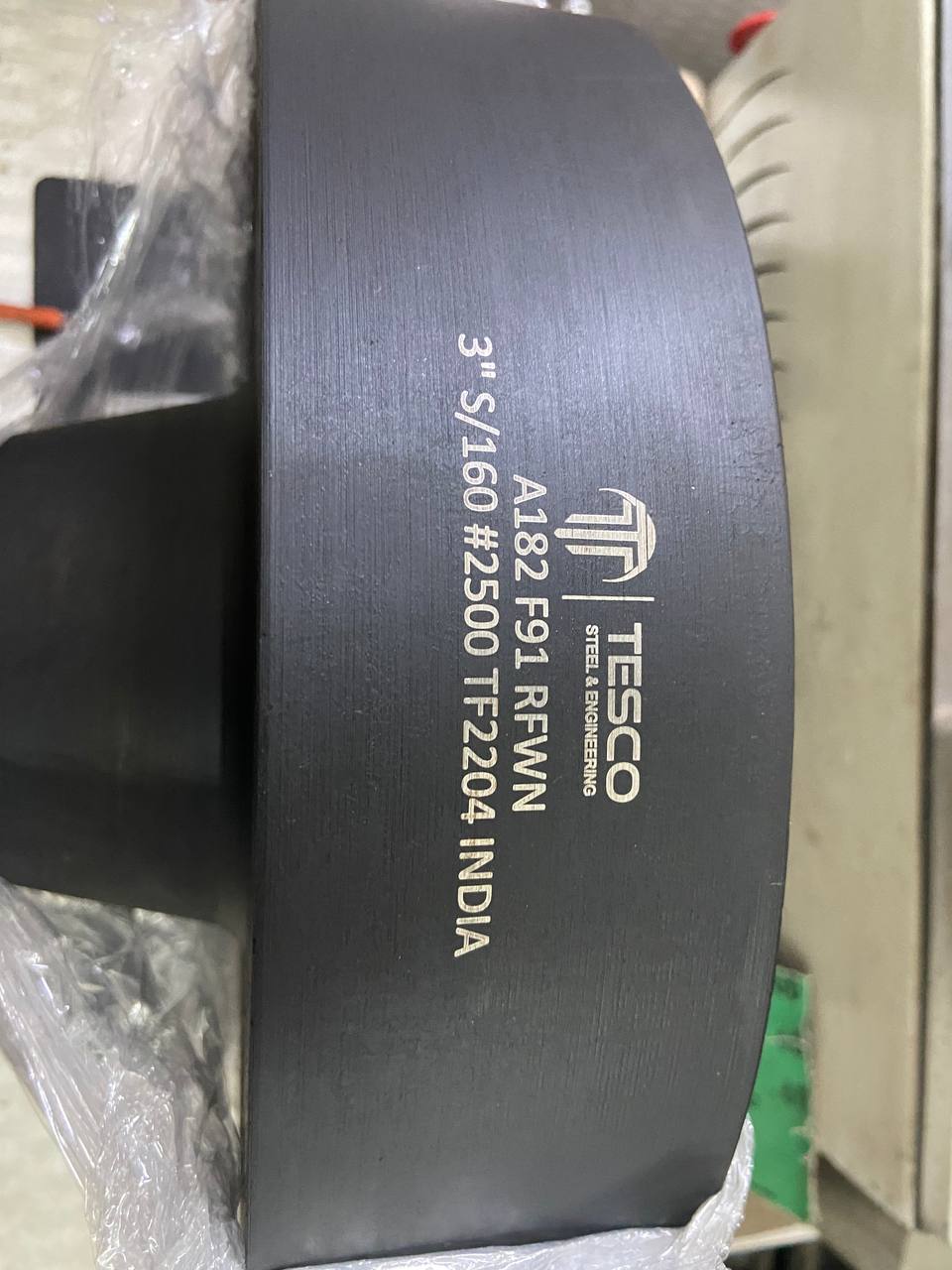
ASTM A350 LF2 Class 1 LTCS Flanges
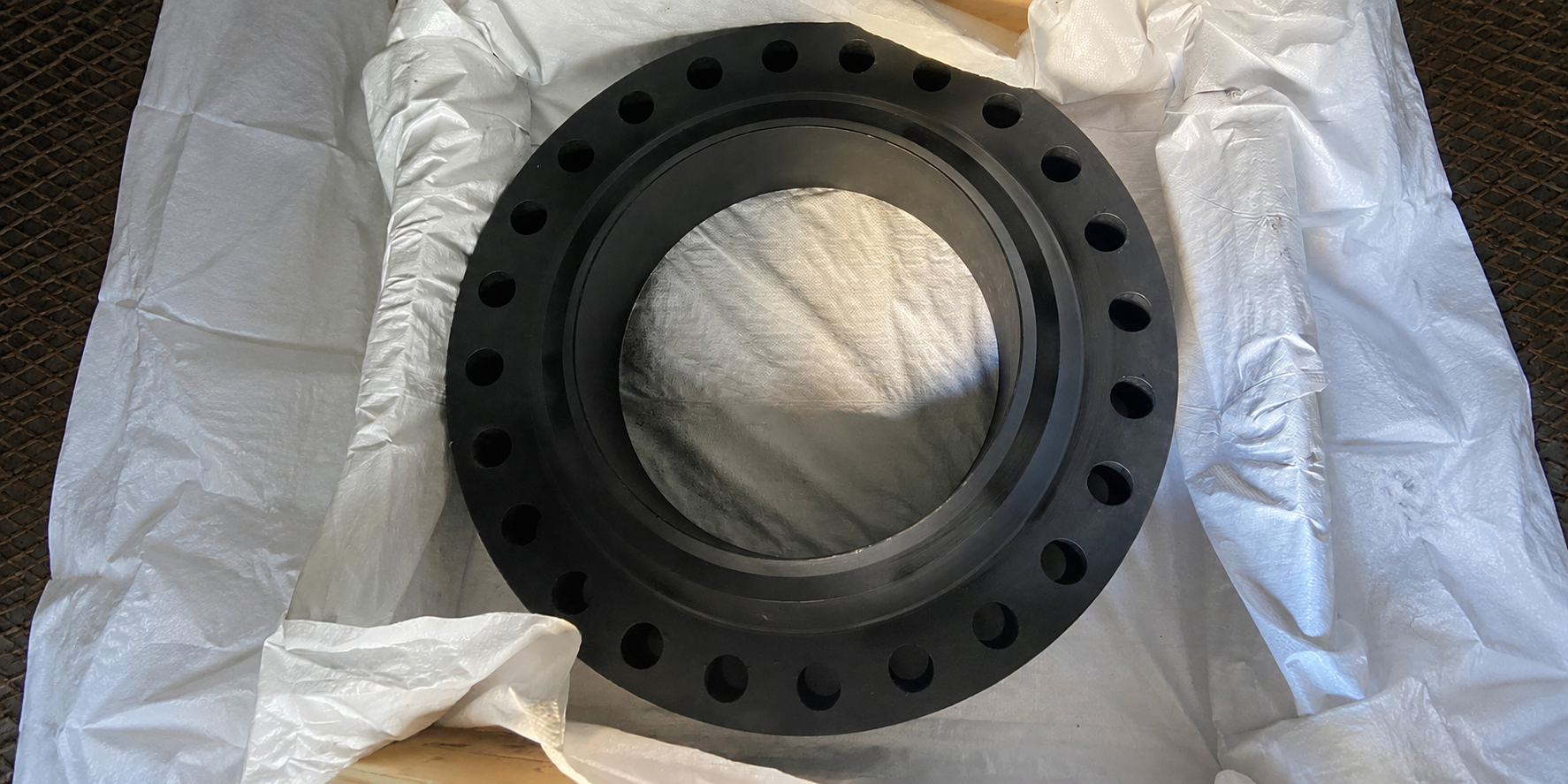
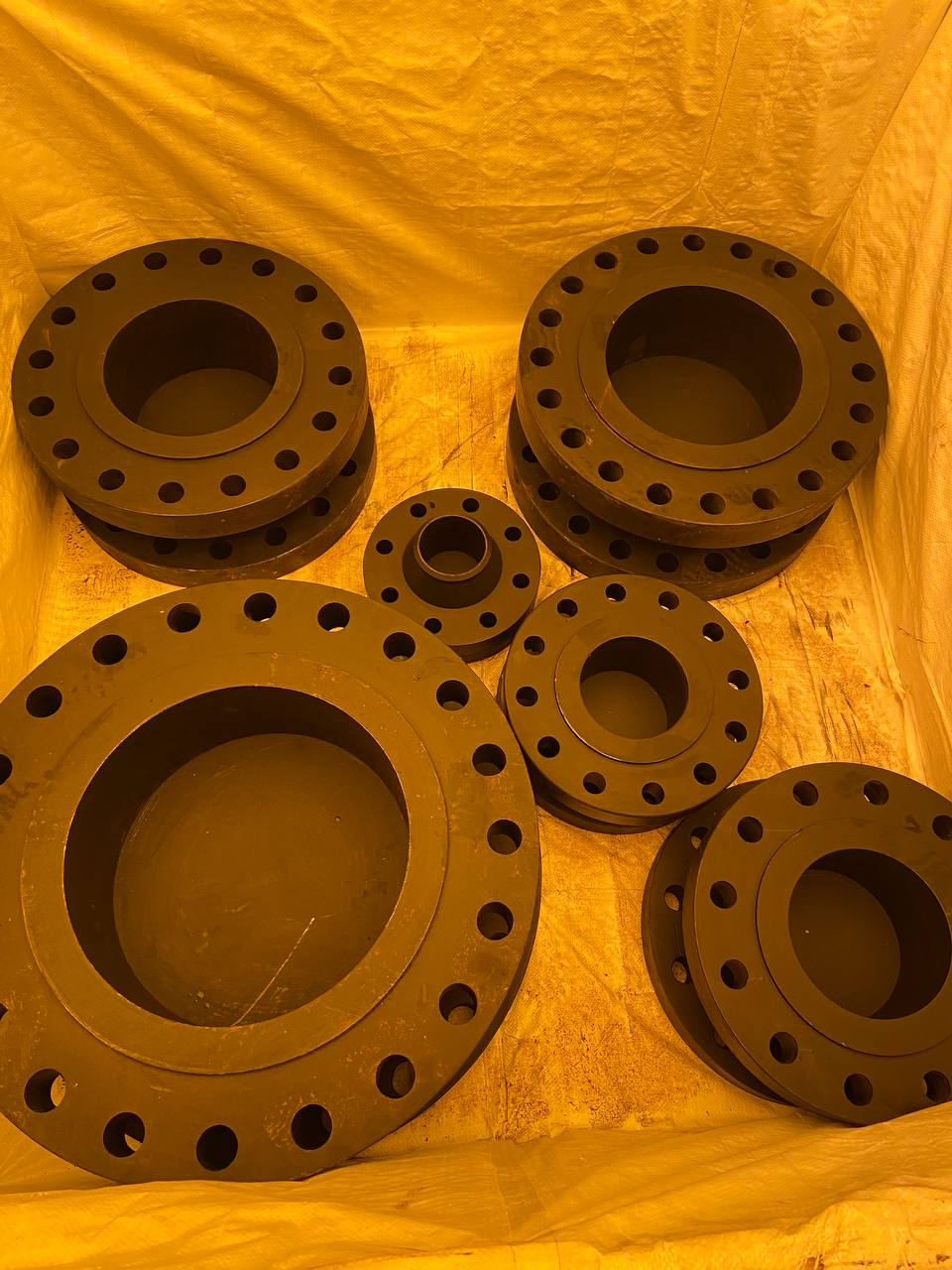
A350 LF2 Weld Neck & RTJ Flanges
Tesco Steel & Engineering manufactures A350 LF2 Class 1 flanges in all types from weld neck to orifice, Class 150 to 2500 — supplied normalized with EN 10204 3.1 / 3.2 certification, the impact-test record, and third-party inspection on request. Explore the wider LTCS flange range, the entry-level A350 LF1 flanges, the higher-requirement A350 LF2 Class 2 flanges and nickel-bearing A350 LF3 flanges, and the flange dimension charts.
| ASTM A350 LF2 Class 1 flanges are available in the following specifications: | |
|---|---|
| Material Grade | ASTM A350 / A350M Grade LF2, Class 1 (low-temperature carbon steel) |
| Alloy Type | Carbon-manganese-silicon steel (LTCS), no deliberate nickel |
| Impact Test | Charpy V-notch at -50°F (-46°C) |
| Heat Condition | Normalized (or normalized and tempered) — Class 1 |
| Size | 1/2″ NB to 24″ NB (DN 15 to DN 600); larger to ASME B16.47 |
| Class / Rating | 150#, 300#, 600#, 900#, 1500#, 2500# · 3000#, 6000#, 9000# (socket-weld / threaded) |
| Pressure Ratings | PN 6 – PN 400 (PN6, 10, 16, 25, 40, 64, 100, 160, 250, 320, 400) |
| Dimensional Standards | ASME B16.5, ASME B16.47 (Series A & B), MSS SP-44, DIN EN 1092-1 |
| Flange Types | Weld Neck (WNRF), Slip-On (SORF), Blind, Socket Weld (SWRF), Lap Joint, Threaded / Screwed, Spectacle Blind, Long Weld Neck, Orifice, Plate |
| Flange Faces | Raised Face (RF), Flat Face (FF), Ring Type Joint (RTJ), Tongue & Groove (T&G) |
| Testing | Charpy impact, hydrostatic, UT, MT/PT per spec; EN 10204 3.1 / 3.2 |
A350 LF2 is a plain carbon-manganese steel with controlled chemistry and residual-element limits. It contains no deliberate nickel; its low-temperature toughness to -46°C is delivered by composition control plus normalizing and verified by the mandatory Charpy impact test.
| Element | ASTM A350 LF2 |
|---|---|
| Carbon (C) | 0.30% max |
| Manganese (Mn) | 0.60 – 1.35% |
| Silicon (Si) | 0.15 – 0.30% |
| Phosphorus (P) | 0.035% max |
| Sulphur (S) | 0.040% max |
| Nickel (Ni) | 0.40% max (residual) |
| Cr / Mo / Cu / V | Residual, combined limit per A350 |
| Mechanical Property | ASTM A350 LF2 |
|---|---|
| Tensile Strength | 70 – 95 ksi (485 – 655 MPa) |
| Yield Strength (min) | 36 ksi (250 MPa) |
| Elongation | ~22 – 25% |
| Impact Toughness | Charpy V-notch verified at -50°F (-46°C) |
| Min. Design Temperature | ~ -46°C (-50°F) |
| Condition | Normalized / normalized & tempered (Class 1) |
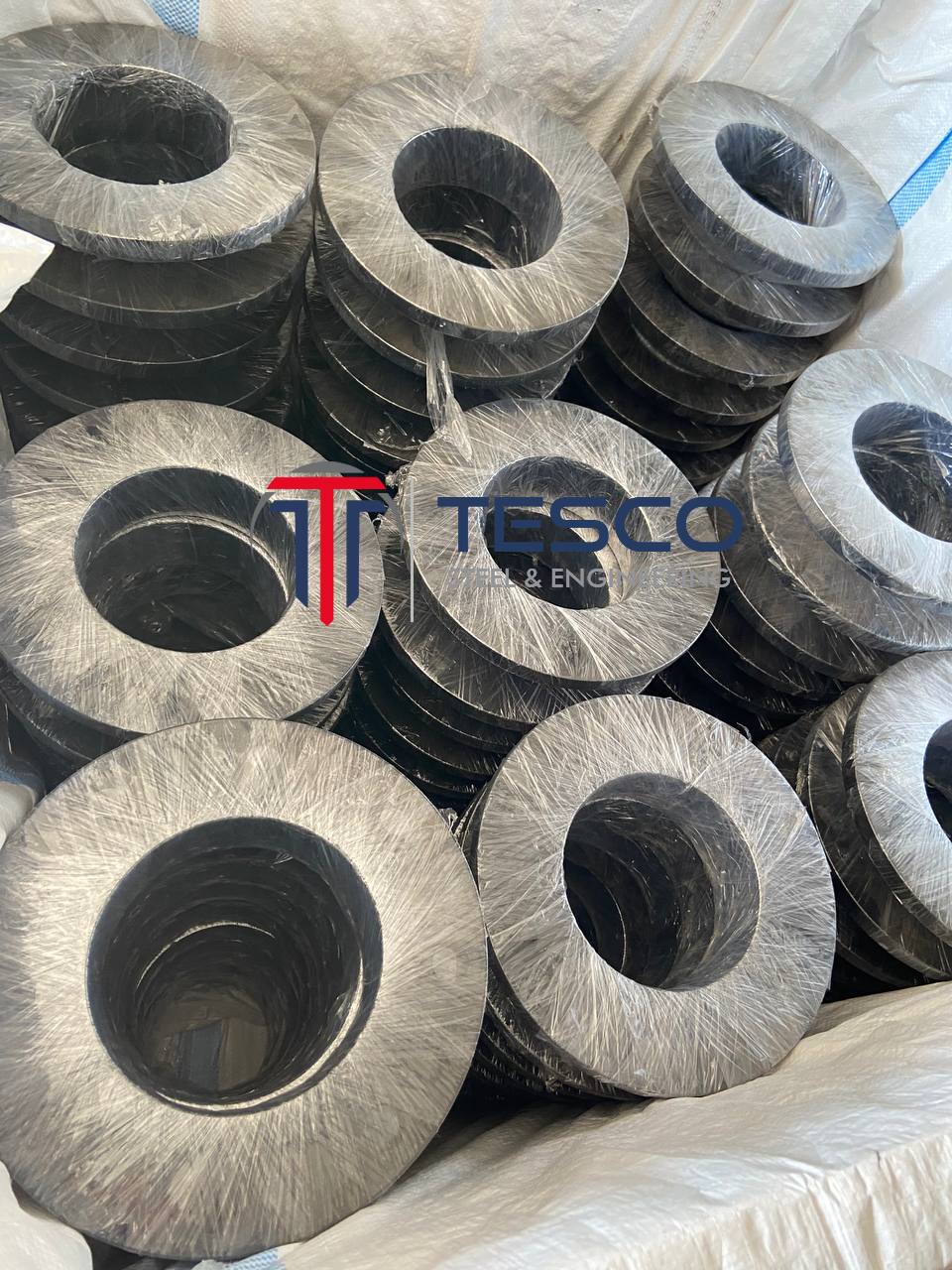
LF2 Weld Neck Flange (WNRF)
LF2 Slip-On Flange (SORF)
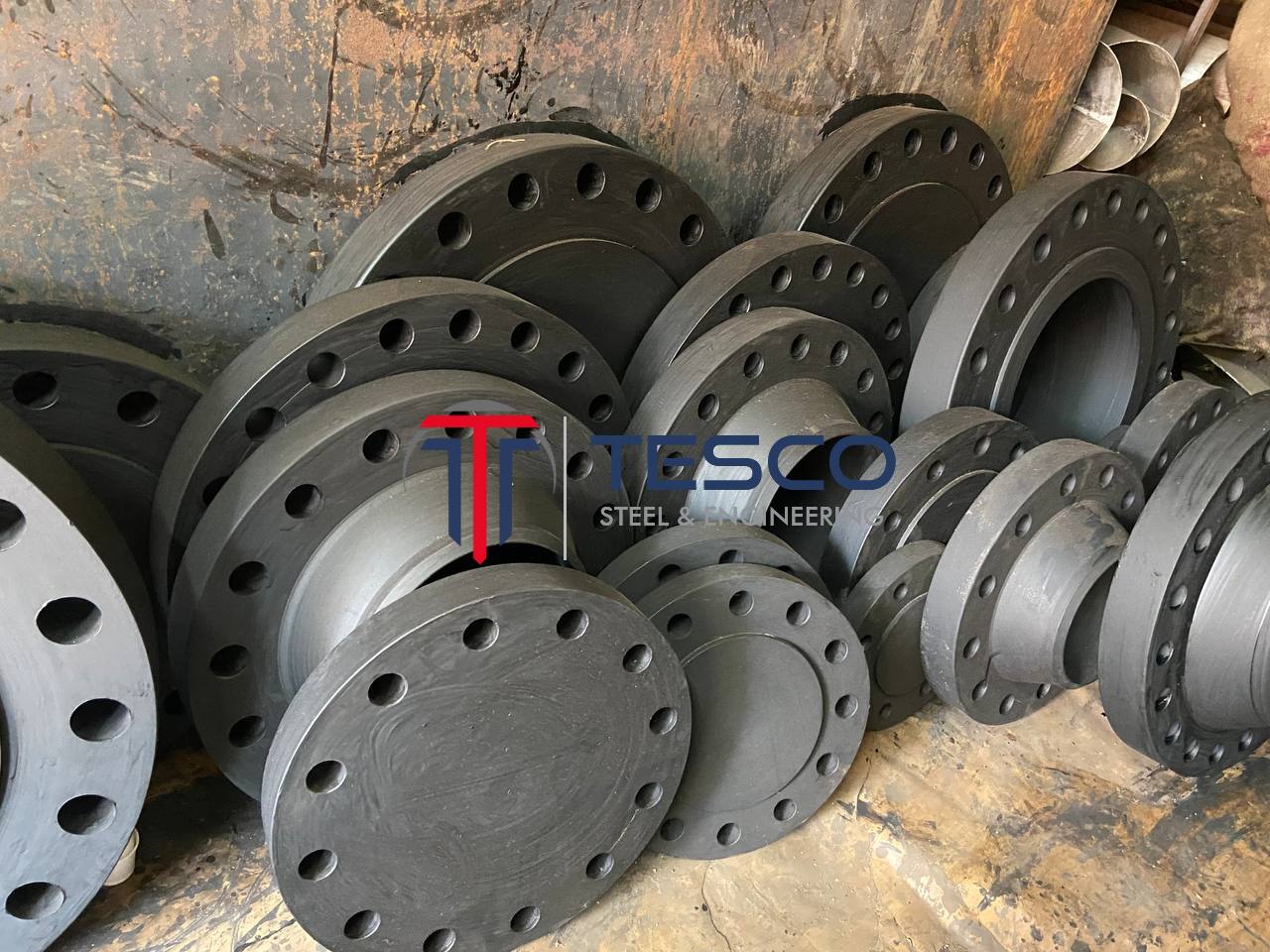
LF2 Blind Flange
| Flange Type | Description & LF2-Specific Use |
|---|---|
| Weld Neck (WNRF) | Tapered hub butt-welded to pipe for high-integrity low-temperature piping; weld with impact-rated low-hydrogen consumables. |
| Slip-On (SORF) | Fillet-welded over the pipe; common in low-temperature piping at moderate pressure. |
| Blind | Seals pipe ends and vessel nozzles in low-temperature systems. |
| Socket Weld (SWRF) | Small-bore (1/2″–2″) instrument and branch connections in cold service. |
| Lap Joint (LJRF) | Used with an LF2 stub end where frequent dismantling is required. |
| Threaded (TRFF) | Internal NPT/BSP threads for non-welded low-pressure connections. |
| Spectacle Blind / Long Weld Neck | Isolation spades and nozzle/long-neck flanges in A350 LF2 for low-temperature duty. |
| Property | LF2 Cl 1 | LF2 Cl 2 | LF1 | LF3 |
|---|---|---|---|---|
| Impact-test temp | -46°C (-50°F) | -46°C (-50°F) | -29°C (-20°F) | -101°C (-150°F) |
| Nickel | None (residual) | None (residual) | None (residual) | ~3.5% |
| Yield (min) | 36 ksi | 36 ksi | 30 ksi | 37.5 ksi |
| Condition / class | Standard normalized | Tighter-requirement class | C-Mn entry grade | 3.5% Ni grade |
| Typical role | Default LTCS grade | Where Class 2 specified | Mild low-temperature | Deep low temperature |
Mandatory Charpy impact test at -50°F confirms notch toughness for cold-service piping.
The most widely specified low-temperature carbon-steel flange grade — readily available in all types and ratings.
Standard carbon-steel welding with impact-rated low-hydrogen consumables and procedures.
Meets ASME B31.3 / B16.5 low-temperature requirements with full impact documentation.
| Industry | Typical Application |
|---|---|
| Oil & Gas | Low-temperature wellhead, processing, pipeline and offshore flanged connections |
| Refining & Petrochemical | Cold-service process and utility piping flanges |
| Gas Processing & LNG-adjacent | Low-temperature gas handling and treatment flanges |
| Cold-Climate Pipelines | Low-ambient-temperature pipeline and station flanges |
| Storage & Terminals | Low-temperature storage and loading flanged connections |
| General Low-Temperature Plant | Sub-ambient pressure-system flanges to -46°C |
Made from certified A350 LF2 with chemistry and Charpy impact results documented on the MTC.
Supplied in the normalized condition with verified impact toughness at -50°F.
WNRF, SORF, blind, socket-weld, threaded, lap-joint, spectacle, LWN, orifice and plate — in RF, FF, RTJ and T&G.
EN 10204 3.1 / 3.2 MTC with impact results, heat/lot traceability, hydrostatic and third-party inspection on request.
A350 LF2 Class 1 flange prices reflect forged carbon-steel material plus normalizing and impact testing — it is the standard, widely-stocked low-temperature carbon-steel flange grade. Tesco Steel & Engineering offers competitive ex-works pricing from Mumbai with full export documentation and material traceability. Click Ask for Quote or message us on WhatsApp at +91 92233 66922 with flange type, size (NB), pressure class, quantity and documentation requirements.
Q1. What is an ASTM A350 LF2 Class 1 flange?
An ASTM A350 LF2 Class 1 flange is a forged low-temperature carbon steel (LTCS) flange in the most widely used grade of the A350 specification. LF2 is a carbon-manganese-silicon steel with controlled chemistry and a mandatory Charpy V-notch impact test at -50 degrees F (-46 degrees C); Class 1 is the standard normalized condition. It is the default LTCS flange material for low-temperature oil, gas and process piping. Flanges are made to ASTM A350 and machined to ASME B16.5 / B16.47 dimensions.
Q2. What is the impact test temperature for A350 LF2?
ASTM A350 LF2 requires a Charpy V-notch impact test at -50 degrees F (-46 degrees C), with minimum average absorbed energy per the specification. This verified low-temperature toughness is what qualifies LF2 for cold service and distinguishes it from ordinary A105 carbon-steel flanges, which are not impact tested.
Q3. What is the difference between A350 LF2 Class 1 and Class 2?
A350 LF2 Class 1 and Class 2 share the same carbon-manganese chemistry and the same -50 degrees F (-46 degrees C) impact requirement and tensile range. The class denotes the heat-treatment/property variant in the specification: Class 1 is the standard normalized (or normalized-and-tempered) condition, while Class 2 is supplied to the tighter requirements some applications call for. Both are common; the project specification states which class is required.
Q4. What is the difference between A350 LF1, LF2 and LF3?
All are forged LTCS grades of ASTM A350, differing in chemistry and minimum impact-test temperature. LF1 is impact tested at -20 degrees F (-29 degrees C). LF2 is the most common grade, tested at -50 degrees F (-46 degrees C). LF3 contains about 3.5% nickel for service to -150 degrees F (-101 degrees C). LF2 covers the great majority of low-temperature carbon-steel piping.
Q5. What is the chemical composition of A350 LF2?
ASTM A350 LF2 nominal composition: carbon 0.30% max, manganese 0.60–1.35%, silicon 0.15–0.30%, phosphorus 0.035% max, sulphur 0.040% max, with combined residual limits on nickel, chromium, copper, molybdenum and vanadium. It is a plain carbon-manganese steel with no deliberate nickel.
Q6. How is A350 LF2 different from A105 flanges?
A105 and A350 LF2 are both forged carbon-steel flange materials with similar chemistry, but A350 LF2 adds a mandatory Charpy impact test at -50 degrees F and tighter control, qualifying it for low-temperature service. A105 is for ambient and higher temperatures and is not impact tested. Where a code requires notch toughness at low temperature, A350 LF2 is the standard substitute for A105.
Q7. What standards apply to A350 LF2 Class 1 flanges?
A350 LF2 Class 1 flanges are forged to ASTM A350/A350M (Grade LF2, Class 1) and machined to ASME B16.5 (1/2 inch to 24 inch) or ASME B16.47 / MSS SP-44 for larger sizes, with EN 1092-1 for PN-rated flanges. Material is supplied normalized (or normalized and tempered) with EN 10204 3.1 / 3.2 certification including the impact-test record.
Q8. Can A350 LF2 flanges be welded?
Yes. A350 LF2 is a readily weldable carbon-manganese steel, welded with low-hydrogen processes and matching low-temperature-rated consumables (for example E7018-1 / ER70S-x with impact requirements). Preheat and, for thicker sections, post-weld heat treatment may be specified; welding procedures should be impact-tested to confirm the joint's low-temperature toughness.
Q9. What are the mechanical properties of A350 LF2?
Typical ASTM A350 LF2 properties: tensile strength 70–95 ksi (485–655 MPa), yield strength 36 ksi (250 MPa) minimum, elongation about 22–25%, with Charpy V-notch impact toughness verified at -50 degrees F (-46 degrees C). It is supplied in the normalized or normalized-and-tempered condition.
Q10. Are A350 LF2 Class 1 flanges supplied with material test certificates?
Yes. Every A350 LF2 Class 1 flange is supplied with EN 10204 3.1 (or 3.2) mill test certificates confirming chemistry, mechanical properties, the Charpy impact-test result and heat/lot traceability, with hydrostatic testing and third-party inspection on request. Tesco Steel & Engineering is an ISO 9001:2015 certified manufacturer and exporter from Mumbai, India.