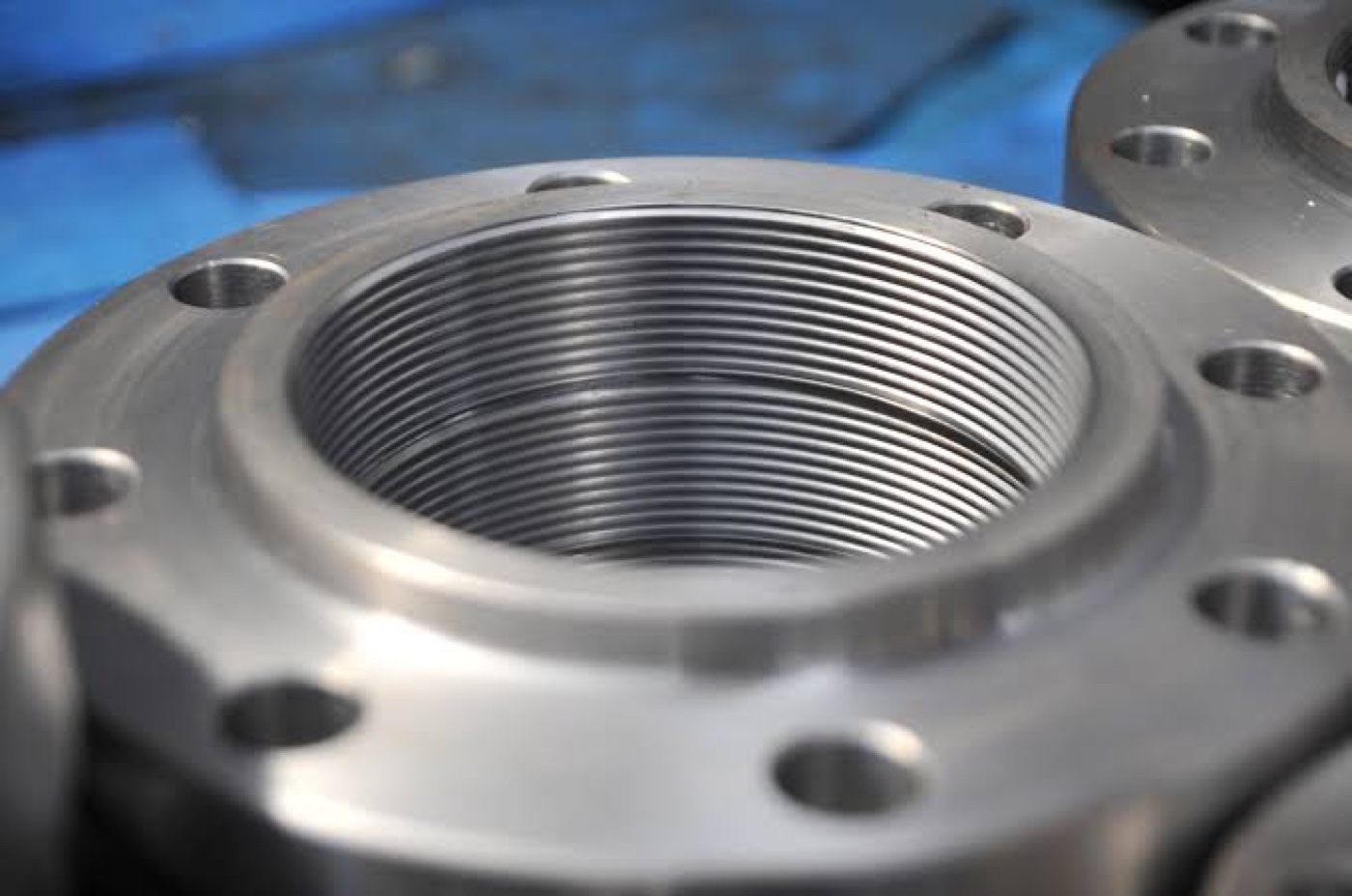
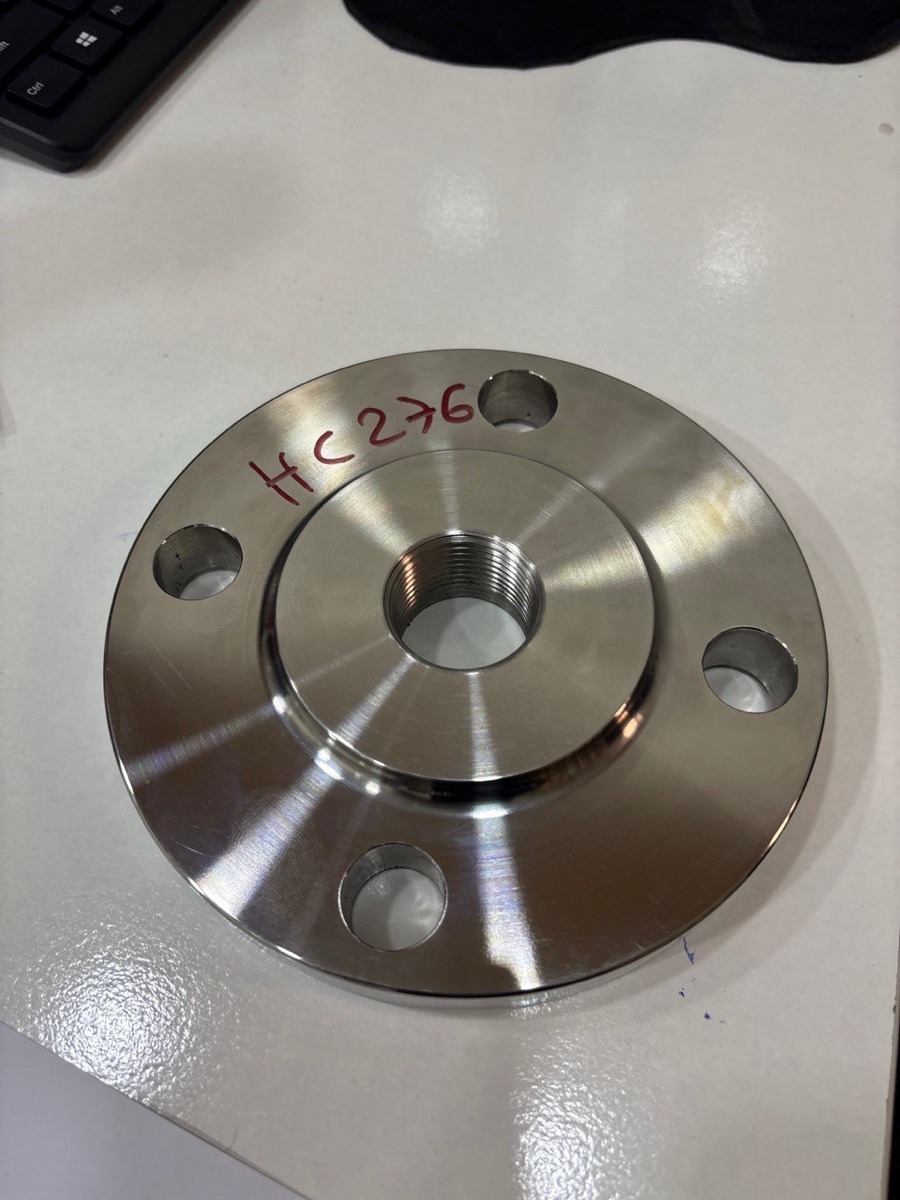
Tesco Steel & Engineering manufactures companion flanges — the flanges that let plain or threaded pipe and equipment nozzles join a bolted flange connection. Pumps, valves and meters arrive with flanged nozzles; the flange you buy to complete the joint — screwed onto the pipe with no welding (threaded companion) or fillet-welded on (slip-on companion) — is their companion. Drilling always follows ASME B16.5 from ½″ to 24″ NB, in raised or flat face — including the flat-face patterns that safely mate Class 125/250 cast iron pumps. Forged in A105 carbon steel (galvanized to order), A182 stainless and nickel alloys to the Hastelloy C-276 unit pictured below; construction detail lives on our threaded flanges and slip on flanges pages. Every lot with EN 10204 3.1/3.2 MTC. ISO 9001:2015, made in Mumbai, India — exported to 50+ countries.
Threaded · Slip-On · Reducing CompanionsNo-Weld Installation (NPT / BSPT)ASME B16.5 Drilling ½″–24″Mates Class 125/250 Cast Iron PumpsRF & FF · Class 150/300 StockedA105 · A182 · Alloys to C-276EN 10204 3.1 / 3.2 · ISO 9001:2015
A companion flange is the flange that completes a mating pair. Equipment — pumps, valves, meters, tanks — arrives with flanged nozzles; plain or threaded pipe arrives with none. The flange bought to bridge them, screwed onto the pipe (threaded, no welding) or welded on (slip-on) and drilled to match the flange across the joint, is the companion. It is a role, not a separate dimensional type: dimensions come from ASME B16.5, threads from ASME B1.20.1 (NPT), and the facing — raised or flat — from whatever it must mate. Sizes ½″–24″, Classes 150/300 dominant, all forged materials.
Also searched as: pump companion flange, threaded companion flange, mating flange, screwed companion, NPT flange for pump — all describe the product on this page. Related pages: threaded flanges (the construction most companions use), slip on flanges, BLFF flanges (the same flat-face logic on blinds), and the special products overview.
"Companion" Is a Role, Not a Shape
The single most useful thing to know before buying one — and the reason the term confuses first-time specifiers:
The Role
One half of a bolted pair, supplied to keep company with a pipe end or an equipment nozzle that already carries the other half. "Send a 4-inch companion for the pump" is a complete sentence in the trade.
The Usual Forms
Physically it is a standard threaded flange (the classic — no welding) or slip-on flange (welded systems), occasionally reducing — there is no separate "companion" dimension table anywhere in ASME.
The Matching Rule
Everything about a companion is chosen from the other side of the joint: same drilling, compatible facing, adequate class. Get the mating flange's details right and the companion specifies itself.
Types of Companion Flanges
Form
Attachment
Welding?
Where It Rules
Threaded Companion
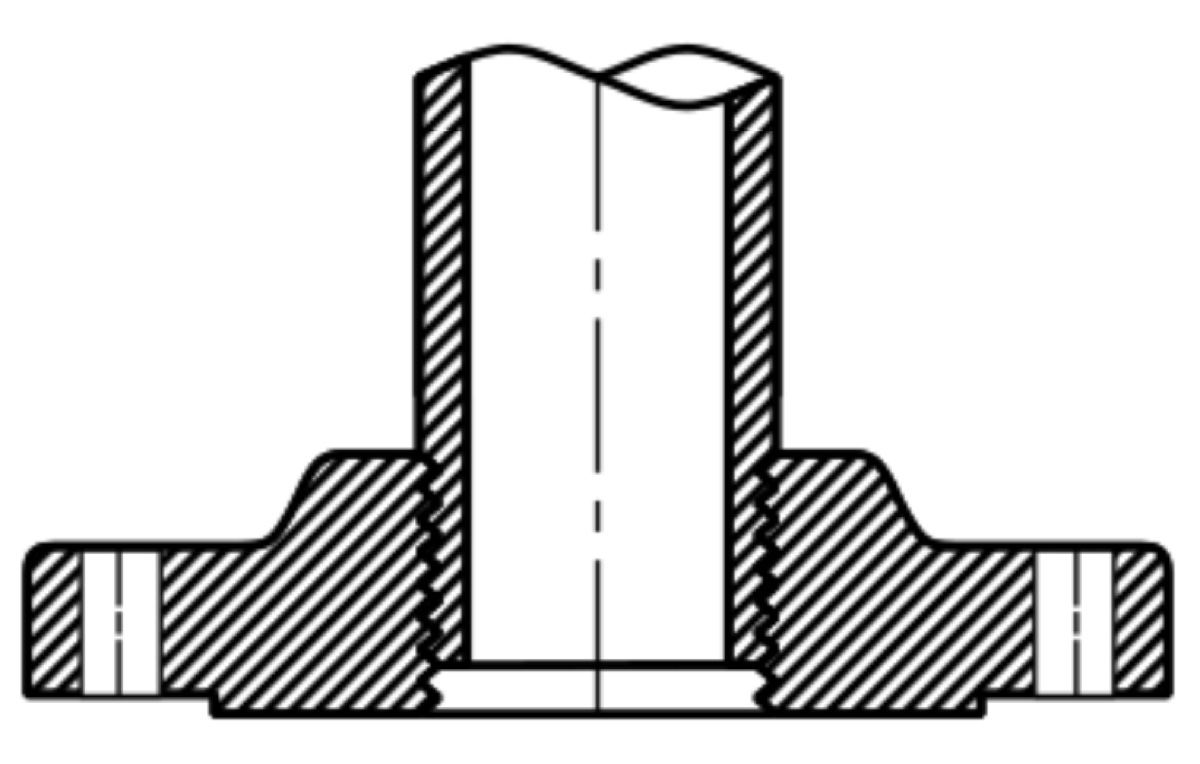
Screws onto NPT / BSPT pipe threads
None
Pumps, water & fire systems, galvanized pipe, no-hot-work sites
Slip-On Companion
Pipe slips in, fillet welded
Yes
Welded steel systems meeting flanged equipment
Reducing Companion
Threaded or bored smaller than drilling size
Per form
Large equipment flange to smaller pipe, one piece
Flat-Face Companion
Any of the above, FF facing
Per form
Class 125/250 cast iron pumps & valves — full-face gasket
How a Threaded Companion Works — Tapered Threads Carry Pipe Into Flange, No Welding
The No-Welding Advantage
The threaded companion earns its place with wrenches alone — and that single fact decides most purchases:
No Hot-Work Permit
Occupied buildings, hospitals, running plants and hazardous areas connect flanged equipment without a welding crew, fire watch or shutdown.
Galvanizing Survives
Welding burns zinc off galvanized pipe; threading does not — which is why fire-protection and water-services systems run threaded companions as standard.
Swap in Minutes
A pump change-out unscrews and rescrews — maintenance departments keep threaded companions on the shelf for exactly this reason.
Companion Flange Specifications
Companion Flanges are available in the following specifications:
Forms
Threaded (NPT per ASME B1.20.1; BSPT to order), Slip-On weld, Reducing; supplied singly or in matched pairs/sets
Size
1/2"NB to 24"NB drilling per ASME B16.5; threaded form practical to ~6"; EN 1092-1 to order
Class
150# & 300# stocked focus; 400#–2500# and PN series to order
Facings
Raised Face or Flat Face — FF drilling matches Class 125/250 cast iron (B16.1) by design
Pump & valve nozzles, meters, tank connections, any B16.5 / B16.1-pattern flange — state the mating details
Installation
Threaded: wrench-tight on sealant/tape, no welding; Slip-on: fillet welded; seal welding of threads to order
Certification
EN 10204 3.1 (standard) / 3.2 witnessed
Why Companion Flanges from Tesco
The Pump-Room Staple
Every pump, meter and flanged valve needs its mating halves — we stock the Class 150/300 threaded companions that connect them, and forge the rest to order.
Cast-Iron Safe
Flat-face companions with full-face gaskets bolt to Class 125/250 iron without cracking it — the same engineering discipline as our BLFF page, applied to the open flange.
Any Metal the Chemistry Demands
From galvanized A105 for fire mains to the C-276 threaded companion pictured on this page — one drilling standard, every certificate.
Gauged Threads, Certified
NPT tapped and ring-gauged at the works, thread standard stated on the EN 10204 certificate — a companion that spins on true, first time.
Specification Notes — Getting Companions Right
Three details buyers miss.Specify the mating side, not just the pipe: the companion's drilling, facing and class come from the pump or valve it bolts to — send us the equipment flange details (or its manual page) and the rest follows. Flat face against cast iron, always: a raised-face companion on a Class 125 iron pump is the classic way to crack the pump — FF plus a full-face gasket is the rule. Respect threaded-joint limits: heavy vibration, thermal cycling, high classes and lethal service call for the welded form — piping codes restrict threads there, and so do we in our recommendations.
How Our Companion Flanges Are Manufactured
1
Forging — cut billet of the certified heat — carbon, stainless or alloy — is hot-forged into the flange blank with full heat traceability.
2
Heat treatment — per the material standard: normalised A105, solution-annealed stainless and nickel grades; furnace records retained.
3
Machining & drilling — faces, OD and bolt holes to ASME B16.5 (or the B16.1-match pattern ordered); RF serrations or full flat face per the mating flange.
4
Threading or boring — NPT/BSPT taper threads cut and ring-gauged on threaded companions; slip-on bores machined to pipe OD on weld companions.
5
Testing & marking — chemistry and mechanicals against the heat, PMI on alloy grades, then permanent marking of standard, grade, size, class and heat number.
6
Finish, certification & packing — galvanizing or anti-rust coating as ordered, threads capped for transit, EN 10204 3.1 MTC issued; pairs and sets packed together on request.
Where Companion Flanges Are Used
Wherever equipment meets pipe: pump suctions and discharges across every industry, water and wastewater works, fire-protection mains, HVAC and building services, meters and instruments, tank and vessel connections — and, in the alloy grades, chemical duty like the C-276 unit below. Production:
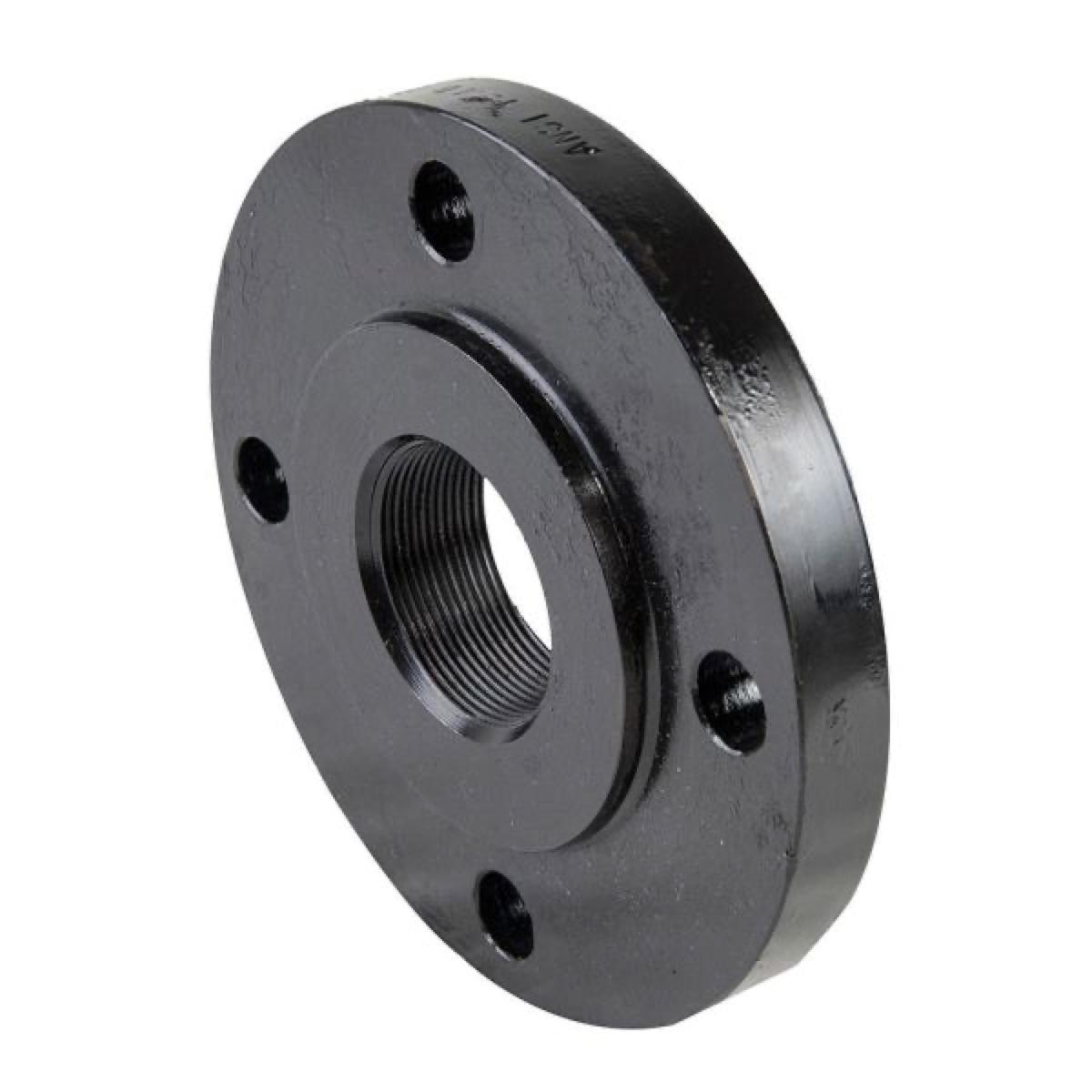
A105 Threaded Companion Flange — Black-Coated, 4-Bolt Class 150Hastelloy C-276 Threaded Companion — Marked at Our Works
Companion Flange Dimensions
Companion drilling follows the standard flange tables — the same charts as every B16.5 flange on this site:
Example: “Companion Flange, Threaded NPT, FF, 3″ NB, drilling ASME B16.5 Class 150, ASTM A105 galvanized, to suit Class 125 CI pump — 2 pcs.” Quotations normally within 24 hours with price, unit weight and delivery.
Companion Flanges — Frequently Asked Questions
What is a companion flange?
A companion flange is a flange supplied to accompany a pipe end or a piece of equipment so it can join a bolted flange connection. In practice it is usually a threaded flange screwed onto NPT pipe — no welding required — or a slip-on flange welded to plain pipe, drilled to match the flange it will bolt to: a pump suction nozzle, a valve, a meter, a tank connection. 'Companion' describes the flange's role as one half of a mating pair, not a separate dimensional type; dimensions follow ASME B16.5 like any other flange.
Why is it called a companion flange?
Because it keeps company with something else. Equipment makers ship pumps, valves and meters with flanged nozzles — but the pipe arriving to meet them has no flange of its own. The flange bought to complete that joint, mounted on the pipe and drilled to mate the equipment, is the nozzle's companion. The term grew up in the pump, waterworks and building-services trades, where 'send a 4-inch companion flange' is understood to mean: the threaded or weld flange that finishes the pairing.
Is a companion flange a different type of flange?
No — and this is the key to buying one correctly. 'Companion' names a role, not a shape: the physical article is a standard threaded, slip-on or lap-joint flange whose dimensions, drilling and facing come from ASME B16.5 (or the cast-iron B16.1 pattern it must mate). There is no separate 'companion flange' dimension table. What makes it a companion is that it is selected to match the flange across the joint — same drilling, compatible facing, suitable rating.
What types of companion flanges are there?
Three forms cover nearly all use. The threaded companion — tapped NPT or BSPT and screwed onto threaded pipe — is the classic, prized because it needs no welding. The slip-on weld companion suits welded steel systems: the pipe slips in and is fillet-welded. The reducing companion carries a smaller threaded or bored centre than its drilling size, mating a large equipment flange to smaller pipe in one piece. All are made in raised face or flat face, the facing chosen to match the equipment across the joint.
Do companion flanges need welding?
The threaded form does not — and that is most of its appeal. It screws onto standard pipe threads with wrenches alone, which is why it dominates where welding is unwelcome or impossible: occupied buildings, fire-protection and water systems, galvanized pipe (welding destroys the coating), site retrofits without hot-work permits, and small pump connections. The slip-on companion form is welded, for systems that are welded anyway. Choose by how the rest of the system is joined.
What is a pump companion flange?
The flange bought to connect piping to a pump's suction or discharge nozzle. Pumps ship with flanged nozzles but not with the mating halves — those are the buyer's companions, and getting them right means matching three things: the drilling (bolt count and circle), the facing (many smaller pumps, and all Class 125/250 cast-iron pumps, are flat-faced and must not meet a raised face), and the connection to your pipe (threaded for no-weld installs, slip-on for welded steel). State the pump's flange details on the enquiry and we match them.
Can a companion flange mate a cast iron pump flange?
Yes — with the flat-face rule respected. Class 125 and 250 cast iron flanges share drilling with ASME B16.5 Class 150 and 300 steel flanges, so a steel companion bolts straight on. But cast iron cracks under the point loading of a raised face: the companion must be flat-faced and used with a full-face gasket, exactly as on our BLFF page. A flat-face threaded companion in A105 is one of the most common building-services purchases there is — and precisely what this page supplies.
What sizes and classes are companion flanges available in?
Drilling from ½" to 24" NB per ASME B16.5, with real-world demand concentrated in ½" to 6" and Classes 150 and 300 — the territory of pumps, meters and building services. Threaded companions run practically to about 4"-6", beyond which threading pipe becomes impractical and the slip-on weld form takes over. Flat-face patterns matching Class 125/250 cast iron, EN 1092-1 PN-series companions and higher classes are produced to order.
What threads do threaded companion flanges use?
NPT taper threads per ASME B1.20.1 as standard — the same threads as standard threaded pipe — with BSPT tapped to order for markets and equipment that use it. The taper makes the seal: thread sealant or tape completes it in ordinary service. Where a specification wants belt and braces, a seal weld can be added over an NPT joint — though at that point a welded slip-on companion is often the cleaner choice. State the thread standard on the enquiry; the flange arrives gauged.
What materials are companion flanges made in?
Every forged grade on this site. Carbon steel ASTM A105 dominates the pump and building-services world; stainless A182 F304/F316 serves water treatment and hygienic duty; and the full alloy range is available for chemistry — the Hastelloy C-276 threaded companion pictured on this page is our own production for severe chloride service. Galvanizing on carbon steel companions, common in fire protection, is applied to order. The certificate follows the grade as usual: EN 10204 3.1 on every lot.
When should a threaded companion flange not be used?
Where threaded joints themselves are the wrong answer: severe cyclic loading and vibration, significant thermal cycling, high pressures and temperatures beyond the modest classes, and services where a leak is intolerable — piping codes restrict threaded connections in exactly those conditions. Crevice-sensitive corrosive services also dislike the thread gap. In all such cases the same companion role is served by the welded slip-on form or a weld-neck joint. The threaded companion is the workhorse of moderate, steady, low-energy service — used there, it is thoroughly reliable.
Is a companion flange the same as a threaded flange?
They overlap but are not synonyms. A threaded flange names a construction — tapped threads instead of a weld. A companion flange names a role — the flange that completes a mating pair. Most companions happen to be threaded flanges, which is why the trade often uses the words interchangeably; but a welded slip-on serving a pump nozzle is equally a companion, and a threaded flange joining two lengths of pipe mid-run is not usually called one. Our threaded flanges page covers the construction in depth; this page covers the role.
Which standards cover companion flanges?
The same standards as the flanges they mate. Dimensions and drilling: ASME B16.5 (with threads per ASME B1.20.1 on threaded forms); mating cast iron: the B16.1 Class 125/250 patterns via the flat-face crossover; European systems: EN 1092-1 threaded (Type 13) and plate types to order. Materials certify to ASTM A105, A182 or B564 as applicable. A complete specification reads like any flange order — 'Companion Flange, Threaded NPT, FF, 3", drilling ASME B16.5 Class 150, ASTM A105, galvanized' — and our certificates state it all together.
Are companion flanges supplied in pairs or sets?
As the joint requires. Where both sides of a connection need flanges — joining two plain pipe ends, for example — companions are bought in pairs, often with bolts and gasket as a set, and we supply them that way on request. Where the other half already exists — a pump nozzle, a flanged valve — a single companion completes the joint. State what the flange must mate on the enquiry; matched drilling, facing and rating are exactly the details we confirm before anything is machined.
Who manufactures companion flanges in India?
Tesco Steel & Engineering is an ISO 9001:2015 certified flange manufacturer based in Mumbai, India, producing threaded, slip-on and reducing companion flanges with ASME B16.5 drilling from ½" to 24" NB — NPT or BSPT threads, raised or flat face, in carbon steel A105 (galvanized to order), stainless A182 and nickel alloys to Hastelloy C-276, with EN 10204 3.1/3.2 certification on every lot — alongside the full range of weld neck, slip-on, blind, threaded and speciality flanges on this site. Exported to more than 50 countries.