BLFF Flanges — Blind Flat Face Flange Manufacturer
Tesco Steel & Engineering forges BLFF flanges — blind flanges with flat face, the closures of the flat-face world — to ASME B16.5 Class 150–2500 from ½″ to 24″ NB and to ASME B16.47 up to 60″. The flat face exists to protect weaker mating parts: bolted with a full-face gasket, it spreads bolt load across the whole joint, so cast iron pumps and valves, GRP piping and lined equipment close safely where a raised face would crack them. Drilling matches Class 125/250 cast iron by design. Forged in A105 by the pallet and every alloy grade on this site; sibling facings BLRF and BLRTJ on their own pages. Every lot with EN 10204 3.1/3.2 MTC. ISO 9001:2015, made in Mumbai, India — exported to 50+ countries.
BLFF · Blind FF · Flat Face BlindASME B16.5 ½″–24″ · Class 150–2500ASME B16.47 to 60″ · EN 1092-1 Type 05Mates Class 125/250 Cast Iron & GRPFull-Face Gasket ServiceA105 · LF2 · A182 · B564 · Ti · CuNiEN 10204 3.1 / 3.2 · ISO 9001:2015
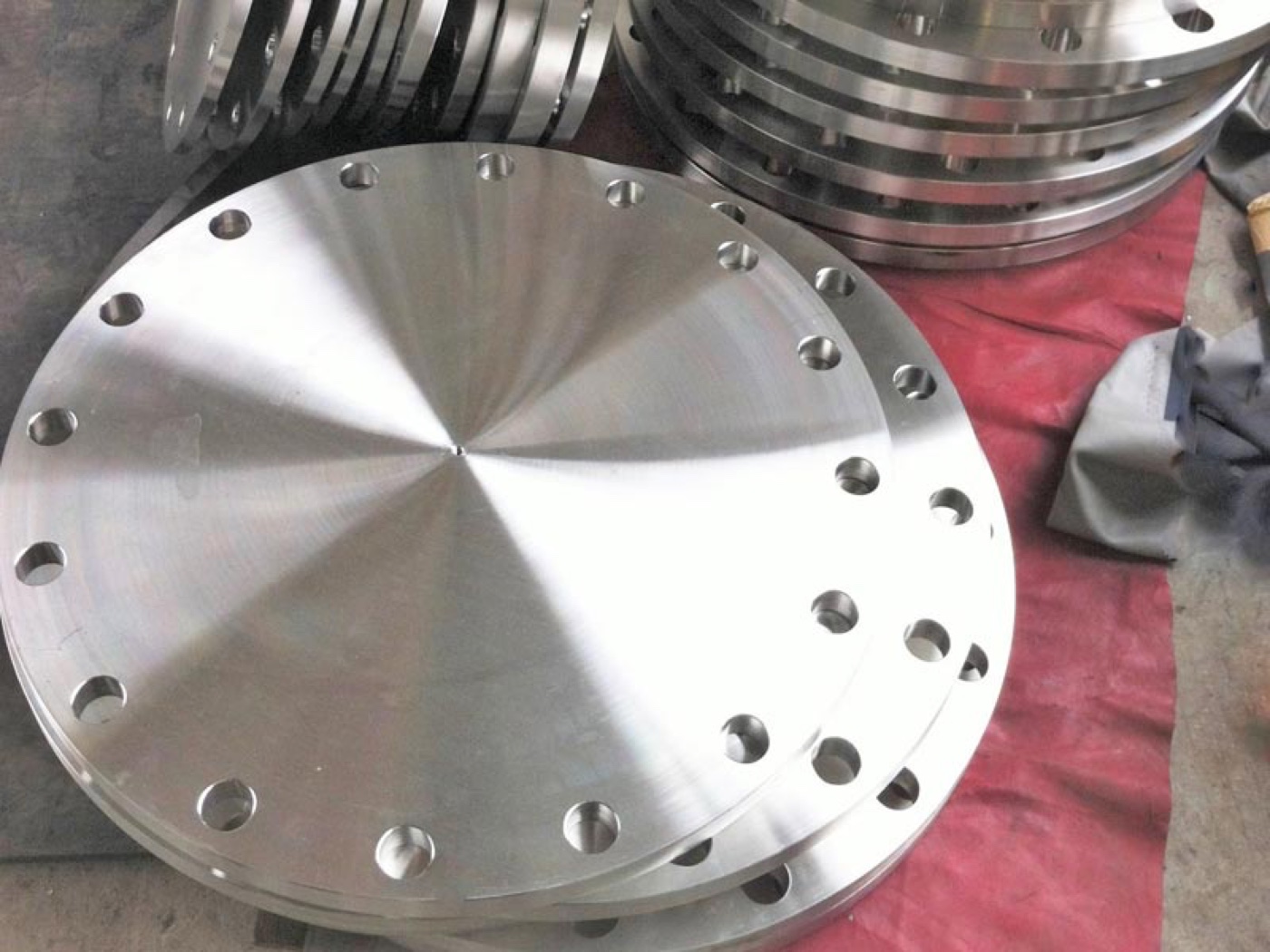
BLFF = Blind, Flat Face. A solid forged disc with no bore, its gasket surface machined flush across the entire face — no raised ring. Used with a full-face gasket, it spreads bolt load over the whole joint, which is the point: cast iron, GRP and lined flanges crack under raised-face point loading, and the flat face removes the lever. The closure of the water-works, cast-iron and composite-piping world — with Class 150/300 FF drilling matched to Class 125/250 cast iron by design. Dimensions per ASME B16.5 / B16.47; every material grade on this site.
Rule of thumb: the facing always matches the mating flange — steel RF systems take BLRF, cast-iron and composite FF systems take BLFF, and mixing the two on one joint is how cast iron gets cracked.
Why the Flat Face Exists — The Cracked-Iron Story
Bolt a raised-face flange to a flat-face one and the contact sits only on the small raised ring — tightening the bolts then levers the outer rim of the weaker flange over that ring like a see-saw. Ductile steel tolerates it; cast iron, GRP and lined flanges crack. The flat face removes the lever entirely:
Full-Face Contact
The whole face bears — no ring, no fulcrum, no bending moment on the weaker part. That is the entire engineering purpose of the facing.
Full-Face Gasket, Always
The gasket covers the complete face, bolt holes included — a ring gasket on a flat face would recreate the very problem FF exists to avoid.
Torque to the Weaker Party
With cast iron or GRP in the joint, their bolt-stress limits govern — soft full-face gaskets seat at low stress, which is exactly why they're chosen.
Seawater GRE headers — where FF meets the marine world
Note the crossover: copper-nickel systems run flat face by convention — our C70600 page tells that story — so marine BLFF blinds in CuNi are a natural pairing. The BLFF pattern is identical across every material; only the certificate changes.
BLFF Flange Specifications
BLFF Blind Flat Face Flanges are available in the following specifications:
Type & Facing
Blind flange, Flat Face (BLFF) — full-face gasket service, no bore; BLRF and BLRTJ facings on their own pages
Size
1/2"NB to 24"NB per ASME B16.5; 26"–60" per ASME B16.47; EN 1092-1 Type 05 to order
Class
150#, 300#, 400#, 600#, 900#, 1500#, 2500# — FF service concentrates in 150# & 300#
Cross-Compatibility
Class 150 FF drilling matches Class 125 cast iron (B16.1); Class 300 FF matches Class 250 cast iron
Full-face (bolt holes included) — elastomer, compressed fibre or PTFE sheet per service
Modifications
NPT-tapped centre (test / vent / drain / instrument), lifting provisions — to order
Installation
No welding — full-face gasket aligned over bolt holes, star-pattern bolt-up to the weaker party's torque limits
Certification
EN 10204 3.1 (standard) / 3.2 witnessed
Why BLFF Flanges Are Specified
The Iron-Safe Closure
Blanking a cast-iron pump or valve nozzle is a routine maintenance job — and a BLFF with a full-face gasket is the engineered way to do it without cracking the iron.
Matched Drilling by Design
Class 150 FF bolts straight to Class 125 cast iron, Class 300 FF to Class 250 — the cross-compatibility that makes steel blinds the standard closure of the iron world.
Composite-Piping Ready
GRP, FRP and GRE systems specify flat face throughout — their blinds are BLFF, in whatever metal the chemistry demands, from A105 to C-276.
Full Blind Capability
Everything a blind does — terminate, isolate, hydrotest, future access — with the same class-governed bending thickness; the facing changes, the pressure design doesn't.
Three details buyers miss.Never RF onto FF iron: an RF blind against a cast-iron or GRP flange is the classic way to crack it — specify BLFF, or machine the raised face off an existing steel flange. Full-face gasket only: a ring gasket on a flat face re-creates the bending problem the facing exists to solve. Torque to the weaker party: the cast iron or GRP sets the bolt-stress limit, not the steel blind — over-torquing cracks iron even with perfect facings. We supply torque guidance with the quotation on request.
How Our BLFF Flanges Are Manufactured
1
Forging — cut billet of the certified heat — carbon, stainless or alloy — is hot-forged into the solid disc blank, keeping full heat traceability.
2
Heat treatment — per the material standard: normalised A105, quench-tempered LF2, solution-annealed stainless and nickel grades; furnace record retained.
3
Machining — the full face machined flush — no raised ring — with bolt holes to ASME B16.5 / B16.47 drilling; thickness verified against the class table.
4
Finish & modifications — smooth or serrated finish per the gasket specification; NPT centre taps and lifting provisions machined where ordered.
5
Testing & marking — mechanical and chemical verification against the heat (UT and PMI where specified), then permanent marking of standard, grade, size, class and heat number.
6
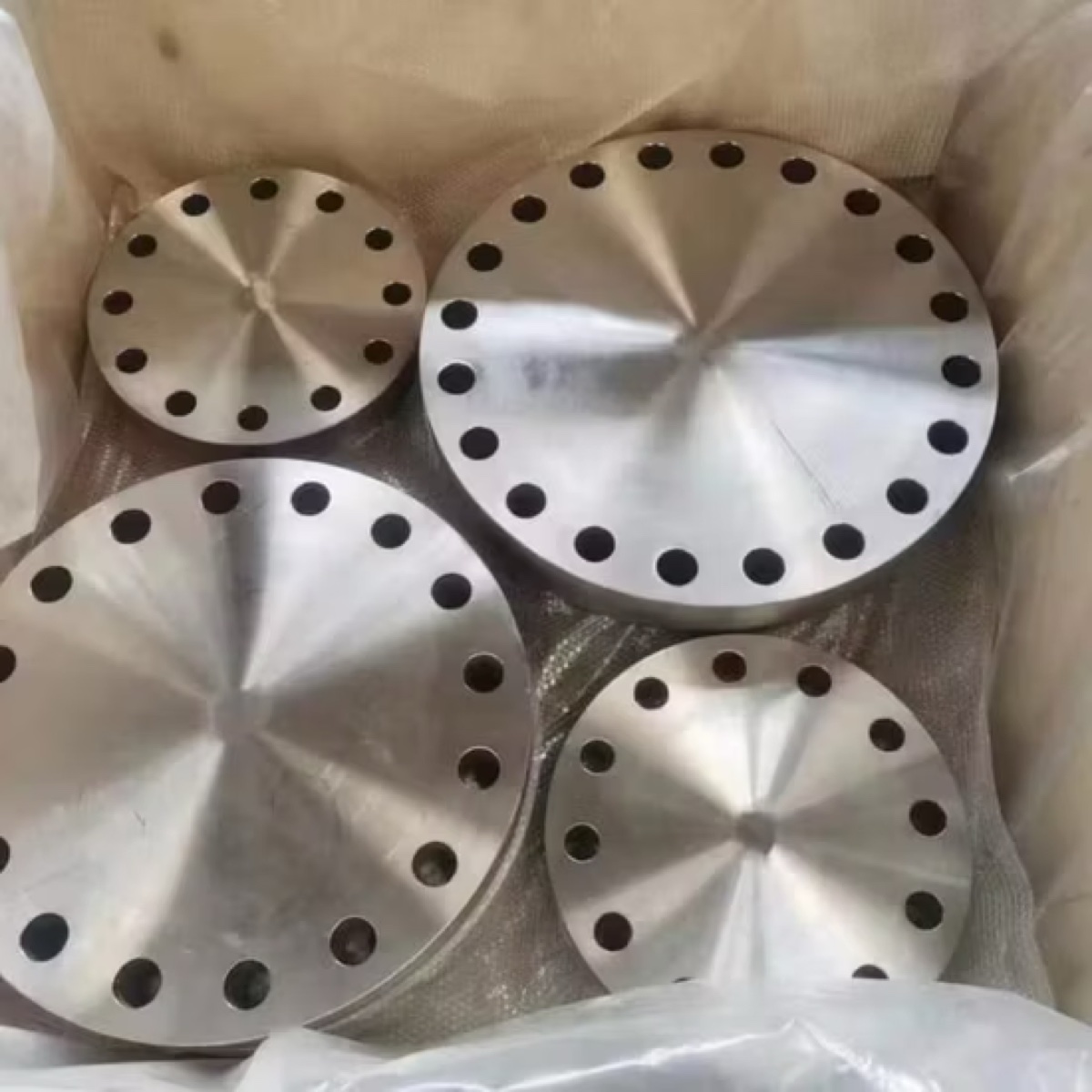
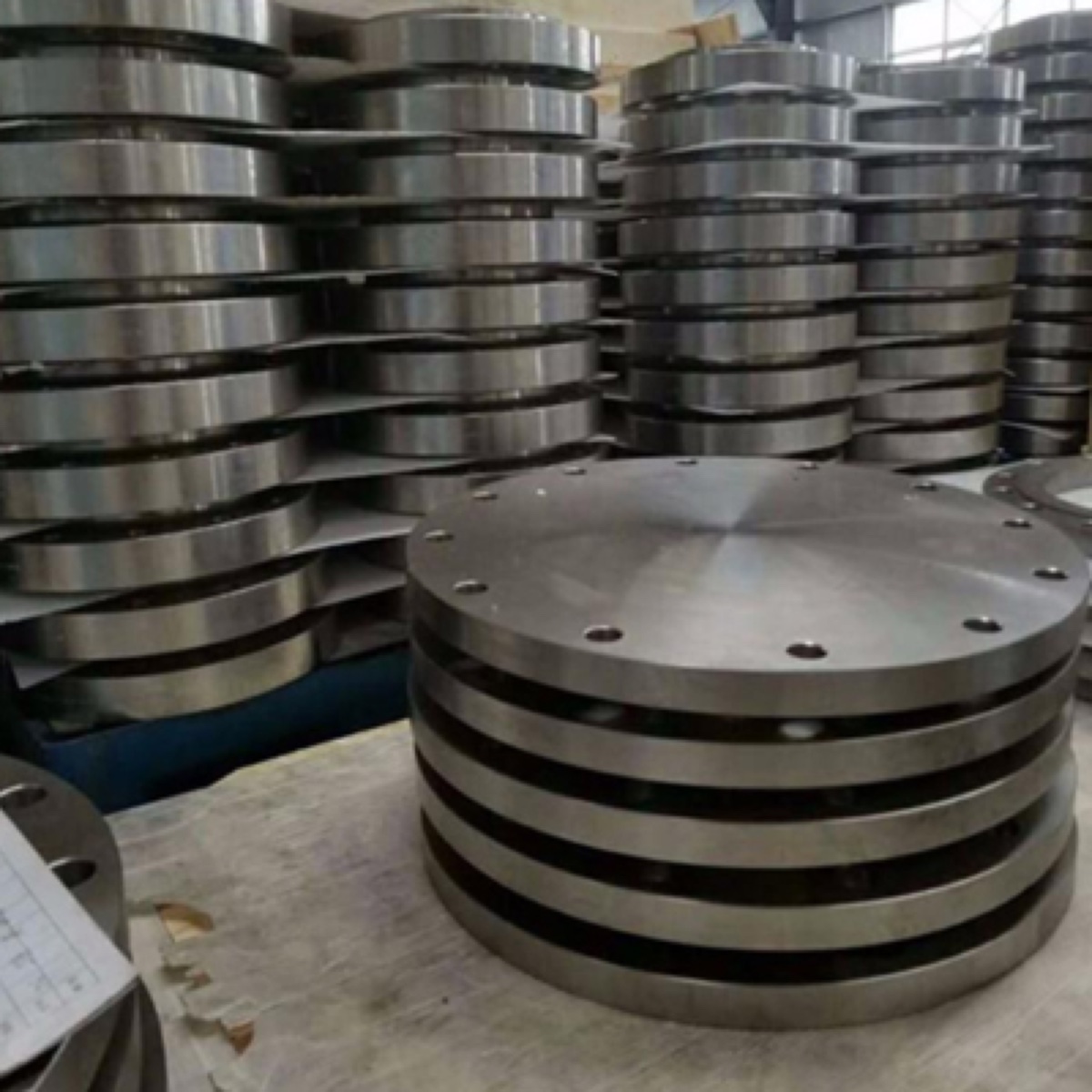
Certification & packing — EN 10204 3.1 MTC (3.2 witnessed on request); faces protected, palletised or crated by size as pictured on this page.
Where BLFF Flanges Are Used
The flat-face side of industry: water and wastewater works, building services and fire protection, cast-iron pump and valve nozzles across every plant, GRP and FRP piping in chemical and desalination service, rubber-lined and glass-lined equipment in acids and brine, and low-pressure utility headers generally. Production below:
Forged Blind Flanges — Packed in Lined Export CrateMachined Blind Flanges — Stacked at Our Works
BLFF Flange Dimensions
Flat-face blind dimensions share the B16.5 / B16.47 blind tables — same OD and drilling, the raised ring simply omitted. Full charts by class:
Example: “Blind Flange, FF, 8″ NB, ASME B16.5 Class 150, ASTM A105, to suit Class 125 CI pump flange, EN 10204 3.1 — 6 pcs.” Quotations normally within 24 hours with price, unit weight and delivery.
BLFF Flanges — Frequently Asked Questions
What is a BLFF flange?
A BLFF flange is a blind flange with a flat face — a solid forged disc, drilled to the standard bolt pattern with no bore, whose gasket surface is machined flush across the entire face instead of carrying a raised ring. Used with a full-face gasket, it closes lines and nozzles exactly as any blind does, but its flat face spreads the bolt load across the whole contact area — the property that protects cast iron, GRP and lined mating equipment from cracking. Dimensions follow ASME B16.5 to 24 inch and ASME B16.47 beyond.
What does BLFF stand for?
Blind, Flat Face — the piping-list shorthand combining the flange type with its facing. The family reads the same way: BLRF is the raised-face blind that dominates steel piping, BLRTJ the ring-joint blind of the high-pressure metal-gasket classes. On drawings you may also see BL FF, Blind FF or flat-face blind; all describe the product on this page.
Why does the flat face exist?
To protect brittle and weak flanges from bending. When a raised-face flange bolts to a flat-face one, the contact sits only on the small raised ring — and tightening the bolts levers the outer rim of the weaker flange over that ring like a see-saw. Ductile steel shrugs it off; cast iron, GRP and lined flanges crack. The flat face removes the lever: full-face contact, full-face gasket, bolt load spread evenly — which is why FF is the standard of the cast-iron, water-works and composite-piping world.
Can a raised face flange be bolted to a flat face flange?
Against cast iron or GRP — no; it is the classic way to crack the weaker part, and most specifications prohibit it outright. Where an RF steel flange must meet an FF system, accepted practice is to machine the raised face off the steel flange (steel tolerates the loss; the thickness allows it) or simply to buy the FF version — this page's product — in the first place. Between two ductile steel flanges an RF-to-FF joint can be made to seal, but it remains poor practice; matching facings is the rule.
What is a full-face gasket, and why must a BLFF use one?
A gasket that covers the entire flange face, bolt holes included — cut from elastomer, compressed fibre or PTFE sheet, with holes punched for the studs. On a flat face it is essential: a ring gasket sitting only inside the bolt circle would let bolt load bend the unsupported rim — recreating the exact problem the flat face exists to avoid. Full-face gasket on a full flat face keeps every part of the joint in compression, which is what lets cast iron and GRP live happily in the same joint as forged steel.
BLFF or BLRF — which should be specified?
Match the mating flange, always. Steel piping systems run raised face by default, so their blinds are BLRF. Cast iron pumps and valves (Class 125/250), GRP and FRP piping, rubber- and glass-lined equipment, and many water-works systems run flat face — their blinds are BLFF with full-face gaskets. The two are not interchangeable on a joint: an RF blind against an FF cast-iron flange risks cracking it. When in doubt, check the mating equipment's flange standard; we confirm at enquiry.
Does a BLFF flange mate with Class 125 and 250 cast iron flanges?
Yes — by design. ASME B16.5 Class 150 flat-face steel flanges share bolt circles and drilling with Class 125 cast iron (B16.1), and Class 300 FF matches Class 250 cast iron, so a steel BLFF is the standard way to blank a cast-iron pump nozzle or valve. The steel blind brings full pressure capability; the flat face and full-face gasket protect the iron. It is one of the most common maintenance purchases in water and building-services work — and exactly what this page supplies.
What materials are BLFF flanges made in?
Every forged grade we produce. Carbon steel ASTM A105 dominates — the flat-face world of water, utilities and cast-iron equipment is largely carbon-steel territory — with A350 LF2 for low temperature, A182 stainless and duplex for corrosion, and the full nickel, titanium and copper-nickel range where FF systems meet chemistry: GRP acid lines, rubber-lined brine systems, seawater GRE headers. The BLFF pattern is identical across all of them; only the material certificate changes.
What sizes and classes are BLFF flanges available in?
From ½" to 24" NB per ASME B16.5 in Classes 150 through 2500 — flat face is available in every class, though Classes 150 and 300 dominate real-world FF service — and beyond 24" the ASME B16.47 tables carry blinds to 60". EN 1092-1 Type 05 blinds in the PN series, which are flat-faced by default in many pressure ratings, are forged to order. Carbon steel BLFF is a stocked item; alloy grades are forged against the order with EN 10204 3.1 certification.
How is a BLFF flange installed?
Bolted, never welded — with the full-face gasket aligned over the bolt holes, studs inserted, and a star tightening pattern in stages. One discipline specific to FF service: when the mating part is cast iron or GRP, the bolt-torque limits of the weaker material govern, not the steel blind's — over-torquing a cast-iron joint cracks the iron even with a perfect flat face. Soft full-face gaskets seat at lower stress, which is exactly why they are used. We supply torque guidance with the quotation on request.
Can BLFF flanges be tapped for testing or instruments?
Yes — the same NPT-tapped centre modification we machine on raised-face blinds applies to flat-face ones: fill, vent, drain, gauge and injection connections for hydrotest and operational duty. The engineering limits are identical, since the tap sits in the centre of the pressure-bending plate regardless of facing. Ordering the tap with the flange, machined and certified together, is the clean route; state the NPT size on the enquiry.
Where are BLFF flanges typically used?
The flat-face side of industry: water and wastewater works, building services and fire-protection systems, cast-iron pump and valve nozzles across every plant, GRP and FRP piping in chemical and desalination service, rubber-lined and glass-lined equipment in acids and brine, and low-pressure utility headers generally. Wherever the mating metal is weaker than forged steel — or the system standard says flat face — the blind that closes it is a BLFF.
Which standards cover BLFF flange dimensions?
ASME B16.5 (½"-24") and B16.47 (26"-60") govern the dimensions and drilling, with the flat face simply specified in place of the raised face — same OD, same bolt pattern, slightly different thickness through the face. EN 1092-1 Type 05 covers the European PN-series blind. Cross-compatibility with cast iron comes from matched drilling: B16.5 Class 150 FF to Class 125 iron, Class 300 FF to Class 250 iron. The material certifies separately — A105, A182 and so on — and our certificates state both together.
Is a BLFF flange thinner or lighter than a BLRF?
Marginally — it is the same blind minus the raised ring (2 mm high through Class 300, 7 mm in Class 600 and above), so the weight difference is small and the pressure design is unchanged: the class-governing thickness of the bending plate is identical. Treat BLFF weights as blind-flange weights: a 10" Class 150 is still roughly 24 kg, and large B16.47 blinds are still crane lifts. We state exact unit weights on every quotation.
Who manufactures BLFF flanges in India?
Tesco Steel & Engineering is an ISO 9001:2015 certified flange manufacturer based in Mumbai, India, forging BLFF blind flat face flanges from ½" to 24" NB per ASME B16.5 and to 60" per ASME B16.47 — in carbon steel A105 and LF2, the full A182 stainless and duplex range, and every nickel, titanium and copper-nickel grade on this site — alongside BLRF and BLRTJ facings, spectacle blinds and full-face gasket guidance, with NPT-tapped blinds machined to order and EN 10204 3.1/3.2 certification on every lot. Exported to more than 50 countries.