
Tesco Steel & Engineering manufactures Inconel 783 flanges (UNS R30783 / Alloy 783) — the aluminium-bearing, oxidation-resistant, low-thermal-expansion age-hardenable nickel-cobalt-iron superalloy with ~34% Co, ~28% Ni, balance Fe and ~5.4% aluminium plus niobium. The high aluminium forms a protective alumina scale giving far better oxidation resistance than other controlled-expansion alloys, while the composition keeps a low, stable coefficient of thermal expansion and high strength after age hardening, with resistance to stress-accelerated grain-boundary oxidation (SAGBO). Developed for gas-turbine sealing and structural rings. Available in weld neck, slip-on, blind, socket-weld, threaded, lap-joint, spectacle and orifice types to AMS 5942 / ASME B16.5. Class 150 to 2500, NPS 1/2″ to 24″, PN6 to PN400. ISO 9001:2015 certified. Made in India.
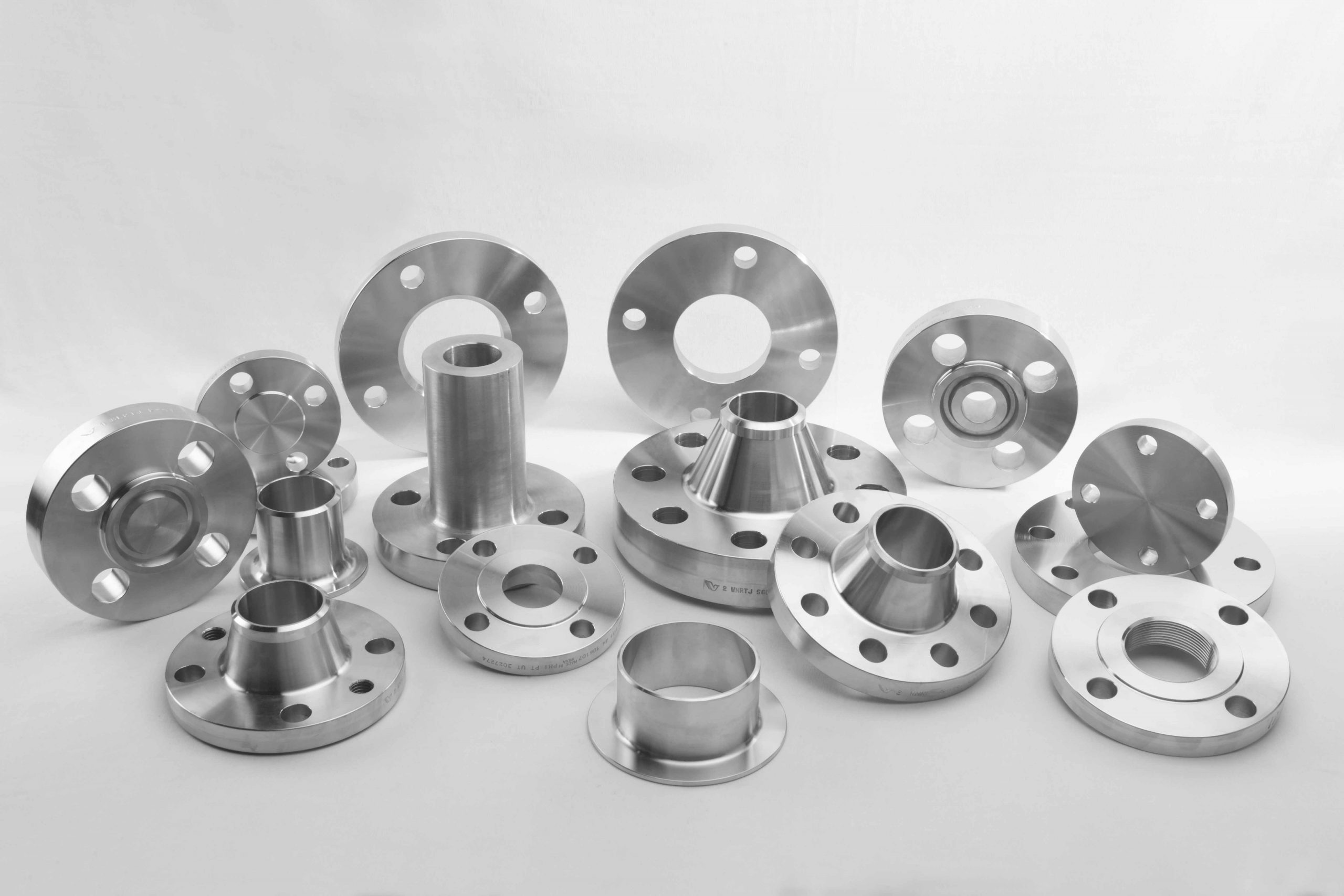
Inconel 783 (UNS R30783) Flanges
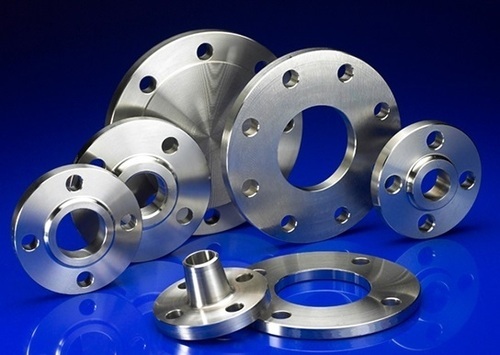
Inconel 783 Weld Neck & Blind Flanges
Tesco Steel & Engineering manufactures Inconel 783 flanges in all types from weld neck to orifice, Class 150 to 2500 — supplied in the solution-treated-and-aged condition with EN 10204 3.1 / 3.2 certification, PMI and third-party inspection on request. Explore the wider Inconel flange range, the high-strength Inconel 718 flanges and high-temperature Inconel 601 flanges, and the flange dimension charts.
| Inconel 783 flanges are available in the following specifications: | |
|---|---|
| Material Grade | Inconel 783 / UNS R30783 / Alloy 783 |
| Alloy Type | Oxidation-resistant low-thermal-expansion age-hardenable Ni-Co-Fe superalloy |
| Condition | Solution treated + precipitation (age) hardened |
| Size | 1/2″ NB to 24″ NB (DN 15 to DN 600); larger to ASME B16.47 |
| Class / Rating | 150#, 300#, 600#, 900#, 1500#, 2500# · 3000#, 6000#, 9000# (socket-weld / threaded) |
| Pressure Ratings | PN 6 – PN 400 (PN6, 10, 16, 25, 40, 64, 100, 160, 250, 320, 400) |
| Material Standards | AMS 5942 (bar/forging); applicable ASME / ASTM nickel-alloy specs |
| Dimensional Standards | ASME B16.5, ASME B16.47 (Series A & B), MSS SP-44, DIN EN 1092-1 |
| Flange Types | Weld Neck (WNRF), Slip-On (SORF), Blind, Socket Weld (SWRF), Lap Joint, Threaded / Screwed, Spectacle Blind, Long Weld Neck, Orifice, Plate |
| Flange Faces | Raised Face (RF), Flat Face (FF), Ring Type Joint (RTJ), Tongue & Groove (T&G) |
| Testing | PMI, hardness/tensile, hydrostatic, UT, MT/PT per spec; EN 10204 3.1 / 3.2 |
Inconel 783 balances cobalt, nickel and iron to achieve a low coefficient of thermal expansion, with a deliberately high aluminium addition (plus niobium and a little chromium) for the protective alumina scale and age-hardening response. This composition is the source of its rare combination of low expansion, oxidation resistance and high strength.
| Element | Inconel 783 (UNS R30783) |
|---|---|
| Cobalt (Co) | ~34% |
| Nickel (Ni) | ~28% |
| Iron (Fe) | Balance (~25–28%) |
| Aluminium (Al) | ~5.4% (alumina scale / hardening) |
| Niobium (Nb) | ~3.0% |
| Chromium (Cr) | ~2.5 – 3.5% |
| Titanium (Ti) | ~0.1 – 0.4% |
| Carbon (C) | 0.03% max |
| Mechanical Property (solution treated + aged, typical) | Inconel 783 |
|---|---|
| Tensile Strength | 1000 – 1150 MPa (145–167 ksi) |
| Yield Strength 0.2% | 620 – 760 MPa (90–110 ksi) |
| Elongation | 12 – 20% |
| Coefficient of Thermal Expansion | Low & stable (controlled-expansion class) |
| Density | ~7.81 g/cm³ |
| Key Feature | Oxidation + SAGBO resistance with low expansion |
| Standard | Inconel 783 Designation |
|---|---|
| UNS (USA) | R30783 |
| AMS (aerospace) | 5942 |
| Alloy class | Oxidation-resistant low-expansion superalloy |
| Related low-expansion alloys | Incoloy 903 / 907 / 909 (lower oxidation resistance) |
| Common names | Inconel 783, Alloy 783 |
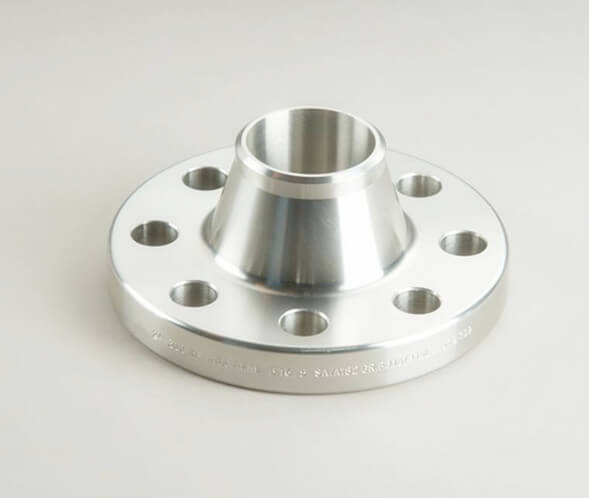
Inconel 783 Weld Neck Flange (WNRF)
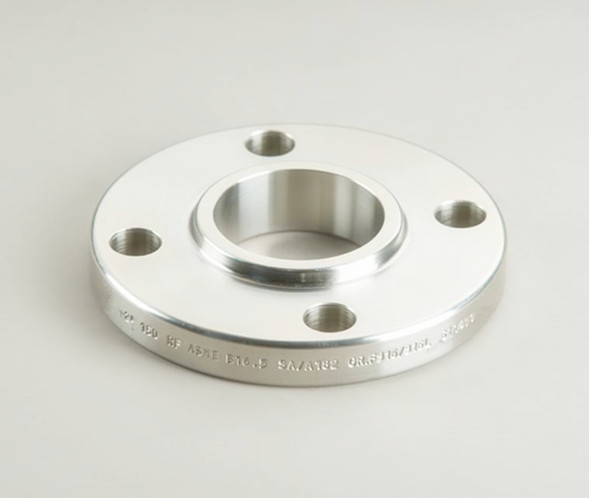
Inconel 783 Slip-On Flange (SORF)
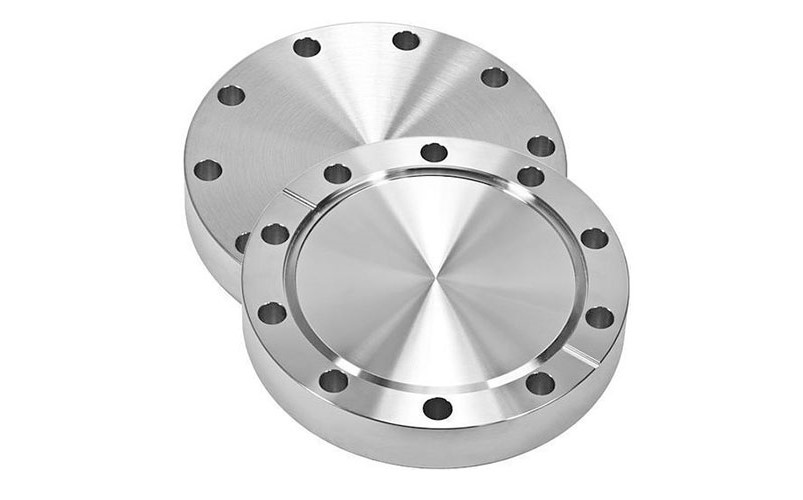
Inconel 783 Blind Flange
| Flange Type | Description & Inconel-783-Specific Use |
|---|---|
| Weld Neck (WNRF) | Tapered hub butt-welded to pipe for high-integrity, low-expansion gas-turbine structural service; weld solution-annealed, then age. |
| Slip-On (SORF) | Fillet-welded over the pipe; used in precision low-expansion assemblies at moderate pressure. |
| Blind | Seals pipe ends and nozzles in high-temperature, dimensionally-stable assemblies. |
| Socket Weld (SWRF) | Small-bore (1/2″–2″) instrument and branch connections. |
| Lap Joint (LJRF) | Used with an Inconel 783 stub end where frequent dismantling is required; economizes on alloy in the backing ring. |
| Threaded (TRFF) | Internal NPT/BSP threads for non-welded connections. |
| Spectacle Blind / Long Weld Neck / Orifice | Isolation spades, nozzle/long-neck and flow-metering flanges in Inconel 783 for precision high-temperature duty. |
| Property | 783 (R30783) | 718 (N07718) | Incoloy 909 (N19909) |
|---|---|---|---|
| Type | Low-expansion Ni-Co-Fe + Al | Ni-Cr-Fe age-hardenable | Low-expansion Ni-Co-Fe |
| Thermal expansion | Low & controlled | Standard (high) | Low & controlled |
| Oxidation resistance | Excellent (alumina scale) | Good | Limited |
| SAGBO resistance | Excellent | Good | Poor |
| Peak strength | High | Very high | High |
| Typical role | Turbine seals/rings needing low expansion + oxidation | General high-strength turbine/downhole | Turbine rings where low expansion dominates |
Keeps tight, stable clearances as temperature changes — ideal for gas-turbine seals and rings.
High aluminium forms a protective alumina scale — far better oxidation resistance than other low-expansion alloys.
Resists stress-accelerated grain-boundary oxidation that limits earlier controlled-expansion alloys.
Age hardening gives high tensile and creep strength while keeping the low-expansion behaviour.
| Industry | Typical Application |
|---|---|
| Aircraft Gas Turbines | Sealing rings, shrouds, spacers and structural rings needing low expansion |
| Industrial Gas Turbines | Casings, rings and seals where clearances must stay stable with temperature |
| Aerospace | Precision high-temperature structural and sealing components |
| High-Temperature Precision Equipment | Assemblies needing controlled expansion plus oxidation resistance |
| Power Generation | Turbine sealing and structural flanged hardware |
| Research & Test Rigs | Dimensionally stable high-temperature fixtures |
Made from certified Alloy 783 with PMI verification of Co, Ni and Al — full chemistry and heat-treatment record on the MTC.
Supplied to AMS 5942 in the solution-treated-and-aged condition, machined to ASME B16.5 dimensions.
WNRF, SORF, blind, socket-weld, threaded, lap-joint, spectacle, LWN, orifice and plate — in RF, FF, RTJ and T&G.
EN 10204 3.1 / 3.2 MTC with hardness/tensile results, heat/lot traceability and third-party inspection on request.
Inconel 783 flange prices reflect the high cobalt and nickel content plus forging and the solution + ageing heat treatment — it is a specialised low-expansion, oxidation-resistant superalloy for gas-turbine service. Tesco Steel & Engineering offers competitive ex-works pricing from Mumbai with full export documentation and material traceability. Click Ask for Quote or message us on WhatsApp at +91 92233 66922 with flange type, size (NB), pressure class, quantity and documentation requirements.
Q1. What is an Inconel 783 flange?
An Inconel 783 flange is a pipe flange made from the aluminium-bearing, oxidation-resistant, low-thermal-expansion age-hardenable nickel-cobalt-iron superalloy UNS R30783 (Alloy 783) — about 34% cobalt, 28% nickel, balance iron, with roughly 5.4% aluminium and 3% niobium. The high aluminium forms a protective alumina scale for excellent oxidation resistance while the composition gives a low coefficient of thermal expansion and high strength after age hardening. It was developed for aircraft gas-turbine sealing and structural rings. Flanges are made to AMS 5942 and machined to ASME B16.5 / B16.47 dimensions.
Q2. What is the chemical composition of Inconel 783?
Inconel 783 (UNS R30783) nominal composition: cobalt ~34%, nickel ~28%, iron balance (~25–28%), aluminium ~5.4%, niobium ~3.0%, chromium ~2.5–3.5%, titanium ~0.1–0.4%, with carbon ~0.03% max. The high aluminium is unusual among controlled-expansion alloys and is the key to its oxidation resistance.
Q3. Why is Inconel 783 a low-thermal-expansion alloy?
Inconel 783 is one of the controlled- or low-expansion superalloys: its nickel-cobalt-iron balance gives a low and stable coefficient of thermal expansion over a wide temperature range, similar to the Incoloy 903/907/909 family. This low expansion lets gas-turbine seals and rings keep tight clearances as temperature changes, improving engine efficiency. Inconel 783 adds high aluminium so it achieves this with much better oxidation resistance than earlier low-expansion alloys.
Q4. Why does Inconel 783 contain so much aluminium?
The ~5.4% aluminium in Inconel 783 forms a tightly adherent aluminium-oxide (alumina) surface scale. This gives the alloy oxidation resistance and resistance to stress-accelerated grain-boundary oxidation (SAGBO) far superior to other low-expansion alloys such as Incoloy 909, while also contributing to age hardening. It is this combination of low expansion plus oxidation resistance that makes 783 valuable in gas turbines.
Q5. What standards apply to Inconel 783 flanges?
Inconel 783 is supplied to aerospace material specifications such as AMS 5942 (bar and forging) in the solution-treated and aged condition, machined to ASME B16.5 (1/2 inch to 24 inch) or ASME B16.47 / MSS SP-44 dimensions for larger sizes. Material is supplied with EN 10204 3.1 / 3.2 certification and the heat-treatment record.
Q6. Is Inconel 783 age-hardenable?
Yes. Inconel 783 is precipitation- (age-) hardenable. A solution treatment followed by ageing develops strengthening precipitates (gamma-prime and beta phases) that give high strength and good creep resistance at temperature. Flanges are supplied in the specified solution-treated-and-aged condition, with the heat-treatment record on the certificate.
Q7. What are the mechanical properties of Inconel 783?
Typical Inconel 783 properties in the solution-treated and aged condition: tensile strength about 1000–1150 MPa (145–167 ksi), yield strength about 620–760 MPa (90–110 ksi), elongation about 12–20%, density about 7.81 g/cm³, with a low coefficient of thermal expansion. It combines high strength with low, stable expansion and oxidation resistance.
Q8. Can Inconel 783 flanges be welded?
Yes, with appropriate procedures. Inconel 783 is welded by GTAW (TIG) in the solution-annealed condition with matching or compatible filler, followed by solution treatment and ageing to restore properties. As with other aluminium-bearing age-hardenable superalloys, clean joints, controlled heat input and proper post-weld heat treatment are important to avoid cracking and to develop full strength.
Q9. What industries use Inconel 783 flanges?
Inconel 783 is used primarily in aircraft and industrial gas turbines — sealing rings, shrouds, casings, spacers and structural rings where low thermal expansion, high strength and oxidation resistance are needed together. It is also used in other high-temperature precision applications that demand controlled expansion with good oxidation resistance.
Q10. Are Inconel 783 flanges supplied with material test certificates?
Yes. Every Inconel 783 flange is supplied with EN 10204 3.1 (or 3.2) mill test certificates confirming chemistry, mechanical properties, heat-treatment condition and heat/lot traceability, with PMI, hydrostatic testing and third-party inspection on request. Tesco Steel & Engineering is an ISO 9001:2015 certified manufacturer and exporter from Mumbai, India.