
Tesco Steel & Engineering provides RTJ groove cladding and weld overlay for ring-type-joint flanges — depositing a corrosion- and erosion-resistant alloy onto the sealing groove and machining it back to the exact ring number. We use Inconel 625, Monel 400, Duplex 2205, Super Duplex 2507, Hastelloy C276 and Stellite 6, for both flange repair / refurbishment and new clad-flange manufacture. Machined to ASME B16.5 / B16.47, API 6A & API 17D, with NACE MR0175 compliance available. ISO 9001:2015 certified.
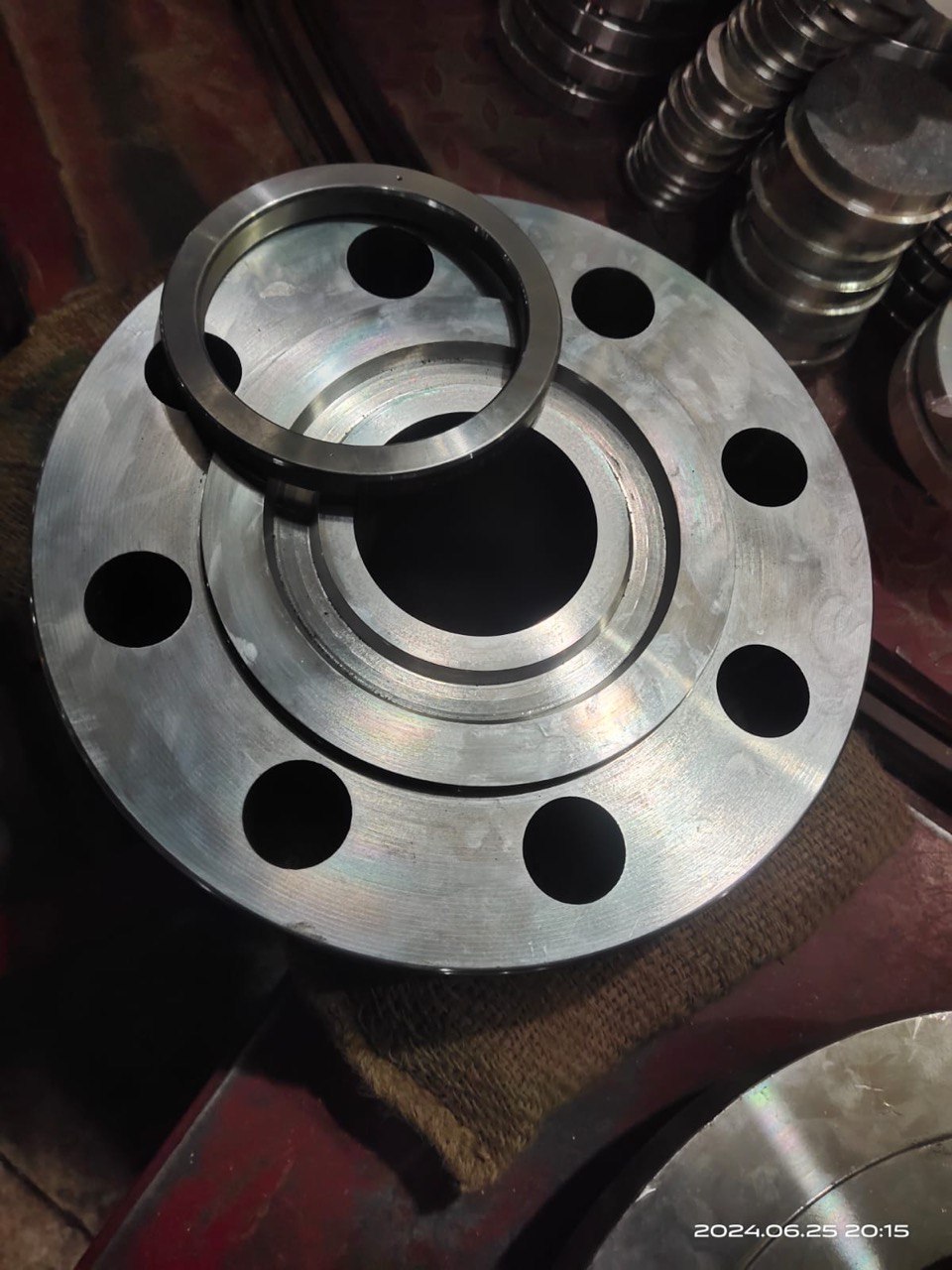
RTJ Flange Groove & Ring-Joint Gasket
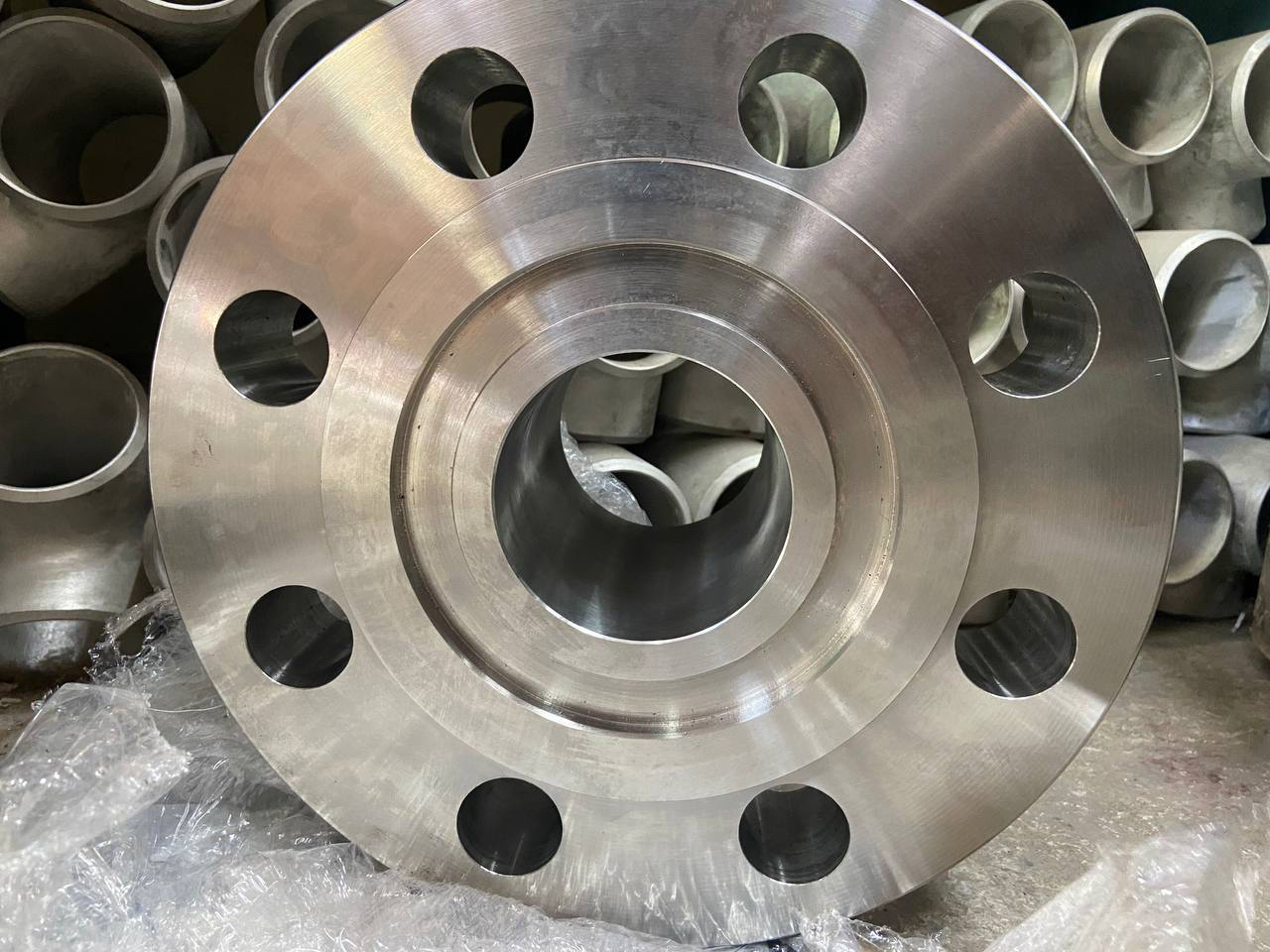
Machined RTJ Sealing Surface
On high-pressure ring-type-joint flanges, the sealing surface is a precision groove that a metal ring gasket seats into. In sour, chloride-bearing or otherwise aggressive service, that groove corrodes, pits or erodes — and a damaged groove leaks. Cladding the groove with a noble alloy, then re-machining it to the correct ring profile, gives the flange a fresh, corrosion-resistant sealing surface without scrapping the forging. We do this both as a repair for in-service flanges and as new manufacture, supplying brand-new flanges with an overlaid (clad) groove instead of a costly solid exotic-alloy forging.
A noble-alloy overlay (e.g. Inconel 625) shields the sealing surface from sour gas, chlorides, seawater and acids that attack carbon and low-alloy steel.
Hardfacing alloys such as Stellite 6 resist erosion, galling and high-cycle wear on demanding sealing faces.
A protected groove lasts far longer, reducing repeat repairs and unplanned shutdowns.
Refurbishment fits into turnarounds and shutdowns — days, not the weeks or months a new exotic forging takes.
You reuse the existing forging and clad only the sealing surface — typically 40–70% cheaper than a new flange.
The groove is CNC-machined back to the exact ring number and finish, restoring a leak-tight metal-to-metal seal.
Overlays can be produced to NACE MR0175 / ISO 15156 for sour (H₂S) service, with full documentation.
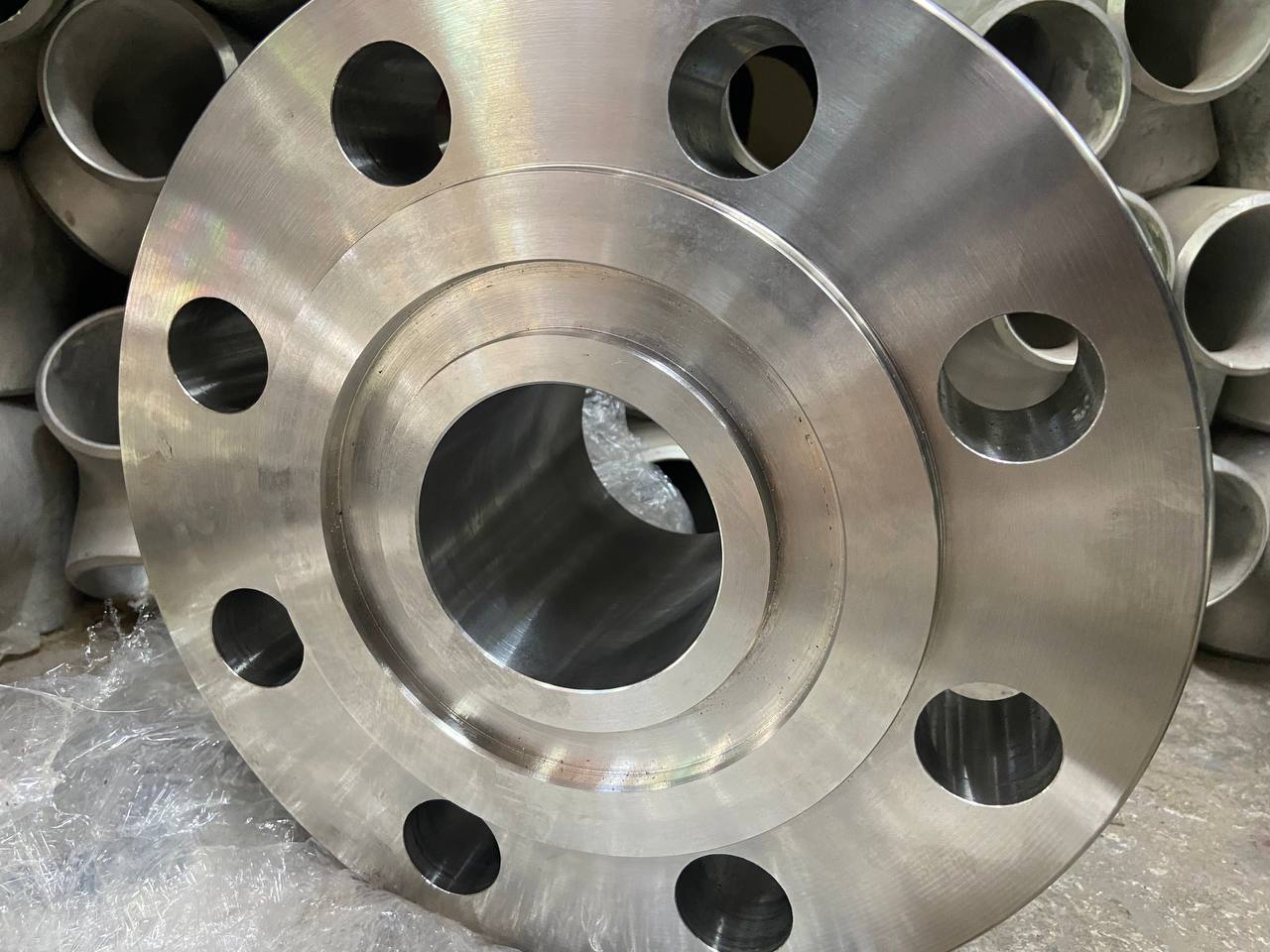
Clad & Machined RTJ Groove Face
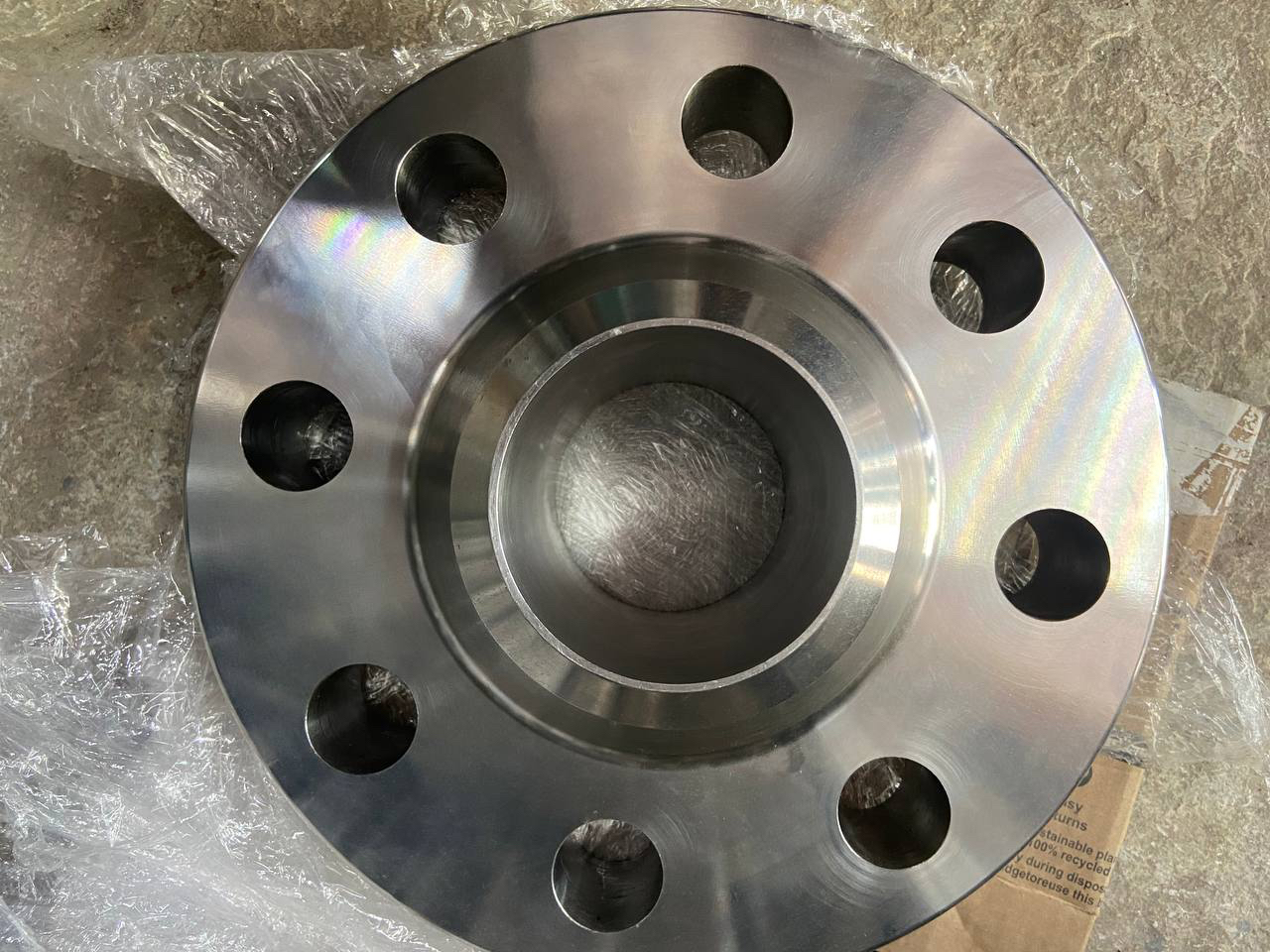
RTJ Flange Groove Refurbishment
| Material | Typical Applications | Corrosion Resistance | Wear Resistance | Common Industries |
|---|---|---|---|---|
| Inconel 625 | Sour gas, chlorides, seawater, acids | Excellent | Good | Oil & gas, offshore, subsea, chemical |
| Monel 400 | Seawater, brine, hydrofluoric acid | Excellent (reducing / seawater) | Moderate | Marine, offshore, chemical |
| Duplex 2205 | Chloride & moderately sour media | Very good | Good | Oil & gas, desalination, process |
| Super Duplex 2507 | High-chloride, seawater, sour service | Excellent | Very good | Subsea, offshore, desalination |
| Hastelloy C276 | Strong acids, mixed chlorides | Outstanding | Good | Chemical, petrochemical |
| Stellite 6 | Wear, galling, high-temperature erosion | Good | Outstanding (hardfacing) | Valves, power, high-wear sealing |
| 316L Stainless Steel | Mild corrosion & general service | Good | Moderate | General process, water, utilities |
| Industry | Where RTJ groove cladding is used |
|---|---|
| Oil & Gas | Wellheads, manifolds, separators and high-pressure RTJ flange connections |
| Offshore Platforms | Topside and process piping flanges in marine, sour environments |
| Subsea Equipment | Subsea connectors and API 17D flanges where replacement is costly |
| Petrochemical & Refineries | Reactor, column and high-temperature line flanges; turnaround repairs |
| LNG Facilities | Cryogenic and high-pressure RTJ sealing surfaces |
| Power Plants | Steam and high-temperature flange grooves; Stellite hardfacing |
| Chemical Processing | Aggressive-acid service flanges in Hastelloy / Inconel overlay |
| Shipbuilding & Marine | Seawater systems with Monel and super duplex overlays |
| Capability | Detail |
|---|---|
| Flange standards | ASME B16.5, ASME B16.47 (Series A & B), API 6A, API 17D |
| RTJ ring numbers | R, RX (oval / octagonal, ASME B16.20) and BX (API 6A) groove profiles |
| Sour-service code | NACE MR0175 / ISO 15156 compliant overlays |
| Welding qualification | WPS / PQR to ASME Section IX; certified welders |
| Overlay alloys | Inconel 625, Monel 400, Duplex 2205, Super Duplex 2507, Hastelloy C276, Stellite 6, 316L |
| Scope | New clad-flange manufacture & repair / refurbishment of existing flanges |
| Custom | Non-standard groove dimensions and special flanges to drawing |
Refurbishment in days to a couple of weeks — built around your shutdown and turnaround windows.
Overlays welded to qualified WPS/PQR under ASME Section IX by certified welders.
Every overlay confirmed by PMI, with full material traceability and EN 10204 3.1 certification.
New-flange quality at repair economics — with global shipping and export documentation handled in-house.
Representative example for illustration of typical scope and outcomes.
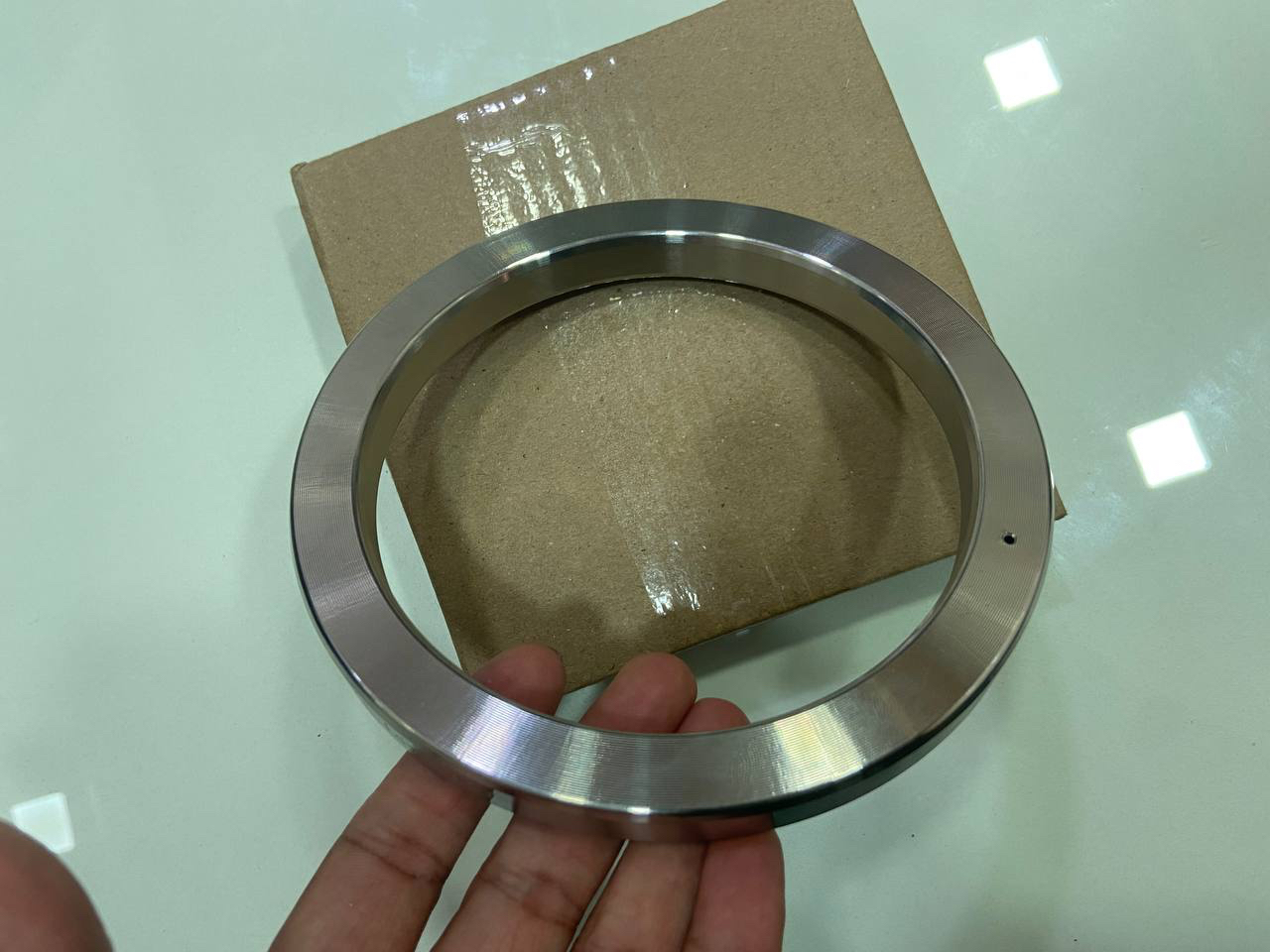
Every clad groove is re-machined to a standard RTJ ring number — R, RX or BX — so it accepts the correct metal ring gasket and seals to code. Need the right ring? See our RTJ gasket size chart for ring numbers by flange size and class.
API 17D Ring Gasket (BX / SBX155, 316)
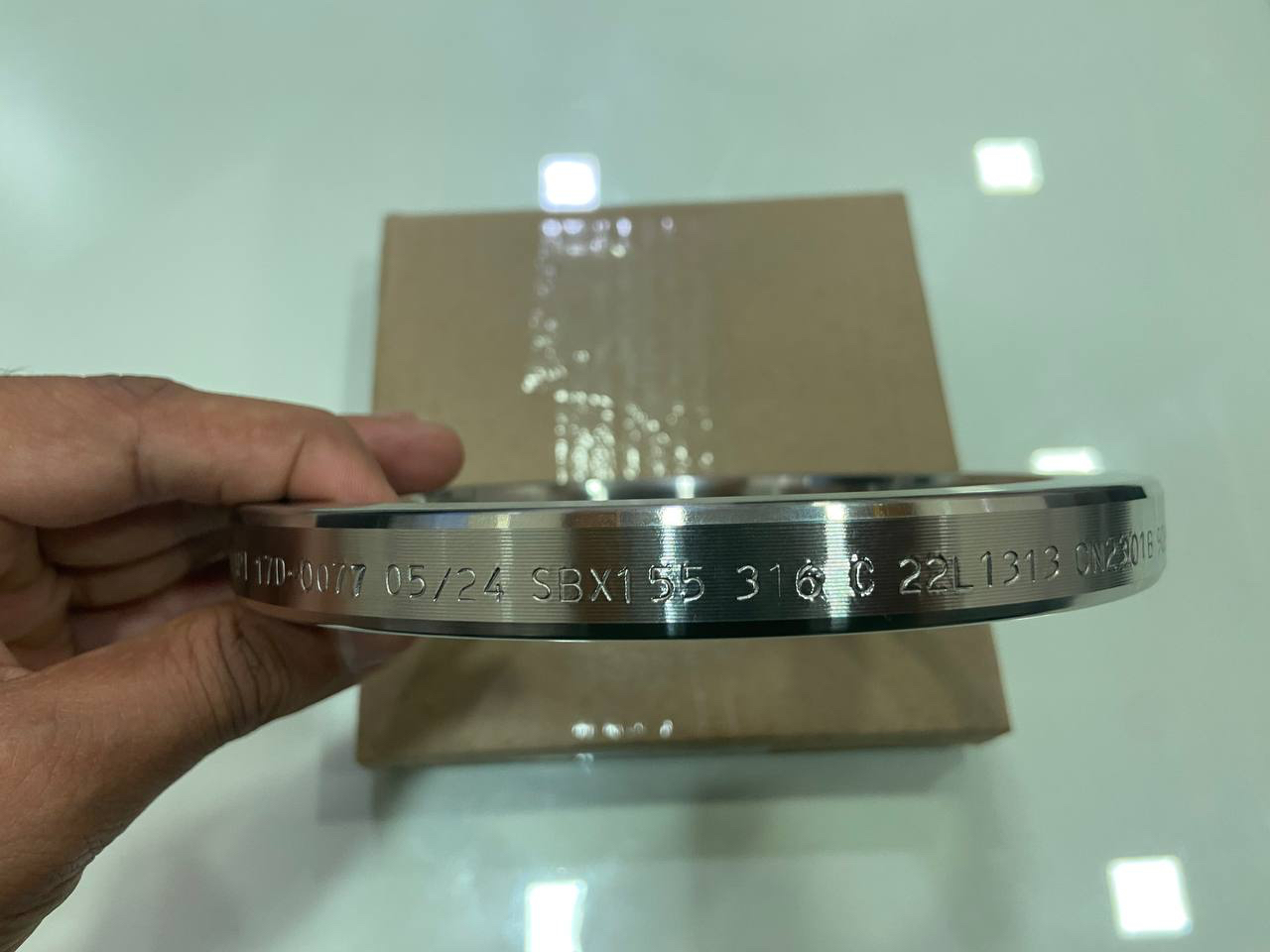
Ring-Type-Joint Gasket (316 Stainless)
For a fast, competitive quote on RTJ groove cladding — repair or new manufacture — please send us:
| To quote, send us | Example |
|---|---|
| Drawing / RTJ ring number | Flange drawing, or ring no. (e.g. R45, BX155) |
| Technical specifications | Flange standard & class (ASME B16.5 Class 1500, API 6A 10K…) |
| Material grade (overlay) | e.g. Inconel 625, NACE MR0175 |
| Quantity | Number of flanges / grooves |
| Delivery location | Port / site for shipping |
What is RTJ groove cladding?
RTJ groove cladding is the application of a corrosion- and erosion-resistant weld overlay — most often Inconel 625 — onto the ring-type-joint (RTJ) sealing groove of a flange, which is then machined back to the original ring number and finish. It protects or repairs the sealing surface so the flange resists corrosion, lasts longer and seals reliably.
Why is Inconel 625 used for RTJ groove overlays?
Inconel 625 (Alloy 625) is the industry default because it combines outstanding resistance to chlorides, sour gas (H₂S) and a wide range of acids with high strength and excellent weldability. It bonds metallurgically to carbon and low-alloy steel flanges and meets NACE MR0175 for sour service, so the sealing surface stays sound in aggressive oil & gas and offshore media.
Can damaged RTJ grooves be repaired?
Yes. Corroded, pitted, eroded or galled RTJ grooves are routinely repaired by machining out the damage, depositing a weld overlay, and re-machining the groove to its original ring number and surface finish. Repair restores a leak-tight sealing surface at a fraction of the cost and lead time of a new flange.
What materials are used for RTJ groove cladding?
The common overlay alloys are Inconel 625, Monel 400, Duplex 2205, Super Duplex 2507, Hastelloy C276, Stellite 6 (for hardfacing) and 316L stainless steel. The choice depends on the service — Inconel 625 for sour/chloride media, Monel for seawater and HF acid, duplex/super duplex for high-chloride strength, Hastelloy for strong acids, and Stellite where wear and galling resistance matter most.
How thick is RTJ groove weld overlay?
A finished corrosion-resistant overlay is typically about 3 mm (1/8 inch) thick after machining, and codes such as NACE MR0175 commonly require a minimum of around 3 mm of overlay at the sealing surface. More material is deposited before machining to allow for blending and final cut. The exact thickness is set by the specification and the depth of damage being repaired.
What standards govern RTJ groove repairs?
RTJ groove dimensions follow ASME B16.5, ASME B16.47, API 6A and API 17D, with ring grooves to ASME B16.20 / API 6A ring numbers (R, RX, BX). Welding is qualified to ASME Section IX (WPS/PQR), and sour-service work follows NACE MR0175 / ISO 15156. Material and overlay are documented with EN 10204 3.1 certificates.
Is RTJ groove cladding NACE compliant?
Yes. When specified, RTJ groove overlays are produced to NACE MR0175 / ISO 15156 for sour (H₂S) service — using qualified alloys such as Inconel 625, controlled welding procedures, a compliant minimum overlay thickness and hardness control. NACE-compliant documentation is provided with the flange.
Can RTJ grooves be overlaid with Stellite?
Yes. Stellite 6 (a cobalt-chromium hardfacing alloy) is applied to RTJ grooves where wear, galling and high-temperature erosion are the main concern — for example on valve and high-cycle sealing surfaces. Stellite gives an extremely hard, wear-resistant sealing face, and can be combined with a corrosion-resistant buffer layer where needed.
What is the difference between RTJ groove repair and flange replacement?
RTJ groove repair restores the existing flange by cladding and re-machining only the damaged sealing surface, keeping the original forging, bolt holes and bore. Replacement means scrapping the flange and buying a new one — far more expensive and with a long lead time, especially in exotic alloys or large bores. Repair is usually the faster, lower-cost option when the flange body is sound.
How long does RTJ groove refurbishment take?
A typical RTJ groove refurbishment runs from a few days to about two weeks, depending on size, alloy, heat-treatment needs and inspection scope. This is dramatically faster than the multi-week or multi-month lead time for a new forged flange in an exotic alloy — which is why repair is favoured during turnarounds and shutdowns.
Can RTJ groove overlays be machined to original dimensions?
Yes. After the overlay is deposited, the groove is CNC-machined back to the exact ring number, groove width, depth, angle and surface finish required by ASME B16.5 / API 6A, so the refurbished flange seals identically to a new one and accepts a standard RTJ ring gasket.
What inspection methods are used after overlay?
After overlay and machining we use visual inspection, dye-penetrant (PT) and/or ultrasonic (UT) testing for weld soundness, PMI (positive material identification) to confirm the alloy, hardness testing, and dimensional inspection against the RTJ ring standard. Results are recorded in the quality dossier supplied with the flange.
Which industries use RTJ groove cladding?
Oil & gas, offshore platforms, subsea equipment, refineries, petrochemical and chemical plants, LNG facilities, power plants and shipbuilding all use RTJ groove cladding — anywhere high-pressure RTJ flanges face corrosive or sour media and need a durable, leak-tight sealing surface.
Can offshore flanges be refurbished instead of replaced?
Yes. Offshore and subsea RTJ flanges are ideal candidates for refurbishment: their large bores and exotic alloys make replacement very costly and slow, while cladding and re-machining the groove restores sealing performance quickly and to the same code, keeping platforms and turnarounds on schedule.
What is the cost advantage of RTJ groove repair?
Repairing the groove typically costs a fraction of a new flange — often 40–70% less — because you reuse the existing forging and only clad and machine the sealing surface. The saving grows with size and alloy: a large-bore Inconel-overlaid flange repair can save the majority of the cost of an equivalent new forged item, plus weeks of lead time.
What is an RTJ flange and ring type joint?
A ring-type-joint (RTJ) flange has a precision-machined groove that holds a metal ring gasket (R, RX or BX type). Bolting up compresses the ring into the grooves of both flanges, creating an initial line-contact seal that tightens under pressure — the standard high-pressure, high-temperature sealing method in oil & gas and process plants.
What welding processes do you use for groove overlay?
Corrosion-resistant overlays are usually deposited by GTAW (TIG), including hot-wire TIG, for a clean, low-dilution, high-quality deposit on the sealing surface. Other processes such as PTA or wire-arc may be used for hardfacing or larger areas. All welding is to qualified WPS/PQR under ASME Section IX by certified welders.
Can you clad new flanges as well as repair used ones?
Yes. We provide RTJ groove cladding both as a repair/refurbishment service for in-service flanges and as new manufacture — supplying brand-new flanges with a corrosion-resistant overlaid (clad) RTJ groove, which is far more economical than a solid exotic-alloy flange.
What RTJ ring numbers and groove sizes can you overlay?
We overlay and machine the full range of RTJ ring numbers — R and RX (oval/octagonal, per ASME B16.20) and BX (per API 6A) — across ASME B16.5, ASME B16.47 and API 6A / 17D flange sizes and pressure classes, and to custom dimensions on request.
How do you verify the overlay is the correct alloy?
Every overlaid sealing surface is checked by PMI (positive material identification) using XRF or optical emission, confirming the deposited chemistry matches the specified alloy (for example Inconel 625) across the finished groove. The PMI report is included in the documentation package.
What surface finish is achieved on the groove?
The machined RTJ groove is finished to the surface roughness required by ASME B16.5 / API 6A for ring-joint sealing surfaces — typically around 63 microinch Ra or finer — so the metal ring gasket seats and seals correctly. The exact finish is confirmed during dimensional inspection.
Will the overlay affect the flange's pressure rating?
No. A correctly applied overlay bonds metallurgically to the base flange and the groove is machined back to standard dimensions, so the flange retains its original pressure class and rating. The overlay adds corrosion/erosion protection to the sealing surface without reducing the flange's structural capacity.
Can duplex, super duplex, Hastelloy or Monel be used as the overlay?
Yes. Besides Inconel 625, we overlay grooves with Monel 400 (seawater, HF acid), Duplex 2205 and Super Duplex 2507 (high-chloride strength), and Hastelloy C276 (strong acids and chlorides). The alloy is selected to match the process medium, temperature and corrosivity.
Do you provide documentation and certificates?
Yes. The package can include EN 10204 3.1 material test certificates, welding procedure and qualification records (WPS/PQR to ASME IX), PMI reports, NDE (PT/UT) reports, hardness results, dimensional inspection reports and NACE MR0175 compliance statements — with third-party inspection (BV, SGS, Lloyd's, TÜV) on request.
How do I request a quote for RTJ groove cladding?
Send your flange drawing or RTJ ring number, the overlay alloy and standard (e.g. Inconel 625, NACE MR0175, API 6A), the quantity, and your delivery location. Tesco Steel & Engineering will respond with a competitive quote and lead time, for both repair/refurbishment and new clad-flange manufacture.