Inconel 600 Slip On Flanges — UNS N06600 Manufacturer
Tesco Steel & Engineering forges Inconel 600 slip on flanges — the workhorse nickel-chromium-iron alloy (UNS N06600, Werkstoff 2.4816, NiCr15Fe) — to ASTM B564 and ASME B16.5 Class 150–2500 from ½″ to 24″ NB, larger patterns to order. At least 72% nickel with 14–17% chromium: oxidation-resistant to ~1093 °C, at home in carburising and nitriding furnace atmospheres, hot dry chlorine and HCl, and caustic at temperature — with complete chloride SCC immunity. Where pure nickel meets its heat limits and 310S stainless meets its chloride limits, Inconel 600 is the next honest answer. Supplied solution annealed, every lot with EN 10204 3.1/3.2 MTC. ISO 9001:2015, made in Mumbai, India — exported to 50+ countries.
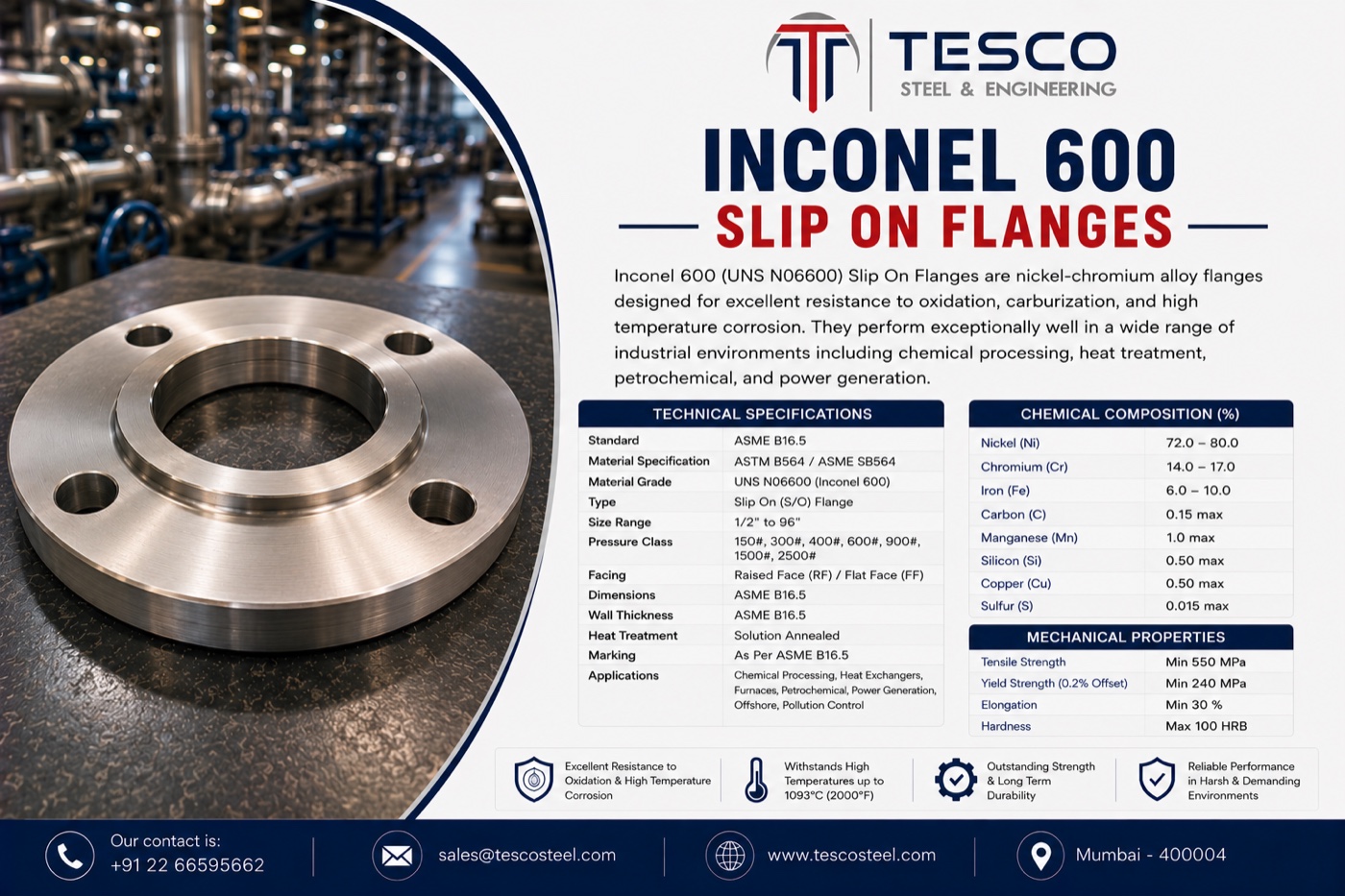
Inconel 600 · Alloy 600 · N06600ASTM B564 · 2.4816 · NiCr15FeNi 72% min · Cr 14–17%Oxidation to ~1093 °CASME B16.5 Class 150–2500550 MPa TS / 240 MPa YS minEN 10204 3.1 / 3.2 · ISO 9001:2015
Inconel 600 Slip On Flange — Specifications at a Glance
What is an Inconel 600 Slip On Flange?
Inconel 600 = nickel taught to face the furnace.≥72% Ni + 15% Cr (NiCr15Fe / 2.4816): the chromia film survives red heat to ~1093 °C, the nickel keeps caustic capability, hot dry Cl₂/HCl service and chloride SCC immunity — and carburising or nitriding atmospheres that eat stainless leave it alone. The general-purpose high-temperature nickel alloy, and the founding Inconel. As a slip-on: two fillet welds with ERNiCr-3 filler, no preheat, no PWHT — forged to ASTM B564, not A182.
Also searched as: Alloy 600 slip on flange, Inconel 600 SORF flange, ASTM B564 N06600 slip on flange, 2.4816 / NiCr15Fe slip on flange, nickel chromium slip on flange — all refer to the product on this page. See also our Inconel 600 flanges overview and Inconel hub.
Rule of thumb: 600 is the chemistry-plus-heat generalist — cheaper ladders (310S, 800H) handle clean heat, 601 takes hotter cyclic oxidation, 625 takes wet, hard and strong.
Inconel 600 (UNS N06600) Chemical Composition
Ni (+Co)
Cr
Fe
C
Mn
Si
Cu
S
72.0 min
14.0-17.0
6.0-10.0
0.15 max
1.0 max
0.50 max
0.50 max
0.015 max
Values in weight % for UNS N06600 per ASTM B564. The chromium is the defining addition over pure nickel — it forms the protective chromia scale that carries the alloy to furnace temperatures — while the 72%+ nickel keeps the caustic capability and chloride SCC immunity of the family. The iron is economy, not function.
Inconel 600 Mechanical Properties
Tensile Strength, MPa (ksi)
Yield Strength 0.2%, Min, MPa (ksi)
Elongation % min (2")
Density
550 (80) min
240 (35) min
30
8.47 g/cm³
Per ASTM B564, solution annealed condition. Useful strength persists far beyond stainless territory, and the alloy is tough from cryogenic temperatures upward with no ductile-brittle transition. Values demonstrated per heat on the EN 10204 certificate.
Inconel 600 Slip On Flange Specifications
Inconel 600 Slip On Flanges are available in the following specifications:
1/2"NB to 24"NB per ASME B16.5; larger diameters and EN 1092-1 patterns in 2.4816 to order
Class
150#, 300#, 400#, 600#, 900#, 1500#, 2500#
Facing
Raised Face (SORF) — default; Flat Face (SOFF) or RTJ where the piping class specifies
Heat Treatment
Solution annealed per ASTM B564, thermal record retained
Service
Furnace & heat-treatment atmospheres (oxidising, carburising, nitriding) to ~1093 °C, hot dry Cl₂/HCl, caustic at temperature — chloride SCC immune
Installation
Two fillet welds (hub + bore), pipe set back 1/8"; ERNiCr-3 / ENiCrFe-3 filler, sulphur-clean joints, no preheat, no PWHT
Testing
PMI verification and dye-penetrant examination on request
Certification
EN 10204 3.1 (standard) / 3.2 witnessed
Equivalent Grades of Inconel 600
Trade Names
ASTM Forging
UNS
Werkstoff Nr.
EN
Inconel 600 / Alloy 600 / Nicrofer 7615
B564
N06600
2.4816
NiCr15Fe
ASME SB-564 is the boiler-code twin. System partners follow the same B-series logic: ASTM B167 seamless pipe & tube, ASTM B168 plate, sheet & strip and ASTM B366 welding fittings (WPNCI). Not an A182 grade — nickel-alloy flanges are governed by the B-series standards.
Why Inconel 600 Slip Ons Are Specified
The Furnace Generalist
Oxidising, carburising and nitriding atmospheres to ~1093 °C — the fixtures, retorts and hot piping of heat-treatment plants are built from this alloy.
Hot Halogen Capable
Protective chloride films keep it serving dry chlorine and HCl to roughly the 500 °C region — chlorination reactors and vent systems trust it where stainless is unthinkable.
Caustic With Chromium
Most of pure nickel's hydroxide capability, plus strength and oxidation resistance nickel cannot offer — hot caustic evaporation's structural alloy.
Chloride SCC Off the Table
At 72%+ nickel, the cracking mechanism that retires stainless in hot chloride service simply does not operate.
Three lines define the edges.Sulphur: hot sulphidising atmospheres attack high-nickel alloys — above ~550 °C in sulphur-bearing flue gas, iron-base Incoloy 800H or stainless does better. Wet acids: sulphuric and hydrochloric chemistry belongs to Alloy 20, 625 or Hastelloy. And the nuclear chapter: Alloy 600 is historically associated with primary-water SCC in steam generators — the industry moved to 30%-chromium Inconel 690 for that duty. Honest suppliers know the history; state the service on the enquiry and we confirm the grade.
How Our Inconel 600 Slip On Flanges Are Manufactured
1
Forging — cut billet of certified N06600 heat is hot-forged into the flange blank, keeping full heat traceability from raw material to despatch.
2
Solution annealing — homogenised per ASTM B564; furnace record retained.
3
Machining — hub, faces and bolt holes to ASME B16.5; the bore machined slightly over pipe OD per the slip-on tolerance.
4
Facing & finish — SORF raised face with serrated stock finish, flat face or RTJ groove.
5
Testing & marking — mechanical and chemical verification against the heat (PMI where the order specifies), then permanent marking of standard, grade, size, class and heat number.
6
Certification & packing — EN 10204 3.1 MTC (3.2 witnessed on request), export-packed for sea or air freight.
Where Inconel 600 Slip On Flanges Are Used
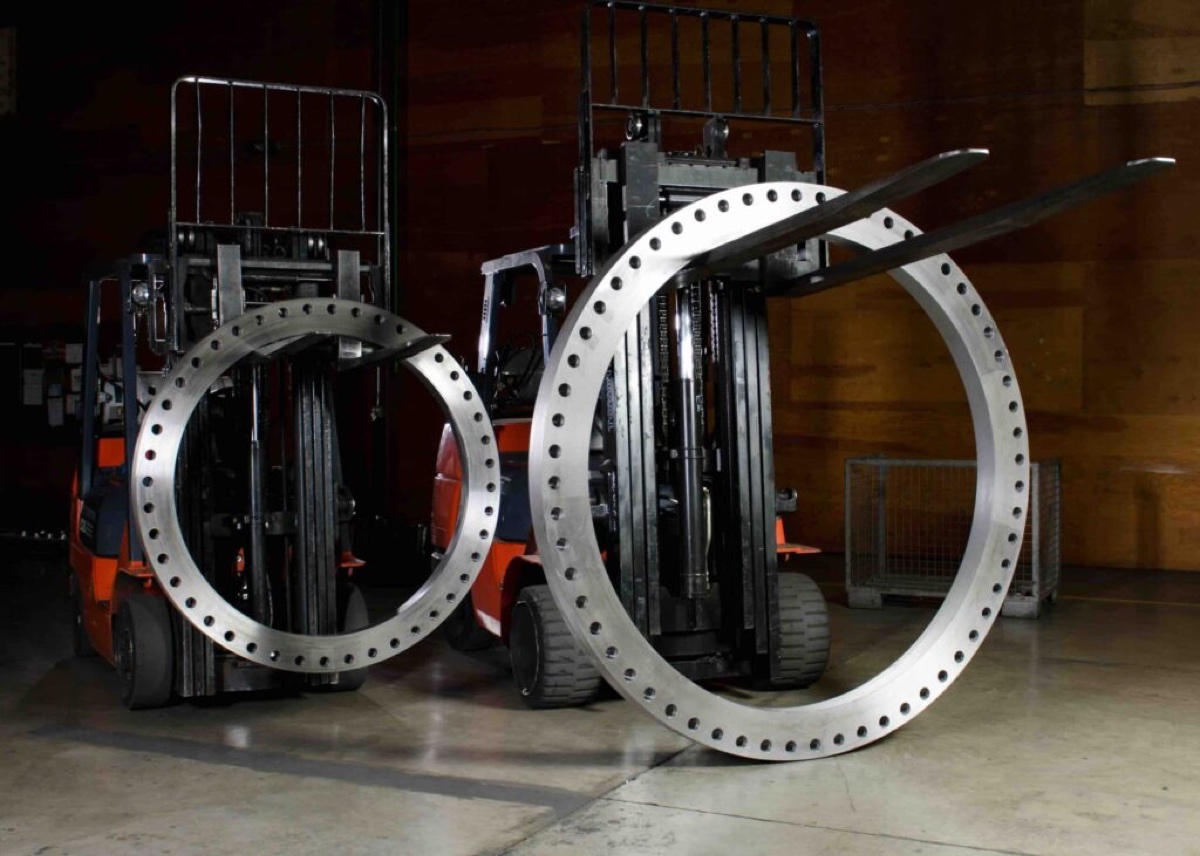
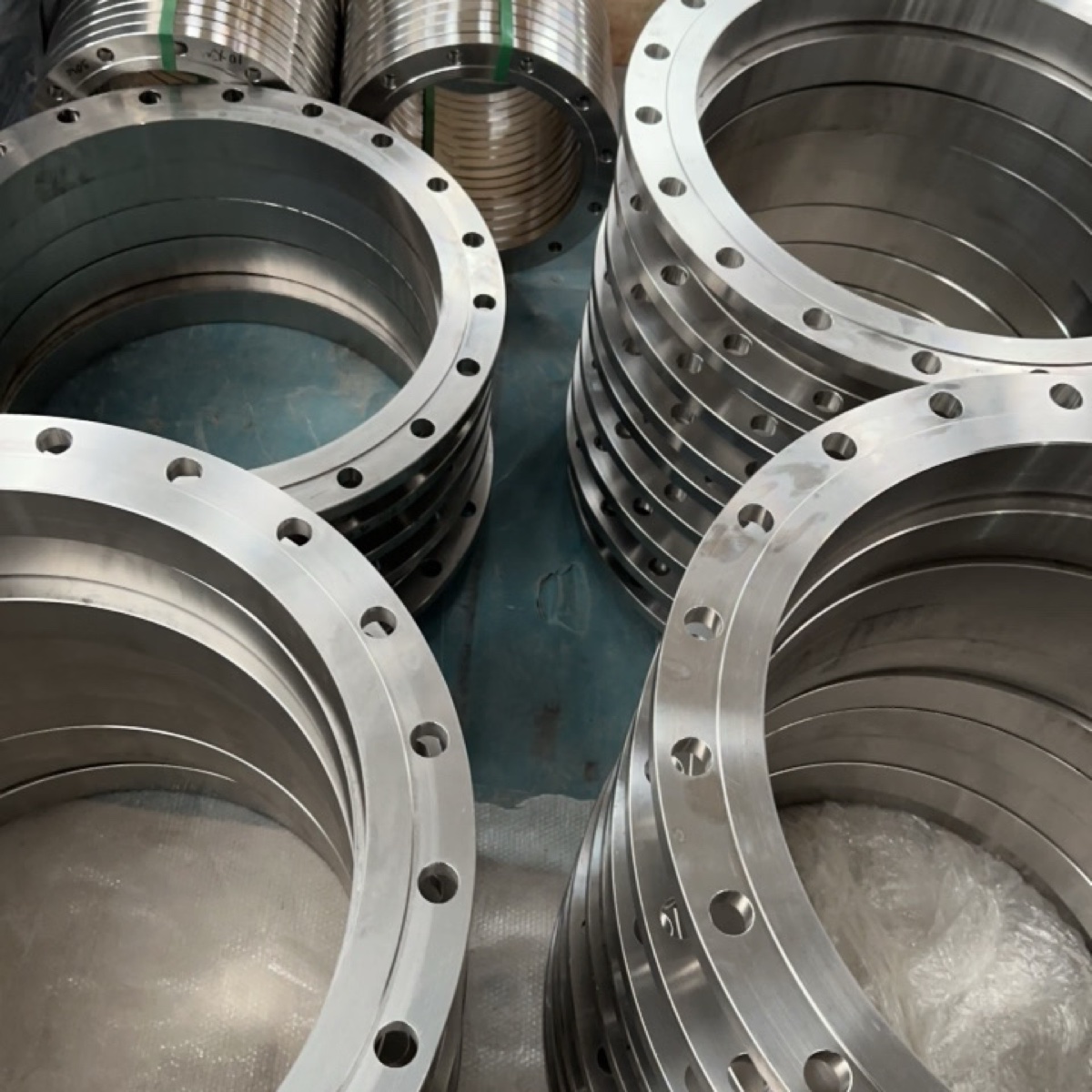
Heat-treatment and furnace systems first — fixtures, retorts, muffles and their piping — then chlorination and hot halogen chemistry, hot caustic evaporation, chemical and petrochemical heaters, thermocouple and instrument wells, gas-turbine and exhaust ducting, and nuclear-adjacent components to legacy designs. Slip-ons serve the moderate-pressure utility, vent, duct and transfer connections; weld necks take pressure and cycling. Large-diameter capability below:
Giant-Diameter Flanges — Forklift-Scale ProductionLarge-Diameter Slip On Flanges — EN 1092-1 Patterns to Order
Inconel 600 Slip On Flange Dimensions
Inconel 600 slip-on dimensions follow the ASME B16.5 slip-on tables — identical for every material. Full charts by class:
How to Specify & Order an Inconel 600 Slip On Flange
Five elements — no bore schedule, since the slip-on bore suits the pipe OD:
1
Size & standard — e.g. 4″ NB ASME B16.5.
2
Pressure class & facing — Class 150–2500, SORF (default), flat face or RTJ where specified.
3
Grade & service — Inconel 600 / UNS N06600 — ASTM B564 (2.4816); state atmosphere and peak temperature so we can flag 601 or 625 where they fit better.
4
Certification & testing — EN 10204 3.1 (standard) or 3.2 witnessed; PMI where the project specifies.
Example: “Slip On Flange, 4″ NB, ASME B16.5 Class 150, RF, Inconel 600 / ASTM B564 (N06600), EN 10204 3.1 — 10 pcs.” Quotations normally within 24 hours with price, unit weight and delivery.
Inconel 600 Slip On Flanges — Frequently Asked Questions
What is an Inconel 600 slip on flange?
It is a slip-on flange forged from Inconel 600 — the workhorse nickel-chromium-iron alloy (UNS N06600, ASTM B564, Werkstoff 2.4816) — dimensioned to ASME B16.5. The flange slides over the pipe end and is secured with two fillet welds. With at least 72% nickel and 14-17% chromium, the alloy resists oxidation to roughly 1093 °C, shrugs off carburising and nitriding furnace atmospheres, handles hot dry chlorine and hydrogen chloride, stays strong in caustic at temperature, and is immune to chloride stress corrosion cracking.
What is Inconel 600?
The founding member of the Inconel family and the general-purpose nickel-chromium alloy of high-temperature engineering. Take nickel's nobility in reducing and caustic chemistry, add 15% chromium for an oxide film that survives red heat, and keep some iron for economy — the result serves furnaces, heat-treatment fixtures, chlorination plants and chemical duty that runs hot. Designations: UNS N06600, Werkstoff 2.4816, EN NiCr15Fe, often simply Alloy 600; forged flanges are governed by ASTM B564.
What is the chemical composition of Inconel 600?
For UNS N06600: nickel (plus cobalt) 72.0% minimum, chromium 14.0-17.0%, iron 6.0-10.0%, carbon 0.15% max, manganese 1.0% max, silicon 0.5% max, copper 0.5% max and sulphur 0.015% max. The chromium is the defining addition over pure nickel — it forms the protective chromia film that carries the alloy to furnace temperatures — while the high nickel keeps the caustic capability and chloride SCC immunity of the family.
What are the mechanical properties of Inconel 600 slip on flanges?
Per ASTM B564 in the annealed condition: tensile strength 550 MPa (80 ksi) minimum, 0.2% yield strength 240 MPa (35 ksi) minimum and elongation 30% minimum. Density is 8.47 g/cm³. The alloy keeps useful strength far beyond stainless territory and stays tough from cryogenic temperatures upward with no ductile-brittle transition. Values are demonstrated per heat on the EN 10204 certificate.
What temperature can Inconel 600 slip on flanges handle?
In oxidising atmospheres the chromia film protects to roughly 1093 °C (2000 °F) — the alloy's famous number — and it performs equally well in the carburising and nitriding atmospheres that attack stainless. Two honest qualifications: bolted-joint design is governed by the ASME B16.5 pressure-temperature tables, which fade long before the metallurgy does, and load-bearing strength at extreme temperature eventually passes to aluminium-bearing Inconel 601 or molybdenum-strengthened grades. For a furnace-adjacent flange, though, 600 is the standard answer.
What is the difference between Inconel 600 and Nickel 200 or 201?
Chromium. Nickel 200/201 are the pure element — unbeatable in the strongest hydroxides and fine below their temperature limits, but with no chromia film they cannot face hot oxidising atmospheres. Inconel 600 trades a little of that caustic supremacy for 15% chromium and gains the furnace: oxidation resistance to ~1093 °C, strength at heat, and tolerance of oxidising process streams. The practical split: wet caustic and dry halogens at moderate heat stay pure nickel; add air, steam or flame and the enquiry moves to 600.
What is the difference between Inconel 600 and Inconel 601?
Aluminium. Inconel 601 adds 1.0-1.7% aluminium and more chromium (21-25%), which builds a tougher, spinel-type oxide scale that resists spalling under thermal cycling — extending oxidation service to roughly 1250 °C where 600 stops near 1093 °C. 600 counters with better resistance in halogen and caustic chemistry and wider availability. Rule of thumb: chemical duty that runs hot favours 600; pure high-temperature oxidation duty, especially cyclic, favours 601. We forge both.
What is the difference between Inconel 600 and Inconel 625?
Molybdenum and niobium. Inconel 625 adds 9% Mo and 3.5% Nb to the Ni-Cr base, which buys two things 600 lacks: formidable wet-corrosion resistance (pitting, crevice, seawater, mixed acids) and roughly double the strength. 600 remains the cleaner choice for hot furnace and halogen duty — its simpler chemistry avoids 625's precipitation reactions on long exposure above ~650 °C — and it costs less. In short: 625 for wet, hard and strong; 600 for hot, dry and chemical.
How does Inconel 600 compare with Incoloy 800 or 310S stainless?
They form the economic ladder below it. 310S stainless (25Cr-20Ni) handles clean oxidation to ~1050 °C at stainless prices but suffers chloride SCC and creeps at temperature. Incoloy 800/800H/800HT (iron-base, 30-35% Ni) adds creep strength and better SCC resistance for hot pressure parts. Inconel 600's 72%+ nickel buys what neither can: near-immunity to chloride SCC, serious caustic and halogen chemistry, and better behaviour in carburising atmospheres. Many plants run all three — each at its honest duty level.
Why is Inconel 600 used in hot chlorine and HCl service?
Because high-nickel alloys form protective nickel-chloride films in dry halogen gases, and 600's chromium extends that protection to higher temperatures than pure nickel manages — it is a standard material for dry chlorine and hydrogen chloride roughly up to the 500 °C region, serving chlorination reactors and vent systems. The critical word is dry: condensing, wet chlorine or hydrochloric acid attacks the alloy, and those duties belong to Hastelloy or titanium instead.
Where does Inconel 600 not belong?
Three honest limits. Sulphur: hot sulphur-bearing atmospheres attack nickel alloys — above roughly 550 °C in sulphidising flue gases, iron-base Incoloy 800 or stainless does better. Wet acids: sulphuric and hydrochloric acid chemistry belongs to Alloy 20, 625 or Hastelloy. And high-purity hot water: Alloy 600 is historically associated with primary-water stress corrosion cracking in nuclear steam generators — the industry moved to Inconel 690 (30% Cr) for that one duty, an honest chapter worth knowing even outside nuclear work.
How is an Inconel 600 slip on flange welded to pipe?
With two fillet welds — hub outside, bore inside, pipe set back 1/8" (3 mm) — using nickel-chromium filler ERNiCr-3 (Inconel 82) for TIG/MIG or ENiCrFe-3 (Inconel 182) electrodes. No preheat and no post-weld heat treatment are required. Standard nickel-alloy discipline applies: scrupulously clean, sulphur-free joints, low heat input and interpass control — and ERNiCr-3 is the same wire trusted for dissimilar joints between nickel alloys and steels, simplifying site fabrication.
Which ASTM standard covers Inconel 600 slip on flanges?
ASTM B564 (ASME SB-564), the nickel-alloy forging specification — not A182, which covers stainless and alloy steels. System partners follow the same B-series logic: seamless pipe and tube to ASTM B167, plate, sheet and strip to ASTM B168, and welding fittings to ASTM B366 (WPNCI). Certificates state UNS N06600, the standard, the annealed condition and the heat number together.
Where are Inconel 600 slip on flanges typically used?
Heat-treatment and furnace systems — fixtures, retorts, muffles and their piping — chlorination and hot halogen chemistry, caustic evaporation running hot, chemical and petrochemical heaters, thermocouple and instrument wells, gas-turbine and exhaust ducting, and nuclear-adjacent components to legacy designs. On these plants the slip-on pattern serves the moderate-pressure connections — utility, vent, duct and transfer lines — with weld necks specified where pressure and cycling demand.
Who manufactures Inconel 600 slip on flanges in India?
Tesco Steel & Engineering is an ISO 9001:2015 certified flange manufacturer based in Mumbai, India, forging Inconel 600 / UNS N06600 slip on flanges from ½" to 24" NB per ASTM B564 and ASME B16.5 — alongside the full Inconel 600 range of weld neck, blind, socketweld, threaded, lapped joint and spectacle blind flanges, plus Inconel 601 and 625 — with full heat traceability, PMI on request, and EN 10204 3.1/3.2 certification on every lot. Exported to more than 50 countries.